-
Chinese (Simplified)
-
English
-
German
-
Korean
-
Spanish
Chinese (Simplified)
English
German
Korean
Spanish
Sign up for an account to enjoy easy online shopping and instant order tracking.
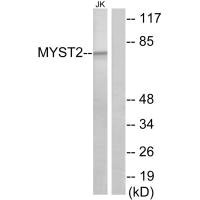
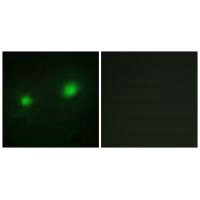
The antibody against KAT7 was raised in rabbit using the Synthesized peptide derived from internal of Human MYST2. as the immunogen. The antibody was affinity-purified from rabbit antiserum by affinity-chromatography using epitope-specific immunogen. This antibody has been validated on ELISA, WB, IF.
$297.00
| Cat.No | ADC-42191A | Clonality | Polyclonal |
|---|---|---|---|
| Host Species | Rabbit | Target Name | KAT7 |
| Target Synonyms | YBF2/SAS3 | Form | Liquid |
| Species Reactivity | Human, Mouse, Rat | Storage Buffer | PH 7.4, 0.02% sodium azide and 50% glycerol., 150mM NaCl, Rabbit IgG in phosphate buffered saline (without Mg2+ and Ca2+) |
| Purification Method | The antibody was affinity-purified from rabbit antiserum by affinity-chromatography using epitope-specific immunogen. | Application | ELISA, IF, WB |
| Storage | Upon receipt |
| Immunogen Description | Synthesized peptide derived from internal of Human MYST2. | Target Species | Human |
|---|---|---|---|
| Immunogen Sequence | Complete sequences for the immunogen, target protein, and peptides are available upon request. | Uniprot ID | O95251 |
Uniprot Id
O95251
Target Species
Human
Target Name
KAT7
Target Full Name
Histone acetyltransferase KAT7
Target Function
Catalytic subunit of histone acetyltransferase HBO1 complexes, which specifically mediate acetylation of histone H3 at 'Lys-14' (H3K14ac), thereby regulating various processes, such as gene transcription, protein ubiquitination, immune regulation, stem cell pluripotent and self-renewal maintenance and embryonic development. Some complexes also catalyze acetylation of histone H4 at 'Lys-5', 'Lys-8' and 'Lys-12' (H4K5ac, H4K8ac and H4K12ac, respectively), regulating DNA replication initiation, regulating DNA replication initiation. Specificity of the HBO1 complexes is determined by the scaffold subunit: complexes containing BRPF scaffold (BRPF1, BRD1/BRPF2 or BRPF3) direct KAT7/HBO1 specificity towards H3K14ac, while complexes containing JADE (JADE1, JADE2 and JADE3) scaffold direct KAT7/HBO1 specificity towards histone H4. H3K14ac promotes transcriptional elongation by facilitating the processivity of RNA polymerase II. Acts as a key regulator of hematopoiesis by forming a complex with BRD1/BRPF2, directing KAT7/HBO1 specificity towards H3K14ac and promoting erythroid differentiation. H3K14ac is also required for T-cell development. KAT7/HBO1-mediated acetylation facilitates two consecutive steps, licensing and activation, in DNA replication initiation: H3K14ac facilitates the activation of replication origins, and histone H4 acetylation (H4K5ac, H4K8ac and H4K12ac) facilitates chromatin loading of MCM complexes, promoting DNA replication licensing. Acts as a positive regulator of centromeric CENPA assembly: recruited to centromeres and mediates histone acetylation, thereby preventing centromere inactivation mediated by SUV39H1, possibly by increasing histone turnover/exchange. Involved in nucleotide excision repair: phosphorylation by ATR in response to ultraviolet irradiation promotes its localization to DNA damage sites, where it mediates histone acetylation to facilitate recruitment of XPC at the damaged DNA sites. Acts as an inhibitor of NF-kappa-B independently of its histone acetyltransferase activity.; Plays a central role in the maintenance of leukemia stem cells in acute myeloid leukemia (AML). Acts by mediating acetylation of histone H3 at 'Lys-14' (H3K14ac), thereby facilitating the processivity of RNA polymerase II to maintain the high expression of key genes, such as HOXA9 and HOXA10 that help to sustain the functional properties of leukemia stem cells.
Target Subcellular Location
Nucleus. Chromosome. Chromosome, centromere. Cytoplasm, cytosol.
Target Protein Families
MYST (SAS/MOZ) family
Target Tissue Specificity
Ubiquitously expressed, with highest levels in testis.
Target Research Area
Transcription
Target Synonyms
Hbo 1; HBO1; HBOa; Histone acetyltransferase binding to hORC1; Histone acetyltransferase binding to ORC1; Histone acetyltransferase KAT7; Histone acetyltransferase MYST2; K(lysine) acetyltransferase 7; KAT 7; KAT7; Lysine acetyltransferase 7; MOZ; MOZ YBF2/SAS3 SAS2 and TIP60 protein; MOZ, YBF2/SAS3, SAS2 and TIP60 protein 2; MYST 2; MYST histone acetyltransferase 2; MYST protein 2; MYST-2; MYST2; MYST2_HUMAN; SAS 2; SAS2 and TIP60 protein 2; TIP60 protein 2; YBF2/SAS3; ZC2HC7
Target Background
The protein encoded by this gene is part of the multimeric HBO1 complex, which possesses histone H4-specific acetyltransferase activity. This activity is required for functional replication origins and is involved in transcriptional activation of some genes. In both cases, the acetylation of histone H4 helps unfold chromatin so that the DNA can be accessed and replicated or transcribed.
Notification