• Contact info@abtriva.com for inquiries and orders.
  • Chinese (Simplified)

  • English

  • German

  • Korean

  • Spanish

United States (English / $ USD)

Rabbit anti-Human KCNAB1 Polyclonal Antibody

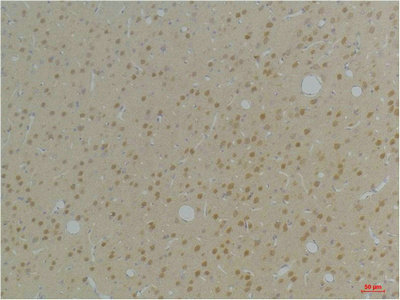
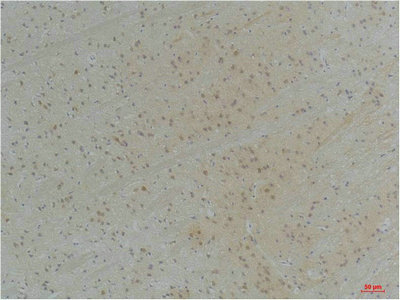
The antibody against KCNAB1 was raised in rabbit using the Synthetic Peptide as the immunogen. This antibody exists as a non-conjugated antibody. The antibody was affinity-purified from rabbit antiserum by affinity-chromatography using specific immunogen. This antibody has been validated on IHC, ELISA.

ADC-13174A

The antibody against KCNAB1 was raised in rabbit using the Synthetic Peptide as the immunogen. This antibody exists as a non-conjugated antibody. The antibody was affinity-purified from rabbit antiserum by affinity-chromatography using specific immunogen. This antibody has been validated on IHC, ELISA.

$167.00

Number
Order Exclusive Products Now

Request a Quote
High Purity LevelsPrecision and ReliabilityCustomization Options

Specifications


Cat.No ADC-13174A ClonalityPolyclonal
Host SpeciesRabbitTarget NameKCNAB1
FormLiquidSpecies ReactivityHuman, Mouse, Rat
Storage Buffer0.5% BSA and 0.02% sodium azide., Liquid in PBS containing 50% glycerolPurification MethodThe antibody was affinity-purified from rabbit antiserum by affinity-chromatography using specific immunogen.
ConjugateNon-conjugatedApplicationELISA, IHC
StorageUpon receipt

Immunogen Information


Immunogen DescriptionSynthetic PeptideTarget SpeciesHuman
Immunogen SequenceComplete sequences for the immunogen, target protein, and peptides are available upon request.Uniprot IDQ14722
Background Information
  • Uniprot Id

    Q14722

  • Target Species

    Human

  • Target Name

    KCNAB1

  • Target Full Name

    Voltage-gated potassium channel subunit beta-1

  • Target Function

    Cytoplasmic potassium channel subunit that modulates the characteristics of the channel-forming alpha-subunits. Modulates action potentials via its effect on the pore-forming alpha subunits. Promotes expression of the pore-forming alpha subunits at the cell membrane, and thereby increases channel activity. Mediates closure of delayed rectifier potassium channels by physically obstructing the pore via its N-terminal domain and increases the speed of channel closure for other family members. Promotes the closure of KCNA1, KCNA2 and KCNA5 channels. Accelerates KCNA4 channel closure. Accelerates the closure of heteromeric channels formed by KCNA1 and KCNA4. Accelerates the closure of heteromeric channels formed by KCNA2, KCNA5 and KCNA6. Isoform KvB1.2 has no effect on KCNA1, KCNA2 or KCNB1. Enhances KCNB1 and KCNB2 channel activity. Binds NADPH; this is required for efficient down-regulation of potassium channel activity. Has NADPH-dependent aldoketoreductase activity. Oxidation of the bound NADPH strongly decreases N-type inactivation of potassium channel activity.

  • Target Subcellular Location

    Cytoplasm. Membrane; Peripheral membrane protein; Cytoplasmic side. Cell membrane; Peripheral membrane protein; Cytoplasmic side.

  • Target Protein Families

    Shaker potassium channel beta subunit family

  • Target Tissue Specificity

    In brain, expression is most prominent in caudate nucleus, hippocampus and thalamus. Significant expression also detected in amygdala and subthalamic nucleus. Also expressed in both healthy and cardiomyopathic heart. Up to four times more abundant in left

  • Target Synonyms

    hKvb3; hKvBeta3; K(+) channel subunit beta-1; KCAB1_HUMAN; KCNA1B; KCNAB1; Kv-beta-1; Kvb1.3; Voltage-gated potassium channel beta-1 subunit; Voltage-gated potassium channel subunit beta-1

  • Target Background

    Potassium channels represent the most complex class of voltage-gated ion channels from both functional and structural standpoints. Their diverse functions include regulating neurotransmitter release, heart rate, insulin secretion, neuronal excitability, epithelial electrolyte transport, smooth muscle contraction, and cell volume. Four sequence-related potassium channel genes - shaker, shaw, shab, and shal - have been identified in Drosophila, and each has been shown to have human homolog(s). This gene encodes a member of the potassium channel, voltage-gated, shaker-related subfamily. This member includes distinct isoforms which are encoded by alternatively spliced transcript variants of this gene. Some of these isoforms are beta subunits, which form heteromultimeric complexes with alpha subunits and modulate the activity of the pore-forming alpha subunits.

Inquire Rabbit anti-Human KCNAB1 Polyclonal Antibody Now


AbTriva respects your privacy and protects your personal data in accordance with AbTriva. For more information, please see our data protection statement. *

Notification