-
Chinese (Simplified)
-
English
-
German
-
Korean
-
Spanish
Chinese (Simplified)
English
German
Korean
Spanish
Sign up for an account to enjoy easy online shopping and instant order tracking.
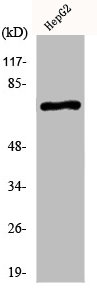
The antibody against KCNC2 was raised in rabbit using the Synthesized peptide derived from the C-terminal region of Human KV3.2. as the immunogen. This antibody exists as a non-conjugated isotype IgG. The antibody was affinity-purified from rabbit antiserum by affinity-chromatography using epitope-specific immunogen. This antibody has been validated on WB, IHC, ELISA.
$167.00
| Cat.No | ADC-38341A | Clonality | Polyclonal |
|---|---|---|---|
| Host Species | Rabbit | Target Name | KCNC2 |
| Target Synonyms | KCNC2; Potassium voltage-gated channel subfamily C member 2; Shaw-like potassium channel; Voltage-gated potassium channel Kv3.2 | Form | Liquid |
| Species Reactivity | Human, Mouse, Rat | Isotype | IgG |
| Storage Buffer | 0.5% BSA and 0.02% sodium azide., Liquid in PBS containing 50% glycerol | Purification Method | The antibody was affinity-purified from rabbit antiserum by affinity-chromatography using epitope-specific immunogen. |
| Conjugate | Non-conjugated | Application | ELISA, IHC, WB |
| Storage | Upon receipt |
| Immunogen Description | Synthesized peptide derived from the C-terminal region of Human KV3.2. | Target Species | Human |
|---|---|---|---|
| Immunogen Sequence | Complete sequences for the immunogen, target protein, and peptides are available upon request. | Uniprot ID | Q96PR1 |
Uniprot Id
Q96PR1
Target Species
Human
Target Name
KCNC2
Target Full Name
Voltage-gated potassium channel KCNC2
Target Function
Voltage-gated potassium channel that mediates transmembrane potassium transport in excitable membranes, primarily in the brain. Contributes to the regulation of the fast action potential repolarization and in sustained high-frequency firing in neurons of the central nervous system. Homotetramer channels mediate delayed-rectifier voltage-dependent potassium currents that activate rapidly at high-threshold voltages and inactivate slowly. Forms tetrameric channels through which potassium ions pass in accordance with their electrochemical gradient. The channel alternates between opened and closed conformations in response to the voltage difference across the membrane. Can form functional homotetrameric and heterotetrameric channels that contain variable proportions of KCNC1, and possibly other family members as well; channel properties depend on the type of alpha subunits that are part of the channel. Channel properties may be modulated either by the association with ancillary subunits, such as KCNE1, KCNE2 or KCNE3 or indirectly by nitric oxide (NO) through a cGMP- and PKG-mediated signaling cascade, slowing channel activation and deactivation of delayed rectifier potassium channels. Contributes to fire sustained trains of very brief action potentials at high frequency in retinal ganglion cells, thalamocortical and suprachiasmatic nucleus (SCN) neurons and in hippocampal and neocortical interneurons. Sustained maximal action potential firing frequency in inhibitory hippocampal interneurons is negatively modulated by histamine H2 receptor activation in a cAMP- and protein kinase (PKA) phosphorylation-dependent manner. Plays a role in maintaining the fidelity of synaptic transmission in neocortical GABAergic interneurons by generating action potential (AP) repolarization at nerve terminals, thus reducing spike-evoked calcium influx and GABA neurotransmitter release. Required for long-range synchronization of gamma oscillations over distance in the neocortex. Contributes to the modulation of the circadian rhythm of spontaneous action potential firing in suprachiasmatic nucleus (SCN) neurons in a light-dependent manner.
Target Involvement
A chromosomal aberration involving KCNC2 has been found in a mother and her two children with varying degrees of neurodevelopmental delay and cerebellar ataxia. One child also exhibits episodes of unresponsiveness suggestive of absence seizures and facial dysmorphism. Deletion at 12q21.1 deletes exons 3-5 of KCNC2.
Target Subcellular Location
Cell membrane; Multi-pass membrane protein. Membrane; Multi-pass membrane protein. Perikaryon. Cell projection, axon. Cell projection, dendrite. Cell junction, synapse, postsynaptic cell membrane. Cell junction, synapse, presynaptic cell membrane. Cell junction, synapse, synaptosome. Cell junction, synapse. Apical cell membrane. Basolateral cell membrane.
Target Protein Families
Potassium channel family, C (Shaw) (TC 1.A.1.2) subfamily, Kv3.2/KCNC2 sub-subfamily
Target Synonyms
KCNC2; Potassium voltage-gated channel subfamily C member 2; Shaw-like potassium channel; Voltage-gated potassium channel Kv3.2
Notification