-
Chinese (Simplified)
-
English
-
German
-
Korean
-
Spanish
Chinese (Simplified)
English
German
Korean
Spanish
Sign up for an account to enjoy easy online shopping and instant order tracking.
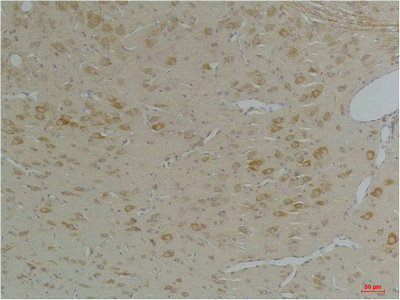
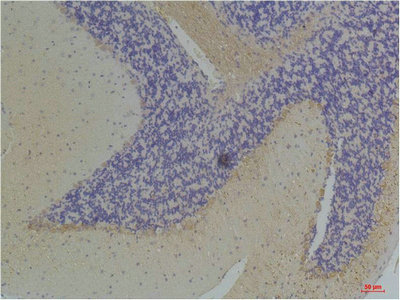
The antibody against KCNIP3 was raised in rabbit using the Synthetic Peptide as the immunogen. This antibody exists as a non-conjugated antibody. The antibody was affinity-purified from rabbit antiserum by affinity-chromatography using specific immunogen. This antibody has been validated on IHC, ELISA.
$167.00
| Cat.No | ADC-13175A | Clonality | Polyclonal |
|---|---|---|---|
| Host Species | Rabbit | Target Name | KCNIP3 |
| Form | Liquid | Species Reactivity | Human, Mouse, Rat |
| Storage Buffer | 0.5% BSA and 0.02% sodium azide., Liquid in PBS containing 50% glycerol | Purification Method | The antibody was affinity-purified from rabbit antiserum by affinity-chromatography using specific immunogen. |
| Conjugate | Non-conjugated | Application | ELISA, IHC |
| Storage | Upon receipt |
| Immunogen Description | Synthetic Peptide | Target Species | Human |
|---|---|---|---|
| Immunogen Sequence | Complete sequences for the immunogen, target protein, and peptides are available upon request. | Uniprot ID | Q9Y2W7 |
Uniprot Id
Q9Y2W7
Target Species
Human
Target Name
KCNIP3
Target Full Name
Calsenilin
Target Function
Calcium-dependent transcriptional repressor that binds to the DRE element of genes including PDYN and FOS. Affinity for DNA is reduced upon binding to calcium and enhanced by binding to magnesium. Seems to be involved in nociception.; Regulatory subunit of Kv4/D (Shal)-type voltage-gated rapidly inactivating A-type potassium channels, such as KCND2/Kv4.2 and KCND3/Kv4.3. Modulates channel expression at the cell membrane, gating characteristics, inactivation kinetics and rate of recovery from inactivation in a calcium-dependent and isoform-specific manner.; May play a role in the regulation of PSEN2 proteolytic processing and apoptosis. Together with PSEN2 involved in modulation of amyloid-beta formation.
Target Subcellular Location
Cytoplasm. Cell membrane; Lipid-anchor. Endoplasmic reticulum. Golgi apparatus. Nucleus.
Target Protein Families
Recoverin family
Target Tissue Specificity
Highly expressed in brain. Widely expressed at lower levels. Expression levels are elevated in brain cortex regions affected by Alzheimer disease.
Target Synonyms
4933407H12Rik; A type potassium channel modulatory protein 3; A-type potassium channel modulatory protein 3; AI413860; Calsenilin; CSEN; CSEN_HUMAN; DRE antagonist modulator; DRE-antagonist modulator; DREAM; EF hand transcription factor; KCHIP 3; KChIP3; KCNIP 3; Kcnip3; Kv channel interacting protein 3; Kv channel-interacting protein 3; MGC18289; Potassium channel interacting protein 3; R74849
Target Background
This gene encodes a member of the family of voltage-gated potassium (Kv) channel-interacting proteins, which belong to the recoverin branch of the EF-hand superfamily. Members of this family are small calcium binding proteins containing EF-hand-like domains. They are integral subunit components of native Kv4 channel complexes that may regulate A-type currents, and hence neuronal excitability, in response to changes in intracellular calcium. The encoded protein also functions as a calcium-regulated transcriptional repressor, and interacts with presenilins. Alternatively spliced transcript variants encoding different isoforms have been described.
Notification