• Contact info@abtriva.com for inquiries and orders.
  • Chinese (Simplified)

  • English

  • German

  • Korean

  • Spanish

United States (English / $ USD)

Rabbit anti-Human KCNJ1 Polyclonal Antibody

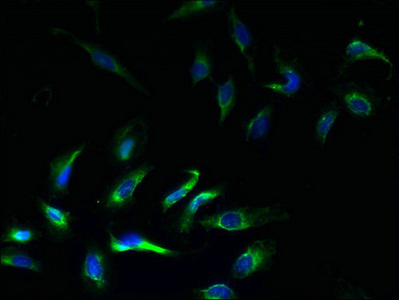
The antibody against KCNJ1 was raised in rabbit using the Recombinant Human ATP-sensitive inward rectifier potassium channel 1 protein (178-391AA) as the immunogen. This antibody exists as a non-conjugated isotype IgG, purified by protein G with a purity greater than 95%. This antibody has been validated on ELISA, WB, IF.

ADC-50586A

The antibody against KCNJ1 was raised in rabbit using the Recombinant Human ATP-sensitive inward rectifier potassium channel 1 protein (178-391AA) as the immunogen. This antibody exists as a non-conjugated isotype IgG, purified by protein G with a purity greater than 95%. This antibody has been validated on ELISA, WB, IF.

$299.00

Number
Order Exclusive Products Now

Request a Quote
High Purity LevelsPrecision and ReliabilityCustomization Options

Specifications


Cat.No ADC-50586A ClonalityPolyclonal
Host SpeciesRabbitTarget NameKCNJ1
FormLiquidSpecies ReactivityHuman
IsotypeIgGStorage Buffer0.01M PBS, 0.03% Proclin 300; Constituents: 50% Glycerol, PH 7.4
Purification Method>95%, Protein G purifiedConjugateNon-conjugated
ApplicationELISA, IF, WBStorageUpon receipt

Immunogen Information


Immunogen DescriptionRecombinant Human ATP-sensitive inward rectifier potassium channel 1 protein (178-391AA)Target SpeciesHuman
Immunogen SequenceComplete sequences for the immunogen, target protein, and peptides are available upon request.Uniprot IDP48048
Background Information
  • Uniprot Id

    P48048

  • Target Species

    Human

  • Target Name

    KCNJ1

  • Target Full Name

    ATP-sensitive inward rectifier potassium channel 1

  • Target Function

    In the kidney, probably plays a major role in potassium homeostasis. Inward rectifier potassium channels are characterized by a greater tendency to allow potassium to flow into the cell rather than out of it. Their voltage dependence is regulated by the concentration of extracellular potassium; as external potassium is raised, the voltage range of the channel opening shifts to more positive voltages. The inward rectification is mainly due to the blockage of outward current by internal magnesium. This channel is activated by internal ATP and can be blocked by external barium.

  • Target Involvement

    Bartter syndrome 2, antenatal (BARTS2)

  • Target Subcellular Location

    Cell membrane; Multi-pass membrane protein. Note=Phosphorylation at Ser-44 by SGK1 is necessary for its expression at the cell membrane.

  • Target Protein Families

    Inward rectifier-type potassium channel (TC 1.A.2.1) family, KCNJ1 subfamily

  • Target Tissue Specificity

    In the kidney and pancreatic islets. Lower levels in skeletal muscle, pancreas, spleen, brain, heart and liver.

  • Target Research Area

    Transport, Signal Transduction

  • Target Synonyms

    ATP regulated potassium channel ROM K; ATP sensitive inward rectifier potassium channel 1; ATP-regulated potassium channel ROM-K; ATP-sensitive inward rectifier potassium channel 1; Inward rectifier K(+) channel Kir1.1; inwardly rectifying K+ channel ; inwardly rectifying subfamily J member 1; IRK1_HUMAN; KCNJ 1; KCNJ; Kcnj1; Kir 1.1; Kir1.1; OTTHUMP00000045938; Potassium channel; Potassium channel inwardly rectifying subfamily J member 1; potassium inwardly-rectifying channel J1; ROMK 1; ROMK 2; ROMK; ROMK1; ROMK2

Inquire Rabbit anti-Human KCNJ1 Polyclonal Antibody Now


AbTriva respects your privacy and protects your personal data in accordance with AbTriva. For more information, please see our data protection statement. *

Notification