-
Chinese (Simplified)
-
English
-
German
-
Korean
-
Spanish
Chinese (Simplified)
English
German
Korean
Spanish
Sign up for an account to enjoy easy online shopping and instant order tracking.
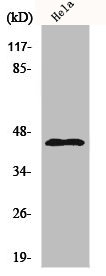
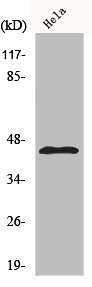
The antibody against KCNJ11 was raised in rabbit using the Synthesized peptide derived from Human KIR6.2 around the non-phosphorylation site of T224. as the immunogen. This antibody exists as a non-conjugated isotype IgG. The antibody was affinity-purified from rabbit antiserum by affinity-chromatography using epitope-specific immunogen. This antibody has been validated on WB, IHC, IF, ELISA.
$167.00
| Cat.No | ADC-38353A | Clonality | Polyclonal |
|---|---|---|---|
| Host Species | Rabbit | Target Name | KCNJ11 |
| Target Synonyms | inwardly rectifying subfamily J member 11, KCNJ11; ATP-sensitive inward rectifier potassium channel 11; IKATP; Inward rectifier K(+ channel Kir6.2; Potassium channel | Form | Liquid |
| Species Reactivity | Human, Mouse, Rat | Isotype | IgG |
| Storage Buffer | 0.5% BSA and 0.02% sodium azide., Liquid in PBS containing 50% glycerol | Purification Method | The antibody was affinity-purified from rabbit antiserum by affinity-chromatography using epitope-specific immunogen. |
| Conjugate | Non-conjugated | Application | ELISA, IF, IHC, WB |
| Storage | Upon receipt |
| Immunogen Description | Synthesized peptide derived from Human KIR6.2 around the non-phosphorylation site of T224. | Target Species | Human |
|---|---|---|---|
| Immunogen Sequence | Complete sequences for the immunogen, target protein, and peptides are available upon request. | Uniprot ID | Q14654 |
Uniprot Id
Q14654
Target Species
Human
Target Name
KCNJ11
Target Full Name
ATP-sensitive inward rectifier potassium channel 11
Target Function
This receptor is controlled by G proteins. Inward rectifier potassium channels are characterized by a greater tendency to allow potassium to flow into the cell rather than out of it. Their voltage dependence is regulated by the concentration of extracellular potassium; as external potassium is raised, the voltage range of the channel opening shifts to more positive voltages. The inward rectification is mainly due to the blockage of outward current by internal magnesium. Can be blocked by extracellular barium. Subunit of ATP-sensitive potassium channels (KATP). Can form cardiac and smooth muscle-type KATP channels with ABCC9. KCNJ11 forms the channel pore while ABCC9 is required for activation and regulation.
Target Involvement
Familial hyperinsulinemic hypoglycemia 2 (HHF2); Diabetes mellitus, permanent neonatal (PNDM); Transient neonatal diabetes mellitus 3 (TNDM3); Maturity-onset diabetes of the young 13 (MODY13)
Target Subcellular Location
Membrane; Multi-pass membrane protein.
Target Protein Families
Inward rectifier-type potassium channel (TC 1.A.2.1) family, KCNJ11 subfamily
Target Synonyms
KCNJ11; ATP-sensitive inward rectifier potassium channel 11; IKATP; Inward rectifier K(+ channel Kir6.2; Potassium channel, inwardly rectifying subfamily J member 11
Target Background
Potassium channels are present in most mammalian cells, where they participate in a wide range of physiologic responses. The protein encoded by this gene is an integral membrane protein and inward-rectifier type potassium channel. The encoded protein, which has a greater tendency to allow potassium to flow into a cell rather than out of a cell, is controlled by G-proteins and is found associated with the sulfonylurea receptor SUR. Mutations in this gene are a cause of familial persistent hyperinsulinemic hypoglycemia of infancy (PHHI), an autosomal recessive disorder characterized by unregulated insulin secretion. Defects in this gene may also contribute to autosomal dominant non-insulin-dependent diabetes mellitus type II (NIDDM), transient neonatal diabetes mellitus type 3 (TNDM3), and permanent neonatal diabetes mellitus (PNDM). Multiple alternatively spliced transcript variants that encode different protein isoforms have been described for this gene.
Notification