• Contact info@abtriva.com for inquiries and orders.
  • Chinese (Simplified)

  • English

  • German

  • Korean

  • Spanish

United States (English / $ USD)

Rabbit anti-Human KCNJ11 Polyclonal Antibody

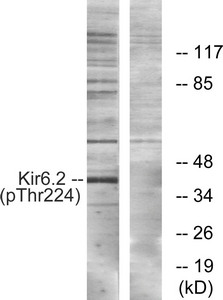
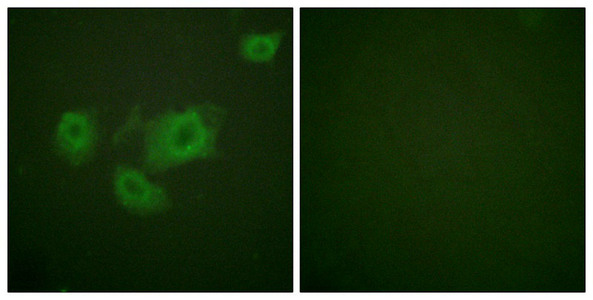
The antibody against KCNJ11 was raised in rabbit using the Peptide sequence around phosphorylation site of threonine 224 (K-T-TP-S-P) derived from Human Kir6.2. as the immunogen. Antibodies were produced by immunizing rabbits with synthetic phosphopeptide and KLH conjugates. Antibodies were purified by affinity-chromatography using epitope-specific phosphopeptide. Non-phospho specific antibodies were removed by chromatogramphy usi This antibody has been validated on ELISA, WB, IF.

ADC-40605A

The antibody against KCNJ11 was raised in rabbit using the Peptide sequence around phosphorylation site of threonine 224 (K-T-TP-S-P) derived from Human Kir6.2. as the immunogen. Antibodies were produced by immunizing rabbits with synthetic phosphopeptide and KLH conjugates. Antibodies were purified by affinity-chromatography using epitope-specific phosphopeptide. Non-phospho specific antibodies were removed by chromatogramphy usi This antibody has been validated on ELISA, WB, IF.

$360.00

Number
Order Exclusive Products Now

Request a Quote
High Purity LevelsPrecision and ReliabilityCustomization Options

Specifications


Cat.No ADC-40605A ClonalityPolyclonal
Host SpeciesRabbitTarget NameKCNJ11
Target Synonymsinwardly rectifying subfamily J member 11, KCNJ11; ATP-sensitive inward rectifier potassium channel 11; IKATP; Inward rectifier K(+ channel Kir6.2; Potassium channelFormLiquid
Species ReactivityHuman, MouseStorage BufferPH 7.4, 0.02% sodium azide and 50% glycerol., 150mM NaCl, Rabbit IgG in phosphate buffered saline (without Mg2+ and Ca2+)
ApplicationELISA, IF, WBStorageUpon receipt

Immunogen Information


Immunogen DescriptionPeptide sequence around phosphorylation site of threonine 224 (K-T-TP-S-P) derived from Human Kir6.2.Target SpeciesHuman
Immunogen SequenceComplete sequences for the immunogen, target protein, and peptides are available upon request.Uniprot IDQ14654
Background Information
  • Uniprot Id

    Q14654

  • Target Species

    Human

  • Target Name

    KCNJ11

  • Target Full Name

    ATP-sensitive inward rectifier potassium channel 11

  • Target Function

    This receptor is controlled by G proteins. Inward rectifier potassium channels are characterized by a greater tendency to allow potassium to flow into the cell rather than out of it. Their voltage dependence is regulated by the concentration of extracellular potassium; as external potassium is raised, the voltage range of the channel opening shifts to more positive voltages. The inward rectification is mainly due to the blockage of outward current by internal magnesium. Can be blocked by extracellular barium. Subunit of ATP-sensitive potassium channels (KATP). Can form cardiac and smooth muscle-type KATP channels with ABCC9. KCNJ11 forms the channel pore while ABCC9 is required for activation and regulation.

  • Target Involvement

    Familial hyperinsulinemic hypoglycemia 2 (HHF2); Diabetes mellitus, permanent neonatal (PNDM); Transient neonatal diabetes mellitus 3 (TNDM3); Maturity-onset diabetes of the young 13 (MODY13)

  • Target Subcellular Location

    Membrane; Multi-pass membrane protein.

  • Target Protein Families

    Inward rectifier-type potassium channel (TC 1.A.2.1) family, KCNJ11 subfamily

  • Target Synonyms

    KCNJ11; ATP-sensitive inward rectifier potassium channel 11; IKATP; Inward rectifier K(+ channel Kir6.2; Potassium channel, inwardly rectifying subfamily J member 11

  • Target Background

    Potassium channels are present in most mammalian cells, where they participate in a wide range of physiologic responses. The protein encoded by this gene is an integral membrane protein and inward-rectifier type potassium channel. The encoded protein, which has a greater tendency to allow potassium to flow into a cell rather than out of a cell, is controlled by G-proteins and is found associated with the sulfonylurea receptor SUR. Mutations in this gene are a cause of familial persistent hyperinsulinemic hypoglycemia of infancy (PHHI), an autosomal recessive disorder characterized by unregulated insulin secretion. Defects in this gene may also contribute to autosomal dominant non-insulin-dependent diabetes mellitus type II (NIDDM), transient neonatal diabetes mellitus type 3 (TNDM3), and permanent neonatal diabetes mellitus (PNDM). Multiple alternatively spliced transcript variants that encode different protein isoforms have been described for this gene.

Inquire Rabbit anti-Human KCNJ11 Polyclonal Antibody Now


AbTriva respects your privacy and protects your personal data in accordance with AbTriva. For more information, please see our data protection statement. *

Notification