-
Chinese (Simplified)
-
English
-
German
-
Korean
-
Spanish
Chinese (Simplified)
English
German
Korean
Spanish
Sign up for an account to enjoy easy online shopping and instant order tracking.
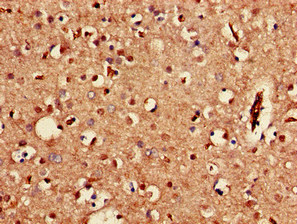
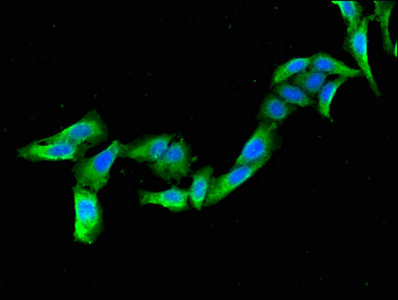
The antibody against KCNJ3 was raised in rabbit using the Recombinant Human G protein-activated inward rectifier potassium channel 1 protein (350-487AA) as the immunogen. This antibody exists as a non-conjugated isotype IgG, purified by protein G with a purity greater than 95%. This antibody has been validated on ELISA, IHC, IF.
$299.00
| Cat.No | ADC-12644A | Clonality | Polyclonal |
|---|---|---|---|
| Host Species | Rabbit | Target Name | KCNJ3 |
| Target Synonyms | inwardly rectifying subfamily J member 3, KCNJ3; GIRK1; G protein-activated inward rectifier potassium channel 1; GIRK-1; Inward rectifier K(+ channel Kir3.1; Potassium channel | Form | Liquid |
| Species Reactivity | Human | Isotype | IgG |
| Storage Buffer | 0.01M PBS, 0.03% Proclin 300; Constituents: 50% Glycerol, PH 7.4 | Purification Method | >95%, Protein G purified |
| Conjugate | Non-conjugated | Application | ELISA, IF, IHC |
| Storage | Upon receipt |
| Immunogen Description | Recombinant Human G protein-activated inward rectifier potassium channel 1 protein (350-487AA) | Target Species | Human |
|---|---|---|---|
| Immunogen Sequence | Complete sequences for the immunogen, target protein, and peptides are available upon request. | Uniprot ID | P48549 |
Uniprot Id
P48549
Target Species
Human
Target Name
KCNJ3
Target Full Name
G protein-activated inward rectifier potassium channel 1
Target Function
This potassium channel is controlled by G proteins. Inward rectifier potassium channels are characterized by a greater tendency to allow potassium to flow into the cell rather than out of it. Their voltage dependence is regulated by the concentration of extracellular potassium; as external potassium is raised, the voltage range of the channel opening shifts to more positive voltages. The inward rectification is mainly due to the blockage of outward current by internal magnesium. This receptor plays a crucial role in regulating the heartbeat.
Target Subcellular Location
Membrane; Multi-pass membrane protein.
Target Protein Families
Inward rectifier-type potassium channel (TC 1.A.2.1) family, KCNJ3 subfamily
Target Research Area
Cardiovascular
Target Synonyms
KCNJ3; GIRK1; G protein-activated inward rectifier potassium channel 1; GIRK-1; Inward rectifier K(+ channel Kir3.1; Potassium channel, inwardly rectifying subfamily J member 3
Target Background
Potassium channels are present in most mammalian cells, where they participate in a wide range of physiologic responses. The protein encoded by this gene is an integral membrane protein and inward-rectifier type potassium channel. The encoded protein, which has a greater tendency to allow potassium to flow into a cell rather than out of a cell, is controlled by G-proteins and plays an important role in regulating heartbeat. It associates with three other G-protein-activated potassium channels to form a heteromultimeric pore-forming complex that also couples to neurotransmitter receptors in the brain and whereby channel activation can inhibit action potential firing by hyperpolarizing the plasma membrane. These multimeric G-protein-gated inwardly-rectifying potassium (GIRK) channels may play a role in the pathophysiology of epilepsy, addiction, Down's syndrome, ataxia, and Parkinson's disease. Alternative splicing results in multiple transcript variants encoding distinct proteins.
Notification