• Contact info@abtriva.com for inquiries and orders.
  • Chinese (Simplified)

  • English

  • German

  • Korean

  • Spanish

United States (English / $ USD)

Rabbit anti-Human KCNK9 Polyclonal Antibody

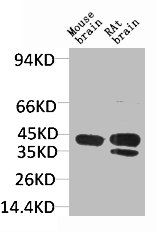
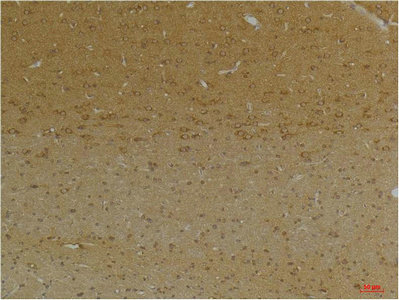
The antibody against KCNK9 was raised in rabbit using the Synthetic Peptide as the immunogen. This antibody exists as a non-conjugated antibody. The antibody was affinity-purified from rabbit antiserum by affinity-chromatography using specific immunogen. This antibody has been validated on WB, IHC, ELISA.

ADC-13180A

The antibody against KCNK9 was raised in rabbit using the Synthetic Peptide as the immunogen. This antibody exists as a non-conjugated antibody. The antibody was affinity-purified from rabbit antiserum by affinity-chromatography using specific immunogen. This antibody has been validated on WB, IHC, ELISA.

$167.00

Number
Order Exclusive Products Now

Request a Quote
High Purity LevelsPrecision and ReliabilityCustomization Options

Specifications


Cat.No ADC-13180A ClonalityPolyclonal
Host SpeciesRabbitTarget NameKCNK9
FormLiquidSpecies ReactivityHuman, Mouse, Rat
Storage Buffer0.5% BSA and 0.02% sodium azide., Liquid in PBS containing 50% glycerolPurification MethodThe antibody was affinity-purified from rabbit antiserum by affinity-chromatography using specific immunogen.
ConjugateNon-conjugatedApplicationELISA, IHC, WB
StorageUpon receipt

Immunogen Information


Immunogen DescriptionSynthetic PeptideTarget SpeciesHuman
Immunogen SequenceComplete sequences for the immunogen, target protein, and peptides are available upon request.Uniprot IDQ9NPC2
Background Information
  • Uniprot Id

    Q9NPC2

  • Target Species

    Human

  • Target Name

    KCNK9

  • Target Full Name

    Potassium channel subfamily K member 9

  • Target Function

    pH-dependent, voltage-insensitive, background potassium channel protein.

  • Target Involvement

    Birk-Barel mental retardation dysmorphism syndrome (BIBAS)

  • Target Subcellular Location

    Cell membrane; Multi-pass membrane protein.

  • Target Protein Families

    Two pore domain potassium channel (TC 1.A.1.8) family

  • Target Tissue Specificity

    Mainly found in the cerebellum. Also found in adrenal gland, kidney and lung.

  • Target Synonyms

    KCNK9; TASK3; Potassium channel subfamily K member 9; Acid-sensitive potassium channel protein TASK-3; TWIK-related acid-sensitive K(+ channel 3; Two pore potassium channel KT3.2; Two pore K(+ channel KT3.2

  • Target Background

    This gene encodes a protein that contains multiple transmembrane regions and two pore-forming P domains and functions as a pH-dependent potassium channel. Amplification and overexpression of this gene have been observed in several types of human carcinomas. This gene is imprinted in the brain, with preferential expression from the maternal allele. A mutation in this gene was associated with Birk-Barel dysmorphism syndrome. Alternative splicing results in multiple transcript variants.

Inquire Rabbit anti-Human KCNK9 Polyclonal Antibody Now


AbTriva respects your privacy and protects your personal data in accordance with AbTriva. For more information, please see our data protection statement. *

Notification