-
Chinese (Simplified)
-
English
-
German
-
Korean
-
Spanish
Chinese (Simplified)
English
German
Korean
Spanish
Sign up for an account to enjoy easy online shopping and instant order tracking.
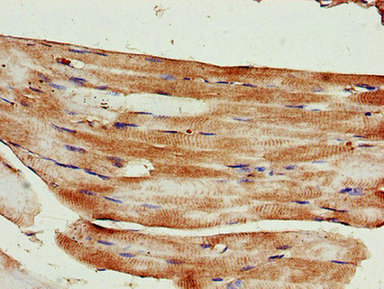
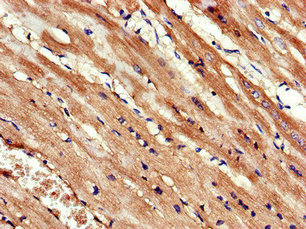
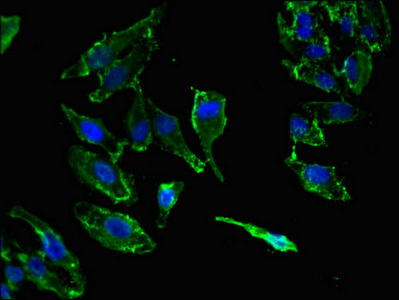
The antibody against KIF14 was raised in rabbit using the Recombinant Human Kinesin-like protein KIF14 protein (261-531AA) as the immunogen. This antibody exists as a non-conjugated isotype IgG, purified by protein G with a purity greater than 95%. This antibody has been validated on ELISA, IHC, IF.
$299.00
| Cat.No | ADC-13819A | Clonality | Polyclonal |
|---|---|---|---|
| Host Species | Rabbit | Target Name | KIF14 |
| Form | Liquid | Species Reactivity | Human |
| Isotype | IgG | Storage Buffer | 0.01M PBS, 0.03% Proclin 300; Constituents: 50% Glycerol, PH 7.4 |
| Purification Method | >95%, Protein G purified | Conjugate | Non-conjugated |
| Application | ELISA, IF, IHC | Storage | Upon receipt |
| Immunogen Description | Recombinant Human Kinesin-like protein KIF14 protein (261-531AA) | Target Species | Human |
|---|---|---|---|
| Immunogen Sequence | Complete sequences for the immunogen, target protein, and peptides are available upon request. | Uniprot ID | Q15058 |
Uniprot Id
Q15058
Target Species
Human
Target Name
KIF14
Target Full Name
Kinesin-like protein KIF14
Target Function
Microtubule motor protein that binds to microtubules with high affinity through each tubulin heterodimer and has an ATPase activity. Plays a role in many processes like cell division, cytokinesis and also in cell proliferation and apoptosis. During cytokinesis, targets to central spindle and midbody through its interaction with PRC1 and CIT respectively. Regulates cell growth through regulation of cell cycle progression and cytokinesis. During cell cycle progression acts through SCF-dependent proteasomal ubiquitin-dependent protein catabolic process which controls CDKN1B degradation, resulting in positive regulation of cyclins, including CCNE1, CCND1 and CCNB1. During late neurogenesis, regulates the cerebellar, cerebral cortex and olfactory bulb development through regulation of apoptosis, cell proliferation and cell division. Also is required for chromosome congression and alignment during mitotic cell cycle process. Regulates cell spreading, focal adhesion dynamics, and cell migration through its interaction with RADIL resulting in regulation of RAP1A-mediated inside-out integrin activation by tethering RADIL on microtubules.
Target Involvement
Meckel syndrome 12 (MKS12)
Target Subcellular Location
Nucleus. Cytoplasm. Cytoplasm, cytoskeleton, spindle. Midbody.
Target Protein Families
TRAFAC class myosin-kinesin ATPase superfamily, Kinesin family
Target Synonyms
KIAA0042; KIF 14; KIF14; KIF14_HUMAN; Kinesin Family Member 14; Kinesin like protein KIF14; Kinesin-like protein KIF14; MGC142302
Target Background
This gene encodes a member of the kinesin-3 superfamily of microtubule motor proteins. These proteins are involved in numerous processes including vesicle transport, chromosome segregation, mitotic spindle formation, and cytokinesis. In human HeLa-S3 and 293T cells, this protein is localized to the cytoplasm during interphase, to the spindle poles and spindle microtubules during mitosis, and to the midbody during cytokinesis. An internal motor domain displays microtubule-dependent ATPase activity, consistent with its function as a microtubule motor protein. Knockdown of this gene results in failed cytokinesis with endoreplication, which results in multinucleated cells. This gene has been identified as a likely oncogene in breast, lung and ovarian cancers, as well as retinoblastomas and gliomas. Alternative splicing results in multiple transcript variants.
Notification