-
Chinese (Simplified)
-
English
-
German
-
Korean
-
Spanish
Chinese (Simplified)
English
German
Korean
Spanish
Sign up for an account to enjoy easy online shopping and instant order tracking.
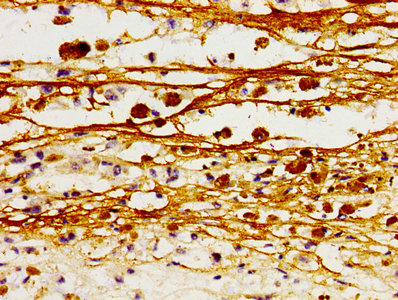
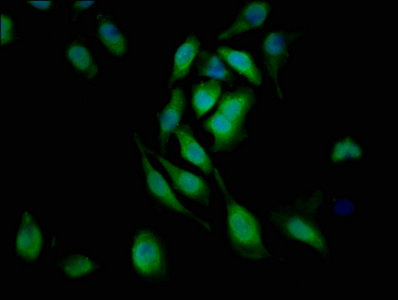
The antibody against L1CAM was raised in rabbit using the Recombinant Human Neural cell adhesion molecule L1 protein (995-1119AA) as the immunogen. This antibody exists as a non-conjugated isotype IgG, purified by protein G with a purity greater than 95%. This antibody has been validated on ELISA, WB, IHC, IF.
$299.00
| Cat.No | ADC-50625A | Clonality | Polyclonal |
|---|---|---|---|
| Host Species | Rabbit | Target Name | L1CAM |
| Form | Liquid | Species Reactivity | Human, Mouse |
| Isotype | IgG | Storage Buffer | 0.01M PBS, 0.03% Proclin 300; Constituents: 50% Glycerol, PH 7.4 |
| Purification Method | >95%, Protein G purified | Conjugate | Non-conjugated |
| Application | ELISA, IF, IHC, WB | Storage | Upon receipt |
| Immunogen Description | Recombinant Human Neural cell adhesion molecule L1 protein (995-1119AA) | Target Species | Human |
|---|---|---|---|
| Immunogen Sequence | Complete sequences for the immunogen, target protein, and peptides are available upon request. | Uniprot ID | P32004 |
Uniprot Id
P32004
Target Species
Human
Target Name
L1CAM
Target Full Name
Neural cell adhesion molecule L1
Target Function
Neural cell adhesion molecule involved in the dynamics of cell adhesion and in the generation of transmembrane signals at tyrosine kinase receptors. During brain development, critical in multiple processes, including neuronal migration, axonal growth and fasciculation, and synaptogenesis. In the mature brain, plays a role in the dynamics of neuronal structure and function, including synaptic plasticity.
Target Involvement
Hydrocephalus due to stenosis of the aqueduct of Sylvius (HSAS); Mental retardation, aphasia, shuffling gait, and adducted thumbs syndrome (MASA); Agenesis of the corpus callosum, X-linked, partial (ACCPX)
Target Subcellular Location
Cell membrane; Single-pass type I membrane protein. Cell projection, growth cone. Cell projection, axon. Cell projection, dendrite.
Target Protein Families
Immunoglobulin superfamily, L1/neurofascin/NgCAM family
Target Research Area
Cell Adhesion
Target Synonyms
Antigen identified by monoclonal R1 ; CAML1; CD171; CD171 antigen ; HSAS; HSAS1; Hyd; L1; L1 cell adhesion molecule; L1-NCAM; L1cam; L1CAM_HUMAN; MASA; MIC5; N CAML1 ; N-CAM-L1; NCAM-L1; NCAML1; Nerve-growth factor-inducible large external glycoprotein; Neural cell adhesion molecule L1; NILE; OTTHUMP00000025992 ; S10 ; SPG1
Target Background
The protein encoded by this gene is an axonal glycoprotein belonging to the immunoglobulin supergene family. The ectodomain, consisting of several immunoglobulin-like domains and fibronectin-like repeats (type III), is linked via a single transmembrane sequence to a conserved cytoplasmic domain. This cell adhesion molecule plays an important role in nervous system development, including neuronal migration and differentiation. Mutations in the gene cause X-linked neurological syndromes known as CRASH (corpus callosum hypoplasia, retardation, aphasia, spastic paraplegia and hydrocephalus). Alternative splicing of this gene results in multiple transcript variants, some of which include an alternate exon that is considered to be specific to neurons.
Notification