-
Chinese (Simplified)
-
English
-
German
-
Korean
-
Spanish
Chinese (Simplified)
English
German
Korean
Spanish
Sign up for an account to enjoy easy online shopping and instant order tracking.
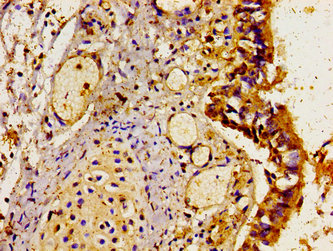
The antibody against LAMP3 was raised in rabbit using the Recombinant Human Lysosome-associated membrane glycoprotein 3 protein (28-224AA) as the immunogen. This antibody exists as a non-conjugated isotype IgG, purified by protein G with a purity greater than 95%. This antibody has been validated on ELISA, WB, IHC.
$299.00
| Cat.No | ADC-08088A | Clonality | Polyclonal |
|---|---|---|---|
| Host Species | Rabbit | Target Name | LAMP3 |
| Form | Liquid | Species Reactivity | Human |
| Isotype | IgG | Storage Buffer | 0.01M PBS, 0.03% Proclin 300; Constituents: 50% Glycerol, PH 7.4 |
| Purification Method | >95%, Protein G purified | Conjugate | Non-conjugated |
| Application | ELISA, IHC, WB | Storage | Upon receipt |
| Immunogen Description | Recombinant Human Lysosome-associated membrane glycoprotein 3 protein (28-224AA) | Target Species | Human |
|---|---|---|---|
| Immunogen Sequence | Complete sequences for the immunogen, target protein, and peptides are available upon request. | Uniprot ID | Q9UQV4 |
Uniprot Id
Q9UQV4
Target Species
Human
Target Name
LAMP3
Target Full Name
Lysosome-associated membrane glycoprotein 3
Target Function
Lysosomal membrane glycoprotein which plays a role in the unfolded protein response (UPR) that contributes to protein degradation and cell survival during proteasomal dysfunction. Plays a role in the process of fusion of the lysosome with the autophagosome, thereby modulating the autophagic process. Promotes hepatocellular lipogenesis through activation of the PI3K/Akt pathway. May also play a role in dendritic cell function and in adaptive immunity.; (Microbial infection) Plays a positive role in post-entry steps of influenza A virus replication, either virus uncoating, cytosolic transport, or nuclear import of viral components, and promotes nuclear accumulation of influenza nucleoprotein/NP at early stages of viral infection.; (Microbial infection) Supports the FURIN-mediated cleavage of mumps virus fusion protein F by interacting with both FURIN and the unprocessed form but not the processed form of the viral protein F.; (Microbial infection) Promotes the intracellular proliferation of Salmonella typhimuium.
Target Subcellular Location
Cell surface. Lysosome membrane; Single-pass type I membrane protein. Cytoplasmic vesicle membrane; Single-pass type I membrane protein. Early endosome membrane; Single-pass type I membrane protein.
Target Protein Families
LAMP family
Target Tissue Specificity
Detected in tonsil interdigitating dendritic cells, in spleen, lymph node, Peyer's patches in the small instestine, in thymus medulla and in B-cells (at protein level). Expressed in lymphoid organs and dendritic cells. Expressed in lung. Up-regulated in c
Target Synonyms
CD208; CD208 antigen ; DC LAMP; DC lysosome associated membrane glycoprotein ; DC-lysosome-associated membrane glycoprotein; DCLAMP ; LAMP ; LAMP 3; LAMP-3; Lamp3; LAMP3_HUMAN; Lysosomal associated membrane protein 3 ; Lysosomal-associated membrane protein 3; Lysosome-associated membrane glycoprotein 3; Protein TSC403; TSC403
Target Background
Dendritic cells (DCs) are the most potent antigen-presenting cells. Immature DCs efficiently capture antigens and differentiate into interdigitating dendritic cells (IDCs) in lymphoid tissues that induce primary T-cell responses (summary by de Saint-Vis et al., 1998 [PubMed 9768752]).
Notification