• Contact info@abtriva.com for inquiries and orders.
  • Chinese (Simplified)

  • English

  • German

  • Korean

  • Spanish

United States (English / $ USD)

Rabbit anti-Human LGR5 Polyclonal Antibody

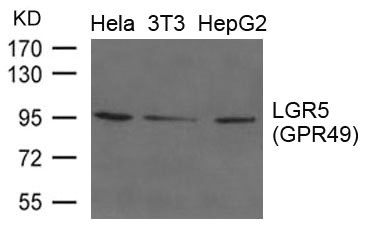
The antibody against LGR5 was raised in rabbit using the Peptide sequence around aa.490~494(K-I-S-N-Q) derived from Human LGR5(GPR49). as the immunogen. Antibodies were produced by immunizing rabbits with synthetic peptide and KLH conjugates. Antibodies were purified by affinity-chromatography using epitope-specific peptide. This antibody has been validated on ELISA, WB.

ADC-43094A

The antibody against LGR5 was raised in rabbit using the Peptide sequence around aa.490~494(K-I-S-N-Q) derived from Human LGR5(GPR49). as the immunogen. Antibodies were produced by immunizing rabbits with synthetic peptide and KLH conjugates. Antibodies were purified by affinity-chromatography using epitope-specific peptide. This antibody has been validated on ELISA, WB.

$297.00

Number
Order Exclusive Products Now

Request a Quote
High Purity LevelsPrecision and ReliabilityCustomization Options

Specifications


Cat.No ADC-43094A ClonalityPolyclonal
Host SpeciesRabbitTarget NameLGR5
FormLiquidSpecies ReactivityHuman, Mouse
Storage BufferPH 7.4, 0.02% sodium azide and 50% glycerol., 150mM NaCl, Supplied at 1.0mg/mL in phosphate buffered saline (without Mg2+ and Ca2+)Purification MethodAntibodies were produced by immunizing rabbits with synthetic peptide and KLH conjugates. Antibodies were purified by affinity-chromatography using epitope-specific peptide.
ApplicationELISA, WBStorageUpon receipt

Immunogen Information


Immunogen DescriptionPeptide sequence around aa.490~494(K-I-S-N-Q) derived from Human LGR5(GPR49).Target SpeciesHuman
Immunogen SequenceComplete sequences for the immunogen, target protein, and peptides are available upon request.Uniprot IDO75473
Background Information
  • Uniprot Id

    O75473

  • Target Species

    Human

  • Target Name

    LGR5

  • Target Full Name

    Leucine-rich repeat-containing G-protein coupled receptor 5

  • Target Function

    Receptor for R-spondins that potentiates the canonical Wnt signaling pathway and acts as a stem cell marker of the intestinal epithelium and the hair follicle. Upon binding to R-spondins (RSPO1, RSPO2, RSPO3 or RSPO4), associates with phosphorylated LRP6 and frizzled receptors that are activated by extracellular Wnt receptors, triggering the canonical Wnt signaling pathway to increase expression of target genes. In contrast to classical G-protein coupled receptors, does not activate heterotrimeric G-proteins to transduce the signal. Involved in the development and/or maintenance of the adult intestinal stem cells during postembryonic development.

  • Target Subcellular Location

    Cell membrane; Multi-pass membrane protein. Golgi apparatus, trans-Golgi network membrane; Multi-pass membrane protein.

  • Target Protein Families

    G-protein coupled receptor 1 family

  • Target Tissue Specificity

    Expressed in skeletal muscle, placenta, spinal cord, and various region of brain. Expressed at the base of crypts in colonic and small mucosa stem cells. In premalignant cancer expression is not restricted to the cript base. Overexpressed in cancers of th

  • Target Research Area

    Others

  • Target Synonyms

    FEX; G protein coupled receptor 49; G protein coupled receptor 67; g protein-coupled receptor fex; G-protein coupled receptor 49; G-protein coupled receptor 67; G-protein coupled receptor HG38; GPCR GPR49; GPR 49; GPR 67; GPR49; GPR67; GRP 49; GRP49; HG 38; HG38; Leucine rich repeat containing G protein coupled receptor 5 ; Leucine-rich repeat-containing G-protein coupled receptor 5; LGR 5; LGR5; LGR5_HUMAN; MGC117008; Orphan G protein coupled receptor HG38

  • Target Background

    The protein encoded by this gene is a leucine-rich repeat-containing receptor (LGR) and member of the G protein-coupled, 7-transmembrane receptor (GPCR) superfamily. The encoded protein is a receptor for R-spondins and is involved in the canonical Wnt signaling pathway. This protein plays a role in the formation and maintenance of adult intestinal stem cells during postembryonic development. Several transcript variants encoding different isoforms have been found for this gene.

Inquire Rabbit anti-Human LGR5 Polyclonal Antibody Now


AbTriva respects your privacy and protects your personal data in accordance with AbTriva. For more information, please see our data protection statement. *

Notification