• Contact info@abtriva.com for inquiries and orders.
  • Chinese (Simplified)

  • English

  • German

  • Korean

  • Spanish

United States (English / $ USD)

Rabbit anti-Human LILRA2 Polyclonal Antibody

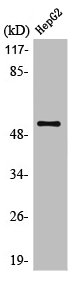
The antibody against LILRA2 was raised in rabbit using the Synthesized peptide derived from the Internal region of Human LIR-7. as the immunogen. This antibody exists as a non-conjugated isotype IgG. The antibody was affinity-purified from rabbit antiserum by affinity-chromatography using epitope-specific immunogen. This antibody has been validated on WB, IF, ELISA.

ADC-38315A

The antibody against LILRA2 was raised in rabbit using the Synthesized peptide derived from the Internal region of Human LIR-7. as the immunogen. This antibody exists as a non-conjugated isotype IgG. The antibody was affinity-purified from rabbit antiserum by affinity-chromatography using epitope-specific immunogen. This antibody has been validated on WB, IF, ELISA.

$167.00

Number
Order Exclusive Products Now

Request a Quote
High Purity LevelsPrecision and ReliabilityCustomization Options

Specifications


Cat.No ADC-38315A ClonalityPolyclonal
Host SpeciesRabbitTarget NameLILRA2
FormLiquidSpecies ReactivityHuman
IsotypeIgGStorage Buffer0.5% BSA and 0.02% sodium azide., Liquid in PBS containing 50% glycerol
Purification MethodThe antibody was affinity-purified from rabbit antiserum by affinity-chromatography using epitope-specific immunogen.ConjugateNon-conjugated
ApplicationELISA, IF, WBStorageUpon receipt

Immunogen Information


Immunogen DescriptionSynthesized peptide derived from the Internal region of Human LIR-7.Target SpeciesHuman
Immunogen SequenceComplete sequences for the immunogen, target protein, and peptides are available upon request.Uniprot IDQ8N149
Background Information
  • Uniprot Id

    Q8N149

  • Target Species

    Human

  • Target Name

    LILRA2

  • Target Full Name

    Leukocyte immunoglobulin-like receptor subfamily A member 2

  • Target Function

    Part of the innate immune responses against microbial infection. Specifically recognizes a set of N-terminally truncated immunoglobulins that are produced via cleavage by proteases from a range of pathogenic bacteria and fungi, including L.pneumophila, M.hyorhinis, S.pneumoniae, S.aureus and C.albicans. Recognizes epitopes that are in part in the variable region of the immunoglobulin light chains, but requires also the constant region for signaling. Binds to a subset of cleaved IgM, IgG3 and IgG4 molecules, but does not bind cleaved IgA1. Binding of N-terminally truncated immunoglobulins mediates activation of neutrophils. In monocytes, activation leads to the release of CSF2, CF3, IL6, CXCL8 and CCL3 and down-regulates responses to bacterial lipopolysaccharide (LPS), possibly via down-regulation of TLR4 expression and reduced signaling via TLR4. In eosinophils, activation by ligand binding leads to the release of RNASE2, IL4 and leukotriene C4. Does not bind class I MHC antigens.

  • Target Subcellular Location

    Cell membrane; Single-pass type I membrane protein.; [Isoform 4]: Secreted.

  • Target Tissue Specificity

    Detected on the surface of all peripheral blood monocytes, neutrophils, basophils and eosinophils (at protein level). Expression levels are very low or not detectable on monocytes, T-cells, B-cells, dendritic cells and natural killer (NK) cells.

  • Target Synonyms

    LILRA2; ILT1; LIR7; Leukocyte immunoglobulin-like receptor subfamily A member 2; CD85 antigen-like family member H; Immunoglobulin-like transcript 1; ILT-1; Leukocyte immunoglobulin-like receptor 7; LIR-7; CD antigen CD85h

  • Target Background

    This gene encodes a member of a family of immunoreceptors that are expressed predominantly on monocytes and B cells, and at lower levels on dendritic cells and natural killer cells. The encoded protein is an activating receptor that inhibits dendritic cell differentiation and antigen presentation and suppresses innate immune response. Alternatively spliced transcript variants encoding different isoforms have been found. This gene is located in a cluster of related genes on chromosome 19 and there is a pseudogene for this gene on chromosome 3.

Inquire Rabbit anti-Human LILRA2 Polyclonal Antibody Now


AbTriva respects your privacy and protects your personal data in accordance with AbTriva. For more information, please see our data protection statement. *

Notification