-
Chinese (Simplified)
-
English
-
German
-
Korean
-
Spanish
Chinese (Simplified)
English
German
Korean
Spanish
Sign up for an account to enjoy easy online shopping and instant order tracking.
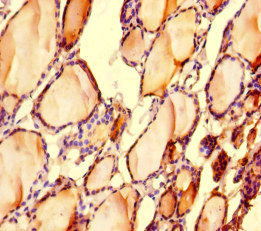
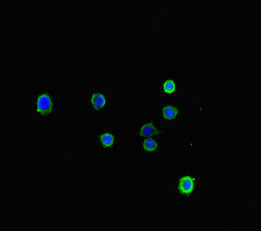
The antibody against LONP1 was raised in rabbit using the Recombinant Human Lon protease homolog, mitochondrial protein (614-959AA) as the immunogen. This antibody exists as a non-conjugated isotype IgG, purified by protein G with a purity greater than 95%. This antibody has been validated on ELISA, IHC, IF.
$299.00
| Cat.No | ADC-15910A | Clonality | Polyclonal |
|---|---|---|---|
| Host Species | Rabbit | Target Name | LONP1 |
| Target Synonyms | hLON antibody; hLON ATP dependent protease antibody; LON antibody; lon peptidase 1 | Form | Liquid |
| Species Reactivity | Human | Isotype | IgG |
| Storage Buffer | 0.01M PBS, 0.03% Proclin 300; Constituents: 50% Glycerol, PH 7.4 | Purification Method | >95%, Protein G purified |
| Conjugate | Non-conjugated | Application | ELISA, IF, IHC |
| Storage | Upon receipt |
| Immunogen Description | Recombinant Human Lon protease homolog, mitochondrial protein (614-959AA) | Target Species | Human |
|---|---|---|---|
| Immunogen Sequence | Complete sequences for the immunogen, target protein, and peptides are available upon request. | Uniprot ID | P36776 |
Uniprot Id
P36776
Target Species
Human
Target Name
LONP1
Target Full Name
Lon protease homolog, mitochondrial
Target Function
ATP-dependent serine protease that mediates the selective degradation of misfolded, unassembled or oxidatively damaged polypeptides as well as certain short-lived regulatory proteins in the mitochondrial matrix. May also have a chaperone function in the assembly of inner membrane protein complexes. Participates in the regulation of mitochondrial gene expression and in the maintenance of the integrity of the mitochondrial genome. Binds to mitochondrial promoters and RNA in a single-stranded, site-specific, and strand-specific manner. May regulate mitochondrial DNA replication and/or gene expression using site-specific, single-stranded DNA binding to target the degradation of regulatory proteins binding to adjacent sites in mitochondrial promoters. Endogenous substrates include mitochondrial steroidogenic acute regulatory (StAR) protein, helicase Twinkle (TWNK) and the large ribosomal subunit protein bL32m. bL32m is protected from degradation by LONP1 when it is bound to a nucleic acid (RNA), but TWNK is not.
Target Involvement
CODAS syndrome (CODASS)
Target Subcellular Location
Mitochondrion matrix.
Target Protein Families
Peptidase S16 family
Target Tissue Specificity
Duodenum, heart, lung and liver, but not thymus.
Target Research Area
Cancer
Target Synonyms
hLON; hLON ATP dependent protease; LON; lon peptidase 1, mitochondrial; LON protease; Lon protease homolog; Lon protease like protein; Lon protease-like protein; LONHs; LONM_HUMAN; LONP; Lonp1; MGC1498; mitochondrial; Mitochondrial ATP dependent protease Lon; Mitochondrial ATP-dependent protease Lon; Mitochondrial lon peptidase 1; PIM1; Protease serine 15; PRSS15; Serine protease 15
Target Background
This gene encodes a mitochondrial matrix protein that belongs to the Lon family of ATP-dependent proteases. This protein mediates the selective degradation of misfolded, unassembled or oxidatively damaged polypeptides in the mitochondrial matrix. It may also have a chaperone function in the assembly of inner membrane protein complexes, and participate in the regulation of mitochondrial gene expression and maintenance of the integrity of the mitochondrial genome. Decreased expression of this gene has been noted in a patient with hereditary spastic paraplegia (PMID:18378094). Alternatively spliced transcript variants have been found for this gene.
Notification