• Contact info@abtriva.com for inquiries and orders.
  • Chinese (Simplified)

  • English

  • German

  • Korean

  • Spanish

United States (English / $ USD)

Rabbit anti-Human LOXL3 Polyclonal Antibody

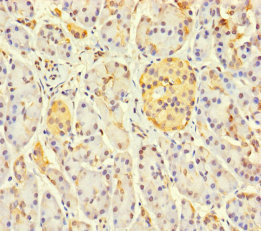
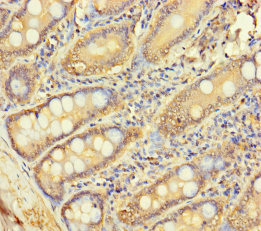
The antibody against LOXL3 was raised in rabbit using the Recombinant Human Lysyl oxidase homolog 3 protein (401-608AA) as the immunogen. This antibody exists as a non-conjugated isotype IgG, purified by protein G with a purity greater than 95%. This antibody has been validated on ELISA, IHC.

ADC-21918A

The antibody against LOXL3 was raised in rabbit using the Recombinant Human Lysyl oxidase homolog 3 protein (401-608AA) as the immunogen. This antibody exists as a non-conjugated isotype IgG, purified by protein G with a purity greater than 95%. This antibody has been validated on ELISA, IHC.

$299.00

Number
Order Exclusive Products Now

Request a Quote
High Purity LevelsPrecision and ReliabilityCustomization Options

Specifications


Cat.No ADC-21918A ClonalityPolyclonal
Host SpeciesRabbitTarget NameLOXL3
Target SynonymsLOXL antibody; Loxl3 antibody; LOXL3_HUMAN antibody; Lysyl oxidase homolog 3 antibody; Lysyl oxidase like 3 antibody; Lysyl oxidase-like protein 3 antibodyFormLiquid
Species ReactivityHumanIsotypeIgG
Storage Buffer0.01M PBS, 0.03% Proclin 300; Constituents: 50% Glycerol, PH 7.4Purification Method>95%, Protein G purified
ConjugateNon-conjugatedApplicationELISA, IHC
StorageUpon receipt

Immunogen Information


Immunogen DescriptionRecombinant Human Lysyl oxidase homolog 3 protein (401-608AA)Target SpeciesHuman
Immunogen SequenceComplete sequences for the immunogen, target protein, and peptides are available upon request.Uniprot IDP58215
Background Information
  • Uniprot Id

    P58215

  • Target Species

    Human

  • Target Name

    LOXL3

  • Target Full Name

    Lysyl oxidase homolog 3

  • Target Function

    Protein-lysine 6-oxidase that mediates the oxidation of peptidyl lysine residues to allysine in target proteins. Catalyzes the post-translational oxidative deamination of peptidyl lysine residues in precursors of elastin and different types of collagens, a prerequisite in the formation of cross-links between collagens and elastin. Required for somite boundary formation by catalyzing oxidation of fibronectin (FN1), enhancing integrin signaling in myofibers and their adhesion to the myotendinous junction (MTJ). Acts as a regulator of inflammatory response by inhibiting differentiation of naive CD4(+) T-cells into T-helper Th17 or regulatory T-cells (Treg): acts by interacting with STAT3 in the nucleus and catalyzing both deacetylation and oxidation of lysine residues on STAT3, leading to disrupt STAT3 dimerization and inhibit STAT3 transcription activity. Oxidation of lysine residues to allysine on STAT3 preferentially takes place on lysine residues that are acetylated. Also able to catalyze deacetylation of lysine residues on STAT3.; Shows protein-lysine 6-oxidase activity toward elastin and different types of collagens, with the highest activity toward collagen type VIII.; Shows protein-lysine 6-oxidase activity toward elastin and different types of collagens, with the highest activity toward collagen type IV.

  • Target Involvement

    Defects in LOXL3 are found in a family with an autosomal recessive form of Stickler syndrome, an inherited disorder that associates ocular signs with more or less complete forms of Pierre Robin sequence and sensorineural deafness (PubMed:25663169). Pierre Robin sequence includes an opening in the roof of the mouth (a cleft palate) (PubMed:25663169). The degree of hearing loss varies among affected individuals and may become more severe over time (PubMed:25663169). Syndrome expressivity is variable (PubMed:25663169). Ocular disorders include non-progressive myopia with associated chorioretinal degeneration (PubMed:25663169). Defects in LOXL3 are found in another family with early-onset high myopia (PubMed:26957899). The disease may be caused by mutations affecting the gene represented in this entry (PubMed:25663169, PubMed:26957899).

  • Target Subcellular Location

    Secreted, extracellular space. Cytoplasm. Nucleus.; [Isoform 1]: Secreted, extracellular space.; [Isoform 2]: Cytoplasm. Secreted, extracellular space.

  • Target Protein Families

    Lysyl oxidase family

  • Target Tissue Specificity

    Isoform 1: Predominantly detected in the heart, placenta, lung, and small intestine. Isoform 2: Highly detected in the kidney, pancreas, spleen, and thymus, and is absent in lung. In eye, present in all layers of corneas as well as in the limbus and conju

  • Target Research Area

    Signal Transduction

  • Target Synonyms

    LOXL; Loxl3; LOXL3_HUMAN; Lysyl oxidase homolog 3; Lysyl oxidase like 3; Lysyl oxidase-like protein 3

Inquire Rabbit anti-Human LOXL3 Polyclonal Antibody Now


AbTriva respects your privacy and protects your personal data in accordance with AbTriva. For more information, please see our data protection statement. *

Notification