-
Chinese (Simplified)
-
English
-
German
-
Korean
-
Spanish

Chinese (Simplified)
English
German
Korean
Spanish
Sign up for an account to enjoy easy online shopping and instant order tracking.
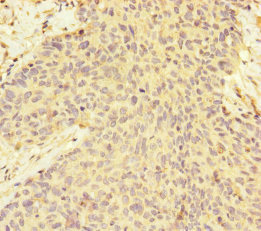
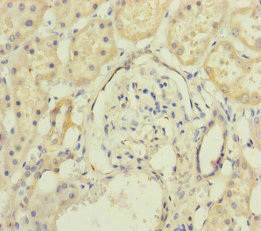
The antibody against MAGOH was raised in rabbit using the Recombinant Human Protein mago nashi homolog protein (1-146AA) as the immunogen. This antibody exists as a non-conjugated isotype IgG, Antigen affinity purified. This antibody has been validated on ELISA, WB, IHC, IP.
$299.00
| Cat.No | ADC-16193A | Clonality | Polyclonal |
|---|---|---|---|
| Host Species | Rabbit | Target Name | MAGOH |
| Target Synonyms | Mago nashi homolog proliferation associated (Drosophila) antibody; Mago nashi protein homolog antibody; magoh antibody; MAGOHA antibody; MGN_HUMAN antibody; Protein mago nashi homolog antibody | Form | Liquid |
| Species Reactivity | Human, Mouse | Isotype | IgG |
| Storage Buffer | 50% Glycerol, PBS with 0.02% sodium azide, pH7.3. | Purification Method | Antigen affinity purified |
| Conjugate | Non-conjugated | Application | ELISA, IHC, WB, IP |
| Storage | Upon receipt |
| Immunogen Description | Recombinant Human Protein mago nashi homolog protein (1-146AA) | Target Species | Human |
|---|---|---|---|
| Immunogen Sequence | Complete sequences for the immunogen, target protein, and peptides are available upon request. | Uniprot ID | P61326 |
Uniprot Id
P61326
Target Species
Human
Target Name
MAGOH
Target Full Name
Protein mago nashi homolog
Target Function
Required for pre-mRNA splicing as component of the spliceosome. Plays a redundant role with MAGOHB as core component of the exon junction complex (EJC) and in the nonsense-mediated decay (NMD) pathway. The EJC is a dynamic structure consisting of core proteins and several peripheral nuclear and cytoplasmic associated factors that join the complex only transiently either during EJC assembly or during subsequent mRNA metabolism. The EJC marks the position of the exon-exon junction in the mature mRNA for the gene expression machinery and the core components remain bound to spliced mRNAs throughout all stages of mRNA metabolism thereby influencing downstream processes including nuclear mRNA export, subcellular mRNA localization, translation efficiency and nonsense-mediated mRNA decay (NMD). The MAGOH-RBM8A heterodimer inhibits the ATPase activity of EIF4A3, thereby trapping the ATP-bound EJC core onto spliced mRNA in a stable conformation. The MAGOH-RBM8A heterodimer interacts with the EJC key regulator PYM1 leading to EJC disassembly in the cytoplasm and translation enhancement of EJC-bearing spliced mRNAs by recruiting them to the ribosomal 48S preinitiation complex. Involved in the splicing modulation of BCL2L1/Bcl-X (and probably other apoptotic genes); specifically inhibits formation of proapoptotic isoforms such as Bcl-X(S); the function is different from the established EJC assembly.
Target Subcellular Location
Nucleus. Nucleus speckle. Cytoplasm.
Target Protein Families
Mago nashi family
Target Tissue Specificity
Ubiquitous.
Target Research Area
Epigenetics and Nuclear Signaling
Target Synonyms
Mago nashi homolog proliferation associated (Drosophila); Mago nashi protein homolog; magoh; MAGOHA; MGN_HUMAN; Protein mago nashi homolog
Target Background
Drosophila that have mutations in their mago nashi (grandchildless) gene produce progeny with defects in germplasm assembly and germline development. This gene encodes the mammalian mago nashi homolog. In mammals, mRNA expression is not limited to the germ plasm, but is expressed ubiquitously in adult tissues and can be induced by serum stimulation of quiescent fibroblasts.
Notification