• Contact info@abtriva.com for inquiries and orders.
  • Chinese (Simplified)

  • English

  • German

  • Korean

  • Spanish

United States (English / $ USD)

Rabbit anti-Human MCM4 Polyclonal Antibody

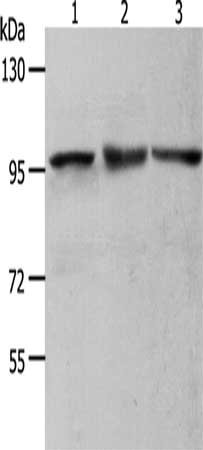
The antibody against MCM4 was raised in rabbit using the Synthetic peptide of Human MCM4 as the immunogen. This antibody exists as a non-conjugated isotype IgG, Antigen affinity purified. This antibody has been validated on ELISA, WB, IHC.

ADC-28169A

The antibody against MCM4 was raised in rabbit using the Synthetic peptide of Human MCM4 as the immunogen. This antibody exists as a non-conjugated isotype IgG, Antigen affinity purified. This antibody has been validated on ELISA, WB, IHC.

$299.00

Number
Order Exclusive Products Now

Request a Quote
High Purity LevelsPrecision and ReliabilityCustomization Options

Specifications


Cat.No ADC-28169A ClonalityPolyclonal
Host SpeciesRabbitTarget NameMCM4
Target Synonyms19G antibody; AI325074 antibody; AU045576 antibody; CDC 21 antibody; CDC 54 antibody; CDC21 antibody; CDC21 homolog antibody; CDC21, 4 antibody; mKIAA4003 antibody; NKCD antibody; NKGCD antibody; P1 CDC21 antibody; P1-CDC21 antibody; P1CDC21 antibody, homolog of, homolog of antibody; CDC54 antibody; Cell division cycle 21, S. cerevisiae, S. pombeFormLiquid
Species ReactivityHuman, MouseIsotypeIgG
Storage Buffer0.05% NaN3, 40% Glycerol., pH7.4 PBSPurification MethodAntigen affinity purified
ConjugateNon-conjugatedApplicationELISA, IHC, WB
StorageUpon receipt

Immunogen Information


Immunogen DescriptionSynthetic peptide of Human MCM4Target SpeciesHuman
Immunogen SequenceComplete sequences for the immunogen, target protein, and peptides are available upon request.Uniprot IDP33991
Background Information
  • Uniprot Id

    P33991

  • Target Species

    Human

  • Target Name

    MCM4

  • Target Full Name

    DNA replication licensing factor MCM4

  • Target Function

    Acts as component of the MCM2-7 complex (MCM complex) which is the putative replicative helicase essential for 'once per cell cycle' DNA replication initiation and elongation in eukaryotic cells. The active ATPase sites in the MCM2-7 ring are formed through the interaction surfaces of two neighboring subunits such that a critical structure of a conserved arginine finger motif is provided in trans relative to the ATP-binding site of the Walker A box of the adjacent subunit. The six ATPase active sites, however, are likely to contribute differentially to the complex helicase activity.

  • Target Involvement

    Natural killer cell and glucocorticoid deficiency with DNA repair defect (NKGCD)

  • Target Subcellular Location

    Nucleus. Chromosome.

  • Target Protein Families

    MCM family

  • Target Synonyms

    19G; AI325074; AU045576; CDC 21; CDC 54; CDC21; CDC21 homolog; CDC21, S. pombe, homolog of; CDC54; Cell division cycle 21, S. pombe, homolog of; DNA replication licensing factor MCM 4; DNA replication licensing factor MCM4; hCdc 21; hCdc21; Homolog of S. pombe cell devision cycle 21; KIAA4003; mcdc21; MCM 4; MCM 4 minichromosome maintenance deficient 4; mcm4; MCM4 minichromosome maintenance deficient 4; MCM4 minichromosome maintenance deficient 4, mitotin (S. cerevisiae); MCM4_HUMAN; Mcmd4; MGC33310; Minichromosome maintenance 4; Minichromosome maintenance complex component 4; Minichromosome maintenance deficient (S. cerevisiae) 4; Minichromosome maintenance deficient 4; Minichromosome maintenance deficient 4 homolog (S. cerevisiae); Minichromosome maintenance, S. cerevisiae, homolog of, 4; mKIAA4003; NKCD; NKGCD; P1 CDC21; P1-CDC21; P1CDC21

  • Target Background

    The protein encoded by this gene is one of the highly conserved mini-chromosome maintenance proteins (MCM) that are essential for the initiation of eukaryotic genome replication. The hexameric protein complex formed by MCM proteins is a key component of the pre-replication complex (pre_RC) and may be involved in the formation of replication forks and in the recruitment of other DNA replication related proteins. The MCM complex consisting of this protein and MCM2, 6 and 7 proteins possesses DNA helicase activity, and may act as a DNA unwinding enzyme. The phosphorylation of this protein by CDC2 kinase reduces the DNA helicase activity and chromatin binding of the MCM complex. This gene is mapped to a region on the chromosome 8 head-to-head next to the PRKDC/DNA-PK, a DNA-activated protein kinase involved in the repair of DNA double-strand breaks. Alternatively spliced transcript variants encoding the same protein have been reported.

Inquire Rabbit anti-Human MCM4 Polyclonal Antibody Now


AbTriva respects your privacy and protects your personal data in accordance with AbTriva. For more information, please see our data protection statement. *

Notification