• Contact info@abtriva.com for inquiries and orders.
  • Chinese (Simplified)

  • English

  • German

  • Korean

  • Spanish

United States (English / $ USD)

Rabbit anti-Human MED1 Polyclonal Antibody

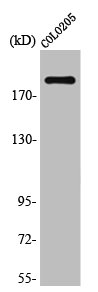
The antibody against MED1 was raised in rabbit using the Synthesized peptide derived from Human TRAP220 around the non-phosphorylation site of T1457. as the immunogen. This antibody exists as a non-conjugated isotype IgG. The antibody was affinity-purified from rabbit antiserum by affinity-chromatography using epitope-specific immunogen. This antibody has been validated on WB, IF, ELISA.

ADC-37431A

The antibody against MED1 was raised in rabbit using the Synthesized peptide derived from Human TRAP220 around the non-phosphorylation site of T1457. as the immunogen. This antibody exists as a non-conjugated isotype IgG. The antibody was affinity-purified from rabbit antiserum by affinity-chromatography using epitope-specific immunogen. This antibody has been validated on WB, IF, ELISA.

$167.00

Number
Order Exclusive Products Now

Request a Quote
High Purity LevelsPrecision and ReliabilityCustomization Options

Specifications


Cat.No ADC-37431A ClonalityPolyclonal
Host SpeciesRabbitTarget NameMED1
FormLiquidSpecies ReactivityHuman, Mouse
IsotypeIgGStorage Buffer0.5% BSA and 0.02% sodium azide., Liquid in PBS containing 50% glycerol
Purification MethodThe antibody was affinity-purified from rabbit antiserum by affinity-chromatography using epitope-specific immunogen.ConjugateNon-conjugated
ApplicationELISA, IF, WBStorageUpon receipt

Immunogen Information


Immunogen DescriptionSynthesized peptide derived from Human TRAP220 around the non-phosphorylation site of T1457.Target SpeciesHuman
Immunogen SequenceComplete sequences for the immunogen, target protein, and peptides are available upon request.Uniprot IDQ15648
Background Information
  • Uniprot Id

    Q15648

  • Target Species

    Human

  • Target Name

    MED1

  • Target Full Name

    Mediator of RNA polymerase II transcription subunit 1

  • Target Function

    Component of the Mediator complex, a coactivator involved in the regulated transcription of nearly all RNA polymerase II-dependent genes. Mediator functions as a bridge to convey information from gene-specific regulatory proteins to the basal RNA polymerase II transcription machinery. Mediator is recruited to promoters by direct interactions with regulatory proteins and serves as a scaffold for the assembly of a functional preinitiation complex with RNA polymerase II and the general transcription factors. Acts as a coactivator for GATA1-mediated transcriptional activation during erythroid differentiation of K562 erythroleukemia cells.

  • Target Subcellular Location

    Nucleus. Note=A subset of the protein may enter the nucleolus subsequent to phosphorylation by MAPK1 or MAPK3.

  • Target Protein Families

    Mediator complex subunit 1 family

  • Target Tissue Specificity

    Ubiquitously expressed.

  • Target Research Area

    Epigenetics and Nuclear Signaling

  • Target Synonyms

    Activator-recruited cofactor 205 kDa component; ARC205; CRSP1; CRSP200; DRIP205; DRIP230; MED1; MED1_HUMAN; Mediator complex subunit 1; Mediator of RNA polymerase II transcription subunit 1; p53 regulatory protein RB18A; PBP; Peroxisome proliferator-activated receptor-binding protein; PPAR binding protein ; PPAR-binding protein; PPARBP ; PPARGBP; RB18A; Thyroid hormone receptor-associated protein complex 220 kDa component; Thyroid receptor-interacting protein 2; TR-interacting protein 2; Trap220; TRIP-2; TRIP2; Vitamin D receptor-interacting protein complex component DRIP205

  • Target Background

    The activation of gene transcription is a multistep process that is triggered by factors that recognize transcriptional enhancer sites in DNA. These factors work with co-activators to direct transcriptional initiation by the RNA polymerase II apparatus. The protein encoded by this gene is a subunit of the CRSP (cofactor required for SP1 activation) complex, which, along with TFIID, is required for efficient activation by SP1. This protein is also a component of other multisubunit complexes e.g. thyroid hormone receptor-(TR-) associated proteins which interact with TR and facilitate TR function on DNA templates in conjunction with initiation factors and cofactors. It also regulates p53-dependent apoptosis and it is essential for adipogenesis. This protein is known to have the ability to self-oligomerize.

Inquire Rabbit anti-Human MED1 Polyclonal Antibody Now


AbTriva respects your privacy and protects your personal data in accordance with AbTriva. For more information, please see our data protection statement. *

Notification