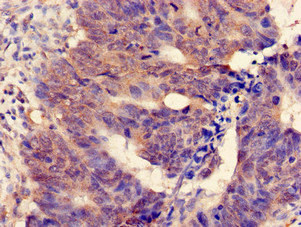
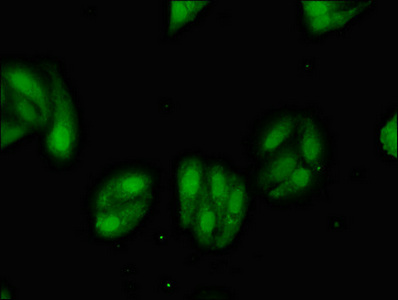
-
Chinese (Simplified)
-
English
-
German
-
Korean
-
Spanish
Chinese (Simplified)
English
German
Korean
Spanish
Sign up for an account to enjoy easy online shopping and instant order tracking.
The antibody against MGST2 was raised in rabbit using the Recombinant Human Microsomal glutathione S-transferase 2 protein (27-57AA) as the immunogen. This antibody exists as a non-conjugated isotype IgG, purified by protein G with a purity greater than 95%. This antibody has been validated on ELISA, IHC, IF.
$299.00
| Cat.No | ADC-11008A | Clonality | Polyclonal |
|---|---|---|---|
| Host Species | Rabbit | Target Name | MGST2 |
| Target Synonyms | MGST2; GST2; Microsomal glutathione S-transferase 2; Microsomal GST-2; Glutathione peroxidase MGST2; Leukotriene C4 synthase MGST2; Microsomal glutathione S-transferase II; Microsomal GST-II | Form | Liquid |
| Species Reactivity | Human | Isotype | IgG |
| Storage Buffer | 0.01M PBS, 0.03% Proclin 300; Constituents: 50% Glycerol, PH 7.4 | Purification Method | >95%, Protein G purified |
| Conjugate | Non-conjugated | Application | ELISA, IF, IHC |
| Storage | Upon receipt |
| Immunogen Description | Recombinant Human Microsomal glutathione S-transferase 2 protein (27-57AA) | Target Species | Human |
|---|---|---|---|
| Immunogen Sequence | Complete sequences for the immunogen, target protein, and peptides are available upon request. | Uniprot ID | Q99735 |
Uniprot Id
Q99735
Target Species
Human
Target Name
MGST2
Target Full Name
Microsomal glutathione S-transferase 2
Target Function
Catalyzes several different glutathione-dependent reactions. Catalyzes the glutathione-dependent reduction of lipid hydroperoxides, such as 5-HPETE. Has glutathione transferase activity, toward xenobiotic electrophiles, such as 1-chloro-2, 4-dinitrobenzene (CDNB). Catalyzes also the conjugation of leukotriene A4 with reduced glutathione to form leukotriene C4 (LTC4). Involved in oxidative DNA damage induced by ER stress and anticancer agents by activating LTC4 biosynthetic machinery in nonimmune cells.
Target Subcellular Location
Endoplasmic reticulum membrane; Multi-pass membrane protein. Microsome membrane; Multi-pass membrane protein.
Target Protein Families
MAPEG family
Target Tissue Specificity
Liver, spleen, skeletal muscle, heart, adrenals, pancreas, prostate, testis, fetal liver, and fetal spleen. Very low expression in lung, brain, placenta and bone marrow. Abundantly expressed in human umbilical vein endothelial cells (at protein level).
Target Synonyms
MGST2; GST2; Microsomal glutathione S-transferase 2; Microsomal GST-2; Glutathione peroxidase MGST2; Leukotriene C4 synthase MGST2; Microsomal glutathione S-transferase II; Microsomal GST-II
Target Background
The MAPEG (Membrane Associated Proteins in Eicosanoid and Glutathione metabolism) family consists of six human proteins, several of which are involved in the production of leukotrienes and prostaglandin E, important mediators of inflammation. This gene encodes a protein which catalyzes the conjugation of leukotriene A4 and reduced glutathione to produce leukotriene C4. Alternatively spliced transcript variants encoding different isoforms have been identified in this gene.
Notification