-
Chinese (Simplified)
-
English
-
German
-
Korean
-
Spanish

Chinese (Simplified)
English
German
Korean
Spanish
Sign up for an account to enjoy easy online shopping and instant order tracking.
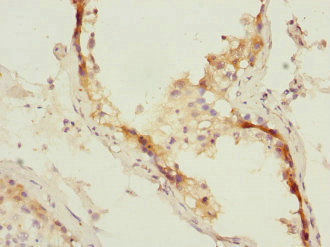
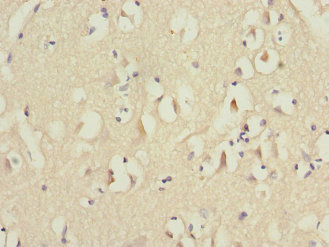
The antibody against MID1 was raised in rabbit using the Recombinant Human E3 ubiquitin-protein ligase Midline-1 protein (478-667AA) as the immunogen. This antibody exists as a non-conjugated isotype IgG, Antigen affinity purified. This antibody has been validated on ELISA, IHC.
$299.00
| Cat.No | ADC-17282A | Clonality | Polyclonal |
|---|---|---|---|
| Host Species | Rabbit | Target Name | MID1 |
| Target Synonyms | homolog of antibody; Zinc finger X and Y antibody; ZNFXY antibody, mouse | Form | Liquid |
| Species Reactivity | Human | Isotype | IgG |
| Storage Buffer | 50% Glycerol, PBS with 0.02% sodium azide, pH7.3. | Purification Method | Antigen affinity purified |
| Conjugate | Non-conjugated | Application | ELISA, IHC |
| Storage | Upon receipt |
| Immunogen Description | Recombinant Human E3 ubiquitin-protein ligase Midline-1 protein (478-667AA) | Target Species | Human |
|---|---|---|---|
| Immunogen Sequence | Complete sequences for the immunogen, target protein, and peptides are available upon request. | Uniprot ID | O15344 |
Uniprot Id
O15344
Target Species
Human
Target Name
MID1
Target Full Name
E3 ubiquitin-protein ligase Midline-1
Target Function
Has E3 ubiquitin ligase activity towards IGBP1, promoting its monoubiquitination, which results in deprotection of the catalytic subunit of protein phosphatase PP2A, and its subsequent degradation by polyubiquitination.
Target Involvement
Opitz GBBB syndrome 1 (GBBB1)
Target Subcellular Location
Cytoplasm. Cytoplasm, cytoskeleton. Cytoplasm, cytoskeleton, spindle. Note=Microtubule-associated. It is associated with microtubules throughout the cell cycle, co-localizing with cytoplasmic fibers in interphase and with the mitotic spindle and midbodies during mitosis and cytokinesis.
Target Protein Families
TRIM/RBCC family
Target Tissue Specificity
In the fetus, highest expression found in kidney, followed by brain and lung. Expressed at low levels in fetal liver. In the adult, most abundant in heart, placenta and brain.
Target Synonyms
BBBG 1; BBBG1; E3 ubiquitin-protein ligase Midline-1; Finger on X and Y mouse homolog of; FXY; GBBB 1; GBBB1; MID 1; Mid1; Midin; Midline 1 (Opitz/BBB syndrome); Midline 1; Midline 1 ring finger; Midline 1 RING finger protein; Midline-1; Midline1; OGS 1; OGS1; OS; OSX; Putative transcription factor XPRF; RING finger protein 59; RING finger protein Midline-1; RNF 59; RNF59; TRI18; TRI18_HUMAN; TRIM 18; TRIM18; Tripartite motif containing protein 18; Tripartite motif protein TRIM18; Tripartite motif-containing protein 18; XPRF; zinc finger on X and Y, mouse, homolog of; Zinc finger X and Y; ZNFXY
Target Background
The protein encoded by this gene is a member of the tripartite motif (TRIM) family, also known as the 'RING-B box-coiled coil' (RBCC) subgroup of RING finger proteins. The TRIM motif includes three zinc-binding domains, a RING, a B-box type 1 and a B-box type 2, and a coiled-coil region. This protein forms homodimers which associate with microtubules in the cytoplasm. The protein is likely involved in the formation of multiprotein structures acting as anchor points to microtubules. Mutations in this gene have been associated with the X-linked form of Opitz syndrome, which is characterized by midline abnormalities such as cleft lip, laryngeal cleft, heart defects, hypospadias, and agenesis of the corpus callosum. This gene was also the first example of a gene subject to X inactivation in human while escaping it in mouse. Alternative promoter use, alternative splicing and alternative polyadenylation result in multiple transcript variants that have different tissue specificities.
Notification