-
Chinese (Simplified)
-
English
-
German
-
Korean
-
Spanish
Chinese (Simplified)
English
German
Korean
Spanish
Sign up for an account to enjoy easy online shopping and instant order tracking.
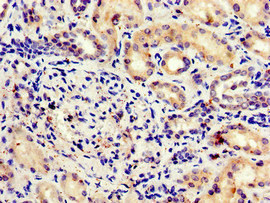
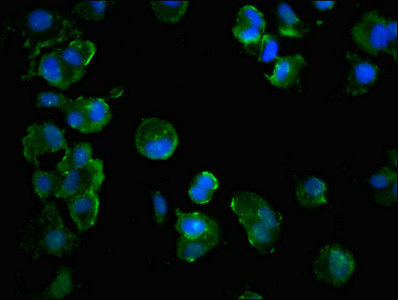
The antibody against MLST8 was raised in rabbit using the Recombinant Human Target of rapamycin complex subunit LST8 protein (159-220AA) as the immunogen. This antibody exists as a non-conjugated isotype IgG, purified by protein G with a purity greater than 95%. This antibody has been validated on ELISA, IHC, IF.
$299.00
| Cat.No | ADC-08717A | Clonality | Polyclonal |
|---|---|---|---|
| Host Species | Rabbit | Target Name | MLST8 |
| Form | Liquid | Species Reactivity | Human |
| Isotype | IgG | Storage Buffer | 0.01M PBS, 0.03% Proclin 300; Constituents: 50% Glycerol, PH 7.4 |
| Purification Method | >95%, Protein G purified | Conjugate | Non-conjugated |
| Application | ELISA, IF, IHC | Storage | Upon receipt |
| Immunogen Description | Recombinant Human Target of rapamycin complex subunit LST8 protein (159-220AA) | Target Species | Human |
|---|---|---|---|
| Immunogen Sequence | Complete sequences for the immunogen, target protein, and peptides are available upon request. | Uniprot ID | Q9BVC4 |
Uniprot Id
Q9BVC4
Target Species
Human
Target Name
MLST8
Target Full Name
Target of rapamycin complex subunit LST8
Target Function
Subunit of both mTORC1 and mTORC2, which regulates cell growth and survival in response to nutrient and hormonal signals. mTORC1 is activated in response to growth factors or amino acids. Growth factor-stimulated mTORC1 activation involves a AKT1-mediated phosphorylation of TSC1-TSC2, which leads to the activation of the RHEB GTPase that potently activates the protein kinase activity of mTORC1. Amino acid-signaling to mTORC1 requires its relocalization to the lysosomes mediated by the Ragulator complex and the Rag GTPases. Activated mTORC1 up-regulates protein synthesis by phosphorylating key regulators of mRNA translation and ribosome synthesis. mTORC1 phosphorylates EIF4EBP1 and releases it from inhibiting the elongation initiation factor 4E (eiF4E). mTORC1 phosphorylates and activates S6K1 at 'Thr-389', which then promotes protein synthesis by phosphorylating PDCD4 and targeting it for degradation. Within mTORC1, LST8 interacts directly with MTOR and enhances its kinase activity. In nutrient-poor conditions, stabilizes the MTOR-RPTOR interaction and favors RPTOR-mediated inhibition of MTOR activity. mTORC2 is also activated by growth factors, but seems to be nutrient-insensitive. mTORC2 seems to function upstream of Rho GTPases to regulate the actin cytoskeleton, probably by activating one or more Rho-type guanine nucleotide exchange factors. mTORC2 promotes the serum-induced formation of stress-fibers or F-actin. mTORC2 plays a critical role in AKT1 'Ser-473' phosphorylation, which may facilitate the phosphorylation of the activation loop of AKT1 on 'Thr-308' by PDK1 which is a prerequisite for full activation. mTORC2 regulates the phosphorylation of SGK1 at 'Ser-422'. mTORC2 also modulates the phosphorylation of PRKCA on 'Ser-657'.
Target Subcellular Location
Cytoplasm.
Target Protein Families
WD repeat LST8 family
Target Tissue Specificity
Broadly expressed, with highest levels in skeletal muscle, heart and kidney.
Target Synonyms
G protein beta subunit like; G protein beta subunit-like; Gable; GbetaL; GBL; GBL protein; LST8; LST8_HUMAN; Mammalian lethal with SEC13 protein 8; MGC111011; mLST8; MTOR associated protein LST8 homolog (S. cerevisiae); POP3; POP3 homolog (S. pombe); Protein GbetaL; Target of rapamycin complex subunit LST8; TORC subunit LST8; WAT1; WAT1 homolog (S. pombe)
Target Background
Enables protein serine/threonine kinase activator activity. Involved in TORC1 signaling; positive regulation of TOR signaling; and regulation of actin cytoskeleton organization. Part of TORC1 complex and TORC2 complex.
Notification