-
Chinese (Simplified)
-
English
-
German
-
Korean
-
Spanish
Chinese (Simplified)
English
German
Korean
Spanish
Sign up for an account to enjoy easy online shopping and instant order tracking.
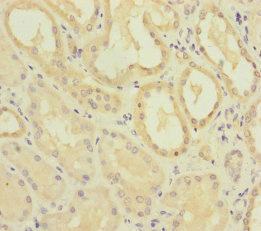
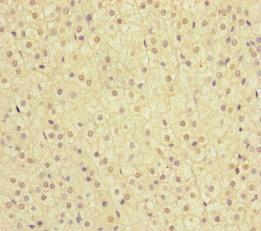
The antibody against MMACHC was raised in rabbit using the Recombinant Human Methylmalonic aciduria and homocystinuria type C protein (63-282AA) as the immunogen. This antibody exists as a non-conjugated isotype IgG, Antigen affinity purified. This antibody has been validated on ELISA, IHC.
$299.00
| Cat.No | ADC-16234A | Clonality | Polyclonal |
|---|---|---|---|
| Host Species | Rabbit | Target Name | MMACHC |
| Form | Liquid | Species Reactivity | Human |
| Isotype | IgG | Storage Buffer | 50% Glycerol, PBS with 0.02% sodium azide, pH7.3. |
| Purification Method | Antigen affinity purified | Conjugate | Non-conjugated |
| Application | ELISA, IHC | Storage | Upon receipt |
| Immunogen Description | Recombinant Human Methylmalonic aciduria and homocystinuria type C protein (63-282AA) | Target Species | Human |
|---|---|---|---|
| Immunogen Sequence | Complete sequences for the immunogen, target protein, and peptides are available upon request. | Uniprot ID | Q9Y4U1 |
Uniprot Id
Q9Y4U1
Target Species
Human
Target Name
MMACHC
Target Full Name
Cyanocobalamin reductase / alkylcobalamin dealkylase
Target Function
Cobalamin (vitamin B12) cytosolic chaperone that catalyzes the reductive decyanation of cyanocob(III)alamin (cyanocobalamin, CNCbl) to yield cob(II)alamin and cyanide, using FAD or FMN as cofactors and NADPH as cosubstrate. Cyanocobalamin constitutes the inactive form of vitamin B12 introduced from the diet, and is converted into the active cofactors methylcobalamin (MeCbl) involved in methionine biosynthesis, and 5'-deoxyadenosylcobalamin (AdoCbl) involved in the TCA cycle. Forms a complex with the lysosomal transporter ABCD4 and its chaperone LMBRD1, to transport cobalamin across the lysosomal membrane into the cytosol. The processing of cobalamin in the cytosol occurs in a multiprotein complex composed of at least MMACHC, MMADHC, MTRR (methionine synthase reductase) and MTR (methionine synthase) which may contribute to shuttle safely and efficiently cobalamin towards MTR in order to produce methionine. Also acts as a glutathione transferase by catalyzing the dealkylation of the alkylcob(III)alamins MeCbl and AdoCbl, using the thiolate of glutathione for nucleophilic displacement to generate cob(I)alamin and the corresponding glutathione thioether. The conversion of incoming MeCbl or AdoCbl into a common intermediate cob(I)alamin is necessary to meet the cellular needs for both cofactors. Cysteine and homocysteine cannot substitute for glutathione in this reaction.
Target Involvement
Methylmalonic aciduria and homocystinuria type cblC (MMAHCC)
Target Subcellular Location
Cytoplasm, cytosol.
Target Protein Families
MMACHC family
Target Tissue Specificity
Widely expressed. Expressed at higher level in fetal liver. Also expressed in spleen, lymph node, thymus and bone marrow. Weakly or not expressed in peripheral blood leukocytes.
Target Synonyms
1810037K07Rik; BOS_3654; cblC; DKFZp564I122; FLJ25671; Methylmalonic aciduria (cobalamin deficiency) cblC type with homocystinuria; Methylmalonic aciduria and homocystinuria type C protein; Methylmalonic aciduria and homocystinuria type C protein homolog; MGC134307; MMAC_HUMAN; MMACHC; OTTHUMP00000009243; RP11 291L19.3; RP23-177C18.3
Target Background
The exact function of the protein encoded by this gene is not known, however, its C-terminal region shows similarity to TonB, a bacterial protein involved in energy transduction for cobalamin (vitamin B12) uptake. Hence, it is postulated that this protein may have a role in the binding and intracellular trafficking of cobalamin. Mutations in this gene are associated with methylmalonic aciduria and homocystinuria type cblC.
Notification