-
Chinese (Simplified)
-
English
-
German
-
Korean
-
Spanish
Chinese (Simplified)
English
German
Korean
Spanish
Sign up for an account to enjoy easy online shopping and instant order tracking.
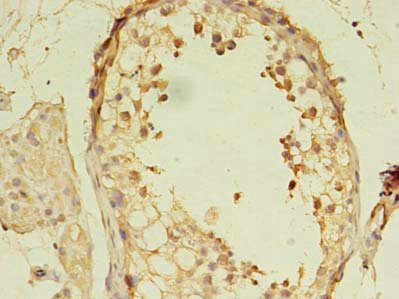
The antibody against MORC2 was raised in rabbit using the Recombinant Human MORC family CW-type zinc finger protein 2 protein (2-300AA) as the immunogen. This antibody exists as a non-conjugated isotype IgG, purified by protein G with a purity greater than 95%. This antibody has been validated on ELISA, WB, IHC.
$299.00
| Cat.No | ADC-24419A | Clonality | Polyclonal |
|---|---|---|---|
| Host Species | Rabbit | Target Name | MORC2 |
| Form | Liquid | Species Reactivity | Human |
| Isotype | IgG | Storage Buffer | 0.01M PBS, 0.03% Proclin 300; Constituents: 50% Glycerol, PH 7.4 |
| Purification Method | >95%, Protein G purified | Conjugate | Non-conjugated |
| Application | ELISA, IHC, WB | Storage | Upon receipt |
| Immunogen Description | Recombinant Human MORC family CW-type zinc finger protein 2 protein (2-300AA) | Target Species | Human |
|---|---|---|---|
| Immunogen Sequence | Complete sequences for the immunogen, target protein, and peptides are available upon request. | Uniprot ID | Q9Y6X9 |
Uniprot Id
Q9Y6X9
Target Species
Human
Target Name
MORC2
Target Full Name
ATPase MORC2
Target Function
Essential for epigenetic silencing by the HUSH (human silencing hub) complex. Recruited by HUSH to target site in heterochromatin, the ATPase activity and homodimerization are critical for HUSH-mediated silencing. Represses germ cell-related genes and L1 retrotransposons in collaboration with SETDB1 and the HUSH complex, the silencing is dependent of repressive epigenetic modifications, such as H3K9me3 mark. Silencing events often occur within introns of transcriptionally active genes, and lead to the down-regulation of host gene expression. During DNA damage response, regulates chromatin remodeling through ATP hydrolysis. Upon DNA damage, is phosphorylated by PAK1, both colocalize to chromatin and induce H2AX expression. ATPase activity is required and dependent of phosphorylation by PAK1 and presence of DNA. Recruits histone deacetylases, such as HDAC4, to promoter regions, causing local histone H3 deacetylation and transcriptional repression of genes such as CA9. Exhibits a cytosolic function in lipogenesis, adipogenic differentiation, and lipid homeostasis by increasing the activity of ACLY, possibly preventing its dephosphorylation.
Target Involvement
Charcot-Marie-Tooth disease 2Z (CMT2Z)
Target Subcellular Location
Nucleus. Cytoplasm, cytosol. Chromosome. Nucleus matrix.
Target Tissue Specificity
Highly expressed in smooth muscle, pancreas and testis.
Target Synonyms
AC004542.C22.1.; CW type with coiled coil domain 1; KIAA0852; MORC family CW type zinc finger 2; MORC family CW-type zinc finger protein 2; MORC2; MORC2_HUMAN; ZCW3; ZCWCC1; Zinc finger; Zinc finger CW type coiled coil domain protein 1; Zinc finger CW type with coiled coil domain 1; Zinc finger CW-type coiled-coil domain protein 1; Zing finger CW type 3
Target Background
This gene encodes a member of the Microrchidia (MORC) protein superfamily. The encoded protein is known to regulate the condensation of heterochromatin in response to DNA damage and play a role in repressing transcription. The protein has been found to regulate the activity of ATP citrate lyase via specific interaction with this enzyme in the cytosol of lipogenic breast cancer cells. The protein also plays a role in lipogenesis and adipocyte differentiation. Alternative splicing results in multiple transcript variants encoding different isoforms.
Notification