-
Chinese (Simplified)
-
English
-
German
-
Korean
-
Spanish
Chinese (Simplified)
English
German
Korean
Spanish
Sign up for an account to enjoy easy online shopping and instant order tracking.
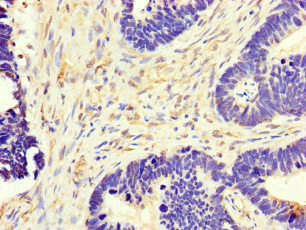
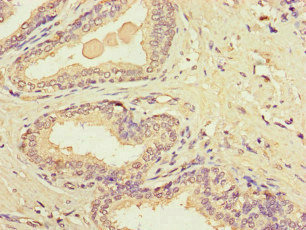
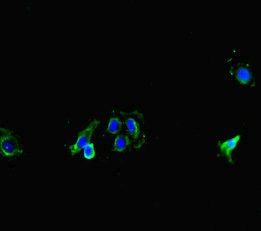
The antibody against MT-CO1 was raised in rabbit using the Recombinant Human Cytochrome c oxidase subunit 1 protein (474-513AA) as the immunogen. This antibody exists as a non-conjugated isotype IgG, purified by protein G with a purity greater than 95%. This antibody has been validated on ELISA, IHC, IF.
$299.00
| Cat.No | ADC-15862A | Clonality | Polyclonal |
|---|---|---|---|
| Host Species | Rabbit | Target Name | MT-CO1 |
| Form | Liquid | Species Reactivity | Human |
| Isotype | IgG | Storage Buffer | 0.01M PBS, 0.03% Proclin 300; Constituents: 50% Glycerol, PH 7.4 |
| Purification Method | >95%, Protein G purified | Conjugate | Non-conjugated |
| Application | ELISA, IF, IHC | Storage | Upon receipt |
| Immunogen Description | Recombinant Human Cytochrome c oxidase subunit 1 protein (474-513AA) | Target Species | Human |
|---|---|---|---|
| Immunogen Sequence | Complete sequences for the immunogen, target protein, and peptides are available upon request. | Uniprot ID | P00395 |
Uniprot Id
P00395
Target Species
Human
Target Name
MT-CO1
Target Full Name
Cytochrome c oxidase subunit 1
Target Function
Component of the cytochrome c oxidase, the last enzyme in the mitochondrial electron transport chain which drives oxidative phosphorylation. The respiratory chain contains 3 multisubunit complexes succinate dehydrogenase (complex II, CII), ubiquinol-cytochrome c oxidoreductase (cytochrome b-c1 complex, complex III, CIII) and cytochrome c oxidase (complex IV, CIV), that cooperate to transfer electrons derived from NADH and succinate to molecular oxygen, creating an electrochemical gradient over the inner membrane that drives transmembrane transport and the ATP synthase. Cytochrome c oxidase is the component of the respiratory chain that catalyzes the reduction of oxygen to water. Electrons originating from reduced cytochrome c in the intermembrane space (IMS) are transferred via the dinuclear copper A center (CU(A)) of subunit 2 and heme A of subunit 1 to the active site in subunit 1, a binuclear center (BNC) formed by heme A3 and copper B (CU(B)). The BNC reduces molecular oxygen to 2 water molecules using 4 electrons from cytochrome c in the IMS and 4 protons from the mitochondrial matrix.
Target Involvement
Leber hereditary optic neuropathy (LHON); Mitochondrial complex IV deficiency (MT-C4D); Recurrent myoglobinuria mitochondrial (RM-MT); Deafness, sensorineural, mitochondrial (DFNM); Colorectal cancer (CRC)
Target Subcellular Location
Mitochondrion inner membrane; Multi-pass membrane protein.
Target Protein Families
Heme-copper respiratory oxidase family
Target Research Area
Others
Target Synonyms
COI; COX I; COX1; COX1_HUMAN; COXI; Cytochrome c oxidase polypeptide I; Cytochrome c oxidase subunit 1; Cytochrome C Oxidase subunit I; Mitochondrially encoded cytochrome c oxidase I; MT CO1; MT-CO1; MTCO 1; MTCO1
Target Background
Contributes to cytochrome-c oxidase activity. Predicted to be involved in electron transport coupled proton transport and mitochondrial electron transport, cytochrome c to oxygen. Part of mitochondrial respiratory chain complex III and mitochondrial respiratory chain complex IV.
Notification