-
Chinese (Simplified)
-
English
-
German
-
Korean
-
Spanish
Chinese (Simplified)
English
German
Korean
Spanish
Sign up for an account to enjoy easy online shopping and instant order tracking.
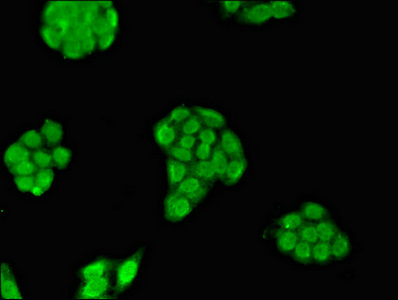
The antibody against MXI1 was raised in rabbit using the Recombinant Human Max-interacting protein 1 protein (75-173AA) as the immunogen. This antibody exists as a non-conjugated isotype IgG, purified by protein G with a purity greater than 95%. This antibody has been validated on ELISA, IF.
$299.00
| Cat.No | ADC-10995A | Clonality | Polyclonal |
|---|---|---|---|
| Host Species | Rabbit | Target Name | MXI1 |
| Form | Liquid | Species Reactivity | Human |
| Isotype | IgG | Storage Buffer | 0.01M PBS, 0.03% Proclin 300; Constituents: 50% Glycerol, PH 7.4 |
| Purification Method | >95%, Protein G purified | Conjugate | Non-conjugated |
| Application | ELISA, IF | Storage | Upon receipt |
| Immunogen Description | Recombinant Human Max-interacting protein 1 protein (75-173AA) | Target Species | Human |
|---|---|---|---|
| Immunogen Sequence | Complete sequences for the immunogen, target protein, and peptides are available upon request. | Uniprot ID | P50539 |
Uniprot Id
P50539
Target Species
Human
Target Name
MXI1
Target Full Name
Max-interacting protein 1
Target Function
Transcriptional repressor. MXI1 binds with MAX to form a sequence-specific DNA-binding protein complex which recognizes the core sequence 5'-CAC[GA]TG-3'. MXI1 thus antagonizes MYC transcriptional activity by competing for MAX.
Target Involvement
Prostate cancer (PC)
Target Subcellular Location
Nucleus.
Target Tissue Specificity
High levels found in the brain, heart and lung while lower levels are seen in the liver, kidney and skeletal muscle.
Target Synonyms
bHLHc11; Class C basic helix-loop-helix protein 11; MAD 2; MAD2; MAX dimerization protein 2; MAX interacting protein 1; Max interactor 1; Max related transcription factor; MAX-interacting protein 1; MGC43220; MXD 2; MXD2; MXI 1; MXI; mxi1; MXI1 protein; MXI1_HUMAN; Protein MXI1
Target Background
Expression of the c-myc gene, which produces an oncogenic transcription factor, is tightly regulated in normal cells but is frequently deregulated in human cancers. The protein encoded by this gene is a transcriptional repressor thought to negatively regulate MYC function, and is therefore a potential tumor suppressor. This protein inhibits the transcriptional activity of MYC by competing for MAX, another basic helix-loop-helix protein that binds to MYC and is required for its function. Defects in this gene are frequently found in patients with prostate tumors. Three alternatively spliced transcripts encoding different isoforms have been described. Additional alternatively spliced transcripts may exist but the products of these transcripts have not been verified experimentally.
Notification