-
Chinese (Simplified)
-
English
-
German
-
Korean
-
Spanish
Chinese (Simplified)
English
German
Korean
Spanish
Sign up for an account to enjoy easy online shopping and instant order tracking.
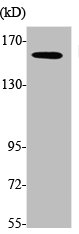
The antibody against MYO6 was raised in rabbit using the Synthesized peptide derived from the N-terminal region of Human Myosin VI. as the immunogen. This antibody exists as a non-conjugated isotype IgG. The antibody was affinity-purified from rabbit antiserum by affinity-chromatography using epitope-specific immunogen. This antibody has been validated on WB, ELISA.
$167.00
| Cat.No | ADC-37275A | Clonality | Polyclonal |
|---|---|---|---|
| Host Species | Rabbit | Target Name | MYO6 |
| Form | Liquid | Species Reactivity | Human, Mouse, Rat |
| Isotype | IgG | Storage Buffer | 0.5% BSA and 0.02% sodium azide., Liquid in PBS containing 50% glycerol |
| Purification Method | The antibody was affinity-purified from rabbit antiserum by affinity-chromatography using epitope-specific immunogen. | Conjugate | Non-conjugated |
| Application | ELISA, WB | Storage | Upon receipt |
| Immunogen Description | Synthesized peptide derived from the N-terminal region of Human Myosin VI. | Target Species | Human |
|---|---|---|---|
| Immunogen Sequence | Complete sequences for the immunogen, target protein, and peptides are available upon request. | Uniprot ID | Q9UM54 |
Uniprot Id
Q9UM54
Target Species
Human
Target Name
MYO6
Target Full Name
Unconventional myosin-VI
Target Function
Myosins are actin-based motor molecules with ATPase activity. Unconventional myosins serve in intracellular movements. Myosin 6 is a reverse-direction motor protein that moves towards the minus-end of actin filaments. Has slow rate of actin-activated ADP release due to weak ATP binding. Functions in a variety of intracellular processes such as vesicular membrane trafficking and cell migration. Required for the structural integrity of the Golgi apparatus via the p53-dependent pro-survival pathway. Appears to be involved in a very early step of clathrin-mediated endocytosis in polarized epithelial cells. May act as a regulator of F-actin dynamics. As part of the DISP complex, may regulate the association of septins with actin and thereby regulate the actin cytoskeleton. May play a role in transporting DAB2 from the plasma membrane to specific cellular targets. May play a role in the extension and network organization of neurites. Required for structural integrity of inner ear hair cells. Modulates RNA polymerase II-dependent transcription.
Target Involvement
Deafness, autosomal dominant, 22 (DFNA22); Deafness, autosomal recessive, 37 (DFNB37); Deafness, autosomal dominant 22, with hypertrophic cardiomyopathy (DFNHCM)
Target Subcellular Location
Golgi apparatus, trans-Golgi network membrane; Peripheral membrane protein. Golgi apparatus. Nucleus. Cytoplasm, perinuclear region. Membrane, clathrin-coated pit. Cytoplasmic vesicle, clathrin-coated vesicle. Cell projection, filopodium. Cell projection, ruffle membrane. Cell projection, microvillus. Cytoplasm, cytosol.; [Isoform 3]: Cytoplasmic vesicle, clathrin-coated vesicle membrane.; [Isoform 4]: Cytoplasmic vesicle, clathrin-coated vesicle membrane. Cell projection, ruffle membrane.
Target Protein Families
TRAFAC class myosin-kinesin ATPase superfamily, Myosin family
Target Tissue Specificity
Expressed in most tissues examined including heart, brain, placenta, pancreas, spleen, thymus, prostate, testis, ovary, small intestine and colon. Highest levels in brain, pancreas, testis and small intestine. Also expressed in fetal brain and cochlea. Is
Target Synonyms
Deafness autosomal recessive 37; DFNA 22; DFNA22; DFNB 37; DFNB37; KIAA0389; MYO 6; Myo6; MYO6_HUMAN; Myosin VI; Myosin-VI; Myosin6; Unconventional myosin-6; Unconventional myosin-VI
Target Background
This gene encodes a reverse-direction motor protein that moves toward the minus end of actin filaments and plays a role in intracellular vesicle and organelle transport. The protein consists of a motor domain containing an ATP- and an actin-binding site and a globular tail which interacts with other proteins. This protein maintains the structural integrity of inner ear hair cells and mutations in this gene cause non-syndromic autosomal dominant and recessive hearing loss. Alternative splicing results in multiple transcript variants encoding distinct isoforms.
Notification