-
Chinese (Simplified)
-
English
-
German
-
Korean
-
Spanish

Chinese (Simplified)
English
German
Korean
Spanish
Sign up for an account to enjoy easy online shopping and instant order tracking.
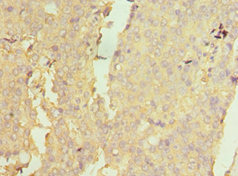
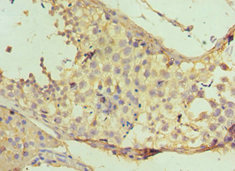
The antibody against NAA10 was raised in rabbit using the Recombinant Human N-alpha-acetyltransferase 10 protein (161-235AA) as the immunogen. This antibody exists as a non-conjugated isotype IgG, Antigen affinity purified. This antibody has been validated on ELISA, WB, IHC.
$299.00
| Cat.No | ADC-45253A | Clonality | Polyclonal |
|---|---|---|---|
| Host Species | Rabbit | Target Name | NAA10 |
| Form | Liquid | Species Reactivity | Human |
| Isotype | IgG | Storage Buffer | 50% Glycerol, PBS with 0.02% sodium azide, pH7.3. |
| Purification Method | Antigen affinity purified | Conjugate | Non-conjugated |
| Application | ELISA, IHC, WB | Storage | Upon receipt |
| Immunogen Description | Recombinant Human N-alpha-acetyltransferase 10 protein (161-235AA) | Target Species | Human |
|---|---|---|---|
| Immunogen Sequence | Complete sequences for the immunogen, target protein, and peptides are available upon request. | Uniprot ID | P41227 |
Uniprot Id
P41227
Target Species
Human
Target Name
NAA10
Target Full Name
N-alpha-acetyltransferase 10
Target Function
Catalytic subunit of N-terminal acetyltransferase complexes which display alpha (N-terminal) acetyltransferase activity. Acetylates amino termini that are devoid of initiator methionine. The alpha (N-terminal) acetyltransferase activity may be important for vascular, hematopoietic and neuronal growth and development. Without NAA15, displays epsilon (internal) acetyltransferase activity towards HIF1A, thereby promoting its degradation. Represses MYLK kinase activity by acetylation, and thus represses tumor cell migration. Acetylates, and stabilizes TSC2, thereby repressing mTOR activity and suppressing cancer development. Acetylates HSPA1A and HSPA1B at 'Lys-77' which enhances its chaperone activity and leads to preferential binding to co-chaperone HOPX. Acetylates HIST1H4A. Acts as a negative regulator of sister chromatid cohesion during mitosis.
Target Involvement
N-terminal acetyltransferase deficiency (NATD); Microphthalmia, syndromic, 1 (MCOPS1)
Target Subcellular Location
Cytoplasm. Nucleus.
Target Protein Families
Acetyltransferase family, ARD1 subfamily
Target Tissue Specificity
Ubiquitous.
Target Synonyms
Alpha N acetyltransferase 1A; ARD1; ARD1 homolog N acetyltransferase (S. cerevisiae); ARD1 homolog A N acetyltransferase (S. cerevisiae); ARD1 homolog A N acetyltransferase; ARD1A; DXS707; MGC71248; N acetyltransferase ARD1, human homolog of; N alpha acetyltransferase 10 NatA catalytic subunit; N terminal acetyltransferase complex ARD1 subunit homolog A; N(alpha) acetyltransferase 10 NatA catalytic subunit; N-alpha-acetyltransferase 10; N-terminal acetyltransferase complex ARD1 subunit homolog A; Naa10; NAA10_HUMAN; NatA catalytic subunit; TE2
Target Background
N-alpha-acetylation is among the most common post-translational protein modifications in eukaryotic cells. This process involves the transfer of an acetyl group from acetyl-coenzyme A to the alpha-amino group on a nascent polypeptide and is essential for normal cell function. This gene encodes an N-terminal acetyltransferase that functions as the catalytic subunit of the major amino-terminal acetyltransferase A complex. Mutations in this gene are the cause of Ogden syndrome. Alternate splicing results in multiple transcript variants.
Notification