• Contact info@abtriva.com for inquiries and orders.
  • Chinese (Simplified)

  • English

  • German

  • Korean

  • Spanish

United States (English / $ USD)

Rabbit anti-Human NDRG1 Polyclonal Antibody

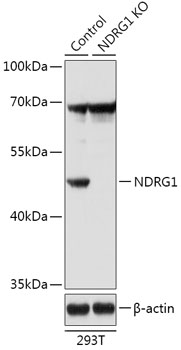
The antibody against NDRG1 was raised in Rabbit using the recombinant fusion protein containing a sequence corresponding to amino acids 175-394 of human NDRG1 (NP_001128714.1) as the immunogen. The polyclonal antibody exists as a isotype IgG, by affinity purification. This antibody has been validated on WB, ELISA.

ADA-10542A

The antibody against NDRG1 was raised in Rabbit using the recombinant fusion protein containing a sequence corresponding to amino acids 175-394 of human NDRG1 (NP_001128714.1) as the immunogen. The polyclonal antibody exists as a isotype IgG, by affinity purification. This antibody has been validated on WB, ELISA.

Number
Order Exclusive Products Now

Request a Quote
High Purity LevelsPrecision and ReliabilityCustomization Options

Specifications


Cat.No ADA-10542A ClonalityPolyclonal
Host SpeciesRabbitTarget NameNDRG1
Target SynonymsGC4; RTP; DRG1; NDR1; NMSL; TDD5; CAP43; CMT4D; DRG-1; HMSNL; RIT42; TARG1; PROXY1; NDRG1FormLiquid
Species ReactivityHuman, Mouse, RatIsotypeIgG
Storage Buffer50% Glycerol, PBS with 0.01% thimerosal, pH7.3.Purification MethodAffinity purification
Positive Samples293TApplicationELISA, WB

Immunogen Information


Immunogen DescriptionRecombinant fusion protein containing a sequence corresponding to amino acids 175-394 of human NDRG1 (NP_001128714.1).Target SpeciesHuman
Uniprot IDQ92597Immunogen Sequence
Background Information
  • Uniprot Id

    Q92597

  • Target Species

    Human

  • Target Name

    NDRG1

  • Target Full Name

    Protein NDRG1

  • Target Function

    Stress-responsive protein involved in hormone responses, cell growth, and differentiation. Acts as a tumor suppressor in many cell types. Necessary but not sufficient for p53/TP53-mediated caspase activation and apoptosis. Has a role in cell trafficking, notably of the Schwann cell, and is necessary for the maintenance and development of the peripheral nerve myelin sheath. Required for vesicular recycling of CDH1 and TF. May also function in lipid trafficking. Protects cells from spindle disruption damage. Functions in p53/TP53-dependent mitotic spindle checkpoint. Regulates microtubule dynamics and maintains euploidy.

  • Target Involvement

    Charcot-Marie-Tooth disease 4D (CMT4D)

  • Target Subcellular Location

    Cytoplasm, cytosol. Cytoplasm, cytoskeleton, microtubule organizing center, centrosome. Nucleus. Cell membrane. Note=Mainly cytoplasmic but differentially localized to other regions. Associates with the plasma membrane in intestinal epithelia and lactating mammary gland. Translocated to the nucleus in a p53/TP53-dependent manner. In prostate epithelium and placental chorion, located in both the cytoplasm and in the nucleus. No nuclear localization in colon epithelium cells. In intestinal mucosa, prostate and renal cortex, located predominantly adjacent to adherens junctions. Cytoplasmic with granular staining in proximal tubular cells of the kidney and salivary gland ducts. Recruits to the membrane of recycling/sorting and late endosomes via binding to phosphatidylinositol 4-phosphate. Associates with microtubules. Colocalizes with TUBG1 in the centrosome. Cytoplasmic location increased with hypoxia. Phosphorylated form found associated with centromeres during S-phase of mitosis and with the plasma membrane.

  • Target Protein Families

    NDRG family

  • Target Tissue Specificity

    Ubiquitous; expressed most prominently in placental membranes and prostate, kidney, small intestine, and ovary tissues. Also expressed in heart, brain, skeletal muscle, lung, liver and pancreas. Low levels in peripheral blood leukocytes and in tissues of

  • Target Synonyms

    42 kDa; Anti GC4; cap43; cmt4d; Differentiation related gene1 protein; Differentiation-related gene 1 protein; Drg 1; DRG-1; drg1; gc4; GC4; hmsnl; Human mRNA for RTP complete cds; N myc downstream regulated gene 1; N myc downstream regulated gene 1 protein; N-myc downstream-regulated gene 1 protein; Ndr 1; ndr1; NDRG 1; Ndrg1; NDRG1 protein ; NDRG1_HUMAN; Nickel specific induction protein; Nickel specific induction protein Cap43; Nickel-specific induction protein Cap43; nmsl; Nmyc downstream regulated; Nmyc downstream regulated gene1; Nmyc downstream regulated gene1 protein; Protein NDRG1; Protein regulated by oxygen 1; Protein regulated by oxygen1; Proxy1; Reduced in tumor; Reducin; Reducing agents and tunicamycin responsive protein ; Reducing agents and tunicamycin-responsive protein; Rit42; RTP; targ1; TDD5; tdds; Tunicamycin responsive protein

  • Target Background

    This gene is a member of the N-myc downregulated gene family which belongs to the alpha/beta hydrolase superfamily. The protein encoded by this gene is a cytoplasmic protein involved in stress responses, hormone responses, cell growth, and differentiation. The encoded protein is necessary for p53-mediated caspase activation and apoptosis. Mutations in this gene are a cause of Charcot-Marie-Tooth disease type 4D, and expression of this gene may be a prognostic indicator for several types of cancer. Alternatively spliced transcript variants encoding multiple isoforms have been observed for this gene.

Inquire Rabbit anti-Human NDRG1 Polyclonal Antibody Now


AbTriva respects your privacy and protects your personal data in accordance with AbTriva. For more information, please see our data protection statement. *

Notification