• Contact info@abtriva.com for inquiries and orders.
  • Chinese (Simplified)

  • English

  • German

  • Korean

  • Spanish

United States (English / $ USD)

Rabbit anti-Human NDUFA13 Polyclonal Antibody

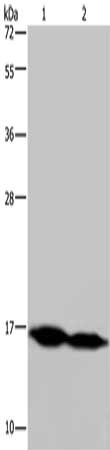
The antibody against NDUFA13 was raised in rabbit using the Fusion protein of Human NDUFA13 as the immunogen. This antibody exists as a non-conjugated isotype IgG, Antigen affinity purified. This antibody has been validated on ELISA, WB, IHC.

ADC-29931A

The antibody against NDUFA13 was raised in rabbit using the Fusion protein of Human NDUFA13 as the immunogen. This antibody exists as a non-conjugated isotype IgG, Antigen affinity purified. This antibody has been validated on ELISA, WB, IHC.

$299.00

Number
Order Exclusive Products Now

Request a Quote
High Purity LevelsPrecision and ReliabilityCustomization Options

Specifications


Cat.No ADC-29931A ClonalityPolyclonal
Host SpeciesRabbitTarget NameNDUFA13
FormLiquidSpecies ReactivityHuman, Mouse
IsotypeIgGStorage Buffer0.05% NaN3, 40% Glycerol., pH7.4 PBS
Purification MethodAntigen affinity purifiedConjugateNon-conjugated
ApplicationELISA, IHC, WBStorageUpon receipt

Immunogen Information


Immunogen DescriptionFusion protein of Human NDUFA13Target SpeciesHuman
Immunogen SequenceComplete sequences for the immunogen, target protein, and peptides are available upon request.Uniprot IDQ9P0J0
Background Information
  • Uniprot Id

    Q9P0J0

  • Target Species

    Human

  • Target Name

    NDUFA13

  • Target Full Name

    NADH dehydrogenase [ubiquinone] 1 alpha subcomplex subunit 13

  • Target Function

    Accessory subunit of the mitochondrial membrane respiratory chain NADH dehydrogenase (Complex I), that is believed not to be involved in catalysis. Complex I functions in the transfer of electrons from NADH to the respiratory chain. The immediate electron acceptor for the enzyme is believed to be ubiquinone. Involved in the interferon/all-trans-retinoic acid (IFN/RA) induced cell death. This apoptotic activity is inhibited by interaction with viral IRF1. Prevents the transactivation of STAT3 target genes. May play a role in CARD15-mediated innate mucosal responses and serve to regulate intestinal epithelial cell responses to microbes.

  • Target Involvement

    Hurthle cell thyroid carcinoma (HCTC)

  • Target Subcellular Location

    Mitochondrion inner membrane; Single-pass membrane protein; Matrix side. Nucleus.

  • Target Protein Families

    Complex I NDUFA13 subunit family

  • Target Tissue Specificity

    Widely expressed, with highest expression in heart, skeletal muscle, liver, kidney and placenta. In intestinal mucosa, down-regulated in areas involved in Crohn disease and ulcerative colitis.

  • Target Synonyms

    NDUFA13; GRIM19; CDA016; CGI-39; NADH dehydrogenase [ubiquinone] 1 alpha subcomplex subunit 13; Cell death regulatory protein GRIM-19; Complex I-B16.6; CI-B16.6; Gene associated with retinoic and interferon-induced mortality 19 protein; GRIM-19; Gene associated with retinoic and IFN-induced mortality 19 protein; NADH-ubiquinone oxidoreductase B16.6 subunit

  • Target Background

    This gene encodes a subunit of the mitochondrial membrane respiratory chain NADH dehydrogenase (Complex I), which functions in the transfer of electrons from NADH to the respiratory chain. The protein is required for complex I assembly and electron transfer activity. The protein binds the signal transducers and activators of transcription 3 (STAT3) transcription factor, and can function as a tumor suppressor. The human protein purified from mitochondria migrates at approximately 16 kDa. Transcripts originating from an upstream promoter and capable of expressing a protein with a longer N-terminus have been found, but their biological validity has not been determined.

Inquire Rabbit anti-Human NDUFA13 Polyclonal Antibody Now


AbTriva respects your privacy and protects your personal data in accordance with AbTriva. For more information, please see our data protection statement. *

Notification