• Contact info@abtriva.com for inquiries and orders.
  • Chinese (Simplified)

  • English

  • German

  • Korean

  • Spanish

United States (English / $ USD)

Rabbit anti-Human NDUFB9 Polyclonal Antibody

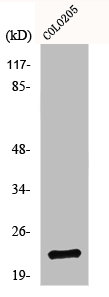
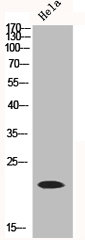
The antibody against NDUFB9 was raised in rabbit using the Synthesized peptide derived from the Internal region of Human NDUFB9. as the immunogen. This antibody exists as a non-conjugated isotype IgG. The antibody was affinity-purified from rabbit antiserum by affinity-chromatography using epitope-specific immunogen. This antibody has been validated on WB, IHC, ELISA.

ADC-38126A

The antibody against NDUFB9 was raised in rabbit using the Synthesized peptide derived from the Internal region of Human NDUFB9. as the immunogen. This antibody exists as a non-conjugated isotype IgG. The antibody was affinity-purified from rabbit antiserum by affinity-chromatography using epitope-specific immunogen. This antibody has been validated on WB, IHC, ELISA.

$167.00

Number
Order Exclusive Products Now

Request a Quote
High Purity LevelsPrecision and ReliabilityCustomization Options

Specifications


Cat.No ADC-38126A ClonalityPolyclonal
Host SpeciesRabbitTarget NameNDUFB9
Target Synonyms9FormLiquid
Species ReactivityHumanIsotypeIgG
Storage Buffer0.5% BSA and 0.02% sodium azide., Liquid in PBS containing 50% glycerolPurification MethodThe antibody was affinity-purified from rabbit antiserum by affinity-chromatography using epitope-specific immunogen.
ConjugateNon-conjugatedApplicationELISA, IHC, WB
StorageUpon receipt

Immunogen Information


Immunogen DescriptionSynthesized peptide derived from the Internal region of Human NDUFB9.Target SpeciesHuman
Immunogen SequenceComplete sequences for the immunogen, target protein, and peptides are available upon request.Uniprot IDQ9Y6M9
Background Information
  • Uniprot Id

    Q9Y6M9

  • Target Species

    Human

  • Target Name

    NDUFB9

  • Target Full Name

    NADH dehydrogenase [ubiquinone] 1 beta subcomplex subunit 9

  • Target Function

    Accessory subunit of the mitochondrial membrane respiratory chain NADH dehydrogenase (Complex I), that is believed to be not involved in catalysis. Complex I functions in the transfer of electrons from NADH to the respiratory chain. The immediate electron acceptor for the enzyme is believed to be ubiquinone.

  • Target Subcellular Location

    Mitochondrion inner membrane; Peripheral membrane protein; Matrix side.

  • Target Protein Families

    Complex I LYR family

  • Target Synonyms

    B22; CI B22; CI-B22; complex I B22 subunit; Complex I-B22; DKFZp566O173; FLJ22885; I B22; LYR motif containing protein 3; LYR motif-containing protein 3; LYRM3; NADH dehydrogenase (ubiquinone) 1 beta subcomplex, 9, 22kDa; NADH dehydrogenase [ubiquinone] 1 beta subcomplex subunit 9; NADH ubiquinone oxidoreductase B22 subunit; NADH-ubiquinone oxidoreductase B22 subunit; NDUB9_HUMAN; Ndufb9; UQOR22

  • Target Background

    The protein encoded by this gene is a subunit of the mitochondrial oxidative phosphorylation complex I (nicotinamide adenine dinucleotide: ubiquinone oxidoreductase). Complex I is localized to the inner mitochondrial membrane and functions to dehydrogenate nicotinamide adenine dinucleotide and to shuttle electrons to coenzyme Q. Complex I deficiency is the most common defect found in oxidative phosphorylation disorders and results in a range of conditions, including lethal neonatal disease, hypertrophic cardiomyopathy, liver disease, and adult-onset neurodegenerative disorders. Pseudogenes of this gene are found on chromosomes five, seven and eight. Alternative splicing results in multiple transcript variants.

Inquire Rabbit anti-Human NDUFB9 Polyclonal Antibody Now


AbTriva respects your privacy and protects your personal data in accordance with AbTriva. For more information, please see our data protection statement. *

Notification