-
Chinese (Simplified)
-
English
-
German
-
Korean
-
Spanish
Chinese (Simplified)
English
German
Korean
Spanish
Sign up for an account to enjoy easy online shopping and instant order tracking.
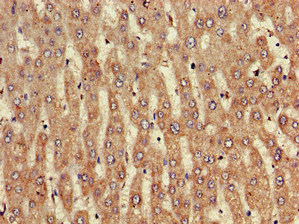
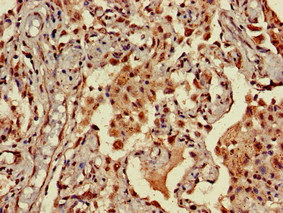
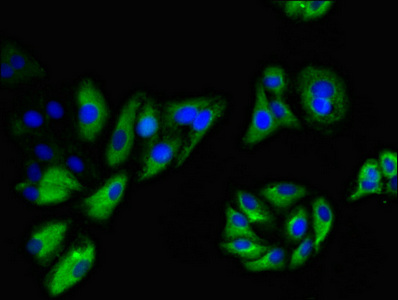
The antibody against NINJ1 was raised in rabbit using the Recombinant Human Ninjurin-1 protein (1-80AA) as the immunogen. This antibody exists as a non-conjugated isotype IgG, purified by protein G with a purity greater than 95%. This antibody has been validated on ELISA, IHC, IF.
$299.00
| Cat.No | ADC-18543A | Clonality | Polyclonal |
|---|---|---|---|
| Host Species | Rabbit | Target Name | NINJ1 |
| Target Synonyms | NINJ1; Ninjurin-1; Nerve injury-induced protein 1 | Form | Liquid |
| Species Reactivity | Human | Isotype | IgG |
| Storage Buffer | 0.01M PBS, 0.03% Proclin 300; Constituents: 50% Glycerol, PH 7.4 | Purification Method | >95%, Protein G purified |
| Conjugate | Non-conjugated | Application | ELISA, IF, IHC |
| Storage | Upon receipt |
| Immunogen Description | Recombinant Human Ninjurin-1 protein (1-80AA) | Target Species | Human |
|---|---|---|---|
| Immunogen Sequence | Complete sequences for the immunogen, target protein, and peptides are available upon request. | Uniprot ID | Q92982 |
Uniprot Id
Q92982
Target Species
Human
Target Name
NINJ1
Target Full Name
Ninjurin-1
Target Function
Homophilic transmembrane adhesion molecule involved in various processes such as inflammation, cell death, axonal growth, cell chemotaxis and angiogenesis. Promotes cell adhesion by mediating homophilic interactions via its extracellular N-terminal adhesion motif (N-NAM). Involved in the progression of the inflammatory stress by promoting cell-to-cell interactions between immune cells and endothelial cells. Involved in leukocyte migration during inflammation by promoting transendothelial migration of macrophages via homotypic binding. Promotes the migration of monocytes across the brain endothelium to central nervous system inflammatory lesions. Acts as a regulator of Toll-like receptor 4 (TLR4) signaling triggered by lipopolysaccharide (LPS) during systemic inflammation; directly binds LPS. Acts as a mediator of both programmed and necrotic cell death. Plays a key role in the induction of plasma membrane rupture during programmed and necrotic cell death: oligomerizes in response to death stimuli to mediate plasma membrane rupture (cytolysis), leading to release intracellular molecules named damage-associated molecular patterns (DAMPs) that propagate the inflammatory response. Plays a role in nerve regeneration by promoting maturation of Schwann cells. Acts as a regulator of angiogenesis. Promotes the formation of new vessels by mediating the interaction between capillary pericyte cells and endothelial cells. Promotes osteoclasts development by enhancing the survival of prefusion osteoclasts. Also involved in striated muscle growth and differentiation.; Secreted form generated by cleavage, which has chemotactic activity. Acts as an anti-inflammatory mediator by promoting monocyte recruitment, thereby ameliorating atherosclerosis.
Target Subcellular Location
[Ninjurin-1]: Cell membrane; Multi-pass membrane protein. Cell junction, synapse, synaptic cell membrane; Multi-pass membrane protein.; [Secreted ninjurin-1]: Secreted.
Target Protein Families
Ninjurin family
Target Tissue Specificity
Widely expressed in both adult and embryonic tissues, primarily those of epithelial origin.
Target Research Area
Neuroscience
Target Synonyms
NINJ1; Ninjurin-1; Nerve injury-induced protein 1
Target Background
The ninjurin protein is upregulated after nerve injury both in dorsal root ganglion neurons and in Schwann cells (Araki and Milbrandt, 1996 [PubMed 8780658]). It demonstrates properties of a homophilic adhesion molecule and promotes neurite outgrowth from primary cultured dorsal root ganglion neurons.
Notification