• Contact info@abtriva.com for inquiries and orders.
  • Chinese (Simplified)

  • English

  • German

  • Korean

  • Spanish

United States (English / $ USD)

Rabbit anti-Human NOG Polyclonal Antibody

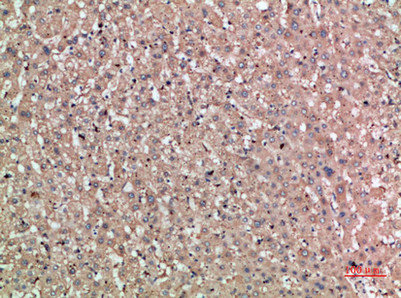
The antibody against NOG was raised in rabbit using the Synthetic peptide from Human protein at AA range: 21-70 as the immunogen. This antibody exists as a non-conjugated antibody. The antibody was affinity-purified from rabbit serum by affinity-chromatography using specific immunogen. This antibody has been validated on IHC, ELISA.

ADC-12974A

The antibody against NOG was raised in rabbit using the Synthetic peptide from Human protein at AA range: 21-70 as the immunogen. This antibody exists as a non-conjugated antibody. The antibody was affinity-purified from rabbit serum by affinity-chromatography using specific immunogen. This antibody has been validated on IHC, ELISA.

$167.00

Number
Order Exclusive Products Now

Request a Quote
High Purity LevelsPrecision and ReliabilityCustomization Options

Specifications


Cat.No ADC-12974A ClonalityPolyclonal
Host SpeciesRabbitTarget NameNOG
Target SynonymsNog antibody; NOGG_HUMAN antibody; Noggin antibody; SYM 1 antibody; SYM1 antibody; Symphalangism 1 (proximal) antibody; Synostoses (multiple) syndrome 1 antibody; SYNS 1 antibody; SYNS1 antibodyFormLiquid
Species ReactivityHuman, Mouse, RatStorage BufferPH 7.4, containing 0.02% sodium azide as Preservative and 50% Glycerol., PBS
Purification MethodThe antibody was affinity-purified from rabbit serum by affinity-chromatography using specific immunogen.ConjugateNon-conjugated
ApplicationELISA, IHCStorageUpon receipt

Immunogen Information


Immunogen DescriptionSynthetic peptide from Human protein at AA range: 21-70Target SpeciesHuman
Immunogen SequenceComplete sequences for the immunogen, target protein, and peptides are available upon request.Uniprot IDQ13253
Background Information
  • Uniprot Id

    Q13253

  • Target Species

    Human

  • Target Name

    NOG

  • Target Full Name

    Noggin

  • Target Function

    Inhibitor of bone morphogenetic proteins (BMP) signaling which is required for growth and patterning of the neural tube and somite. Essential for cartilage morphogenesis and joint formation. Inhibits chondrocyte differentiation through its interaction with GDF5 and, probably, GDF6.

  • Target Involvement

    Symphalangism, proximal 1A (SYM1A); Multiple synostoses syndrome 1 (SYNS1); Tarsal-carpal coalition syndrome (TCC); Stapes ankylosis with broad thumb and toes (SABTS); Brachydactyly B2 (BDB2)

  • Target Subcellular Location

    Secreted.

  • Target Protein Families

    Noggin family

  • Target Research Area

    Developmental Biology

  • Target Synonyms

    Nog; NOGG_HUMAN; Noggin; SYM 1; SYM1; Symphalangism 1 (proximal); Synostoses (multiple) syndrome 1; SYNS 1; SYNS1

  • Target Background

    The secreted polypeptide, encoded by this gene, binds and inactivates members of the transforming growth factor-beta (TGF-beta) superfamily signaling proteins, such as bone morphogenetic protein-4 (BMP4). By diffusing through extracellular matrices more efficiently than members of the TGF-beta superfamily, this protein may have a principal role in creating morphogenic gradients. The protein appears to have pleiotropic effect, both early in development as well as in later stages. It was originally isolated from Xenopus based on its ability to restore normal dorsal-ventral body axis in embryos that had been artificially ventralized by UV treatment. The results of the mouse knockout of the ortholog suggest that it is involved in numerous developmental processes, such as neural tube fusion and joint formation. Recently, several dominant human NOG mutations in unrelated families with proximal symphalangism (SYM1) and multiple synostoses syndrome (SYNS1) were identified; both SYM1 and SYNS1 have multiple joint fusion as their principal feature, and map to the same region (17q22) as this gene. All of these mutations altered evolutionarily conserved amino acid residues. The amino acid sequence of this human gene is highly homologous to that of Xenopus, rat and mouse.

Inquire Rabbit anti-Human NOG Polyclonal Antibody Now


AbTriva respects your privacy and protects your personal data in accordance with AbTriva. For more information, please see our data protection statement. *

Notification