-
Chinese (Simplified)
-
English
-
German
-
Korean
-
Spanish
Chinese (Simplified)
English
German
Korean
Spanish
Sign up for an account to enjoy easy online shopping and instant order tracking.
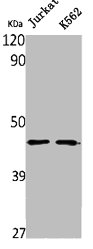
The antibody against NPRL2 was raised in rabbit using the Synthesized peptide derived from the C-terminal region of Human NPRL2. as the immunogen. This antibody exists as a non-conjugated isotype IgG. The antibody was affinity-purified from rabbit antiserum by affinity-chromatography using epitope-specific immunogen. This antibody has been validated on WB, ELISA.
$167.00
| Cat.No | ADC-37261A | Clonality | Polyclonal |
|---|---|---|---|
| Host Species | Rabbit | Target Name | NPRL2 |
| Form | Liquid | Species Reactivity | Human, Mouse, Rat |
| Isotype | IgG | Storage Buffer | 0.5% BSA and 0.02% sodium azide., Liquid in PBS containing 50% glycerol |
| Purification Method | The antibody was affinity-purified from rabbit antiserum by affinity-chromatography using epitope-specific immunogen. | Conjugate | Non-conjugated |
| Application | ELISA, WB | Storage | Upon receipt |
| Immunogen Description | Synthesized peptide derived from the C-terminal region of Human NPRL2. | Target Species | Human |
|---|---|---|---|
| Immunogen Sequence | Complete sequences for the immunogen, target protein, and peptides are available upon request. | Uniprot ID | Q8WTW4 |
Uniprot Id
Q8WTW4
Target Species
Human
Target Name
NPRL2
Target Full Name
GATOR1 complex protein NPRL2
Target Function
As a component of the GATOR1 complex functions as an inhibitor of the amino acid-sensing branch of the TORC1 pathway. The GATOR1 complex strongly increases GTP hydrolysis by RRAGA and RRAGB within RRAGC-containing heterodimers, thereby deactivating RRAGs, releasing mTORC1 from lysosomal surface and inhibiting mTORC1 signaling. The GATOR1 complex is negatively regulated by GATOR2 the other GATOR subcomplex in this amino acid-sensing branch of the TORC1 pathway.; Suppresses Src-dependent tyrosine phosphorylation and activation of PDPK1 and its downstream signaling. Down-regulates PDPK1 kinase activity by interfering with tyrosine phosphorylation at 'Tyr-9', 'Tyr-373' and 'Tyr-376' residues. May act as a tumor suppressor. Suppresses cell growth and enhances sensitivity to various anticancer drugs.
Target Involvement
Epilepsy, familial focal, with variable foci 2 (FFEVF2)
Target Subcellular Location
Lysosome membrane.
Target Protein Families
NPR2 family
Target Tissue Specificity
Most abundant in skeletal muscle, followed by brain, liver and pancreas, with lower amounts in lung, kidney, placenta and heart. Expressed in the frontal lobe cortex as well as in the temporal, parietal, and occipital lobes. Expressed in most lung cancer
Target Synonyms
2810446G01Rik; G21 protein; Gene 21 protein; Homologous to yeast nitrogen permease (candidate tumor suppressor); Homologous to yeast nitrogen permease; Nitrogen permease regulator 2-like protein; Nitrogen permease regulator-like 2 (S. cerevisiae); NPR 2L; NPR L2; NPR like 2; NPR2; NPR2 like; NPR2-like protein; NPR2L; NPRL 2; NPRL2; NPRL2_HUMAN; Tumor suppressor candidate 4; TUSC 4; TUSC 4 protein; TUSC4; TUSC4 protein
Target Background
Enables protein kinase activity. Contributes to GTPase activator activity. Involved in cellular response to amino acid starvation; negative regulation of TOR signaling; and negative regulation of kinase activity. Located in lysosomal membrane. Part of GATOR1 complex. Implicated in focal epilepsy.
Notification