-
Chinese (Simplified)
-
English
-
German
-
Korean
-
Spanish
Chinese (Simplified)
English
German
Korean
Spanish
Sign up for an account to enjoy easy online shopping and instant order tracking.
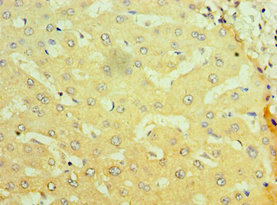
The antibody against NR1I2 was raised in rabbit using the Recombinant Human Nuclear receptor subfamily 1 group I member 2 protein (175-434AA) as the immunogen. This antibody exists as a non-conjugated isotype IgG, Antigen affinity purified. This antibody has been validated on ELISA, IHC.
$299.00
| Cat.No | ADC-44013A | Clonality | Polyclonal |
|---|---|---|---|
| Host Species | Rabbit | Target Name | NR1I2 |
| Form | Liquid | Species Reactivity | Human |
| Isotype | IgG | Storage Buffer | 50% Glycerol, PBS with 0.02% sodium azide, pH7.3. |
| Purification Method | Antigen affinity purified | Conjugate | Non-conjugated |
| Application | ELISA, IHC | Storage | Upon receipt |
| Immunogen Description | Recombinant Human Nuclear receptor subfamily 1 group I member 2 protein (175-434AA) | Target Species | Human |
|---|---|---|---|
| Immunogen Sequence | Complete sequences for the immunogen, target protein, and peptides are available upon request. | Uniprot ID | O75469 |
Uniprot Id
O75469
Target Species
Human
Target Name
NR1I2
Target Full Name
Nuclear receptor subfamily 1 group I member 2
Target Function
Nuclear receptor that binds and is activated by variety of endogenous and xenobiotic compounds. Transcription factor that activates the transcription of multiple genes involved in the metabolism and secretion of potentially harmful xenobiotics, drugs and endogenous compounds. Activated by the antibiotic rifampicin and various plant metabolites, such as hyperforin, guggulipid, colupulone, and isoflavones. Response to specific ligands is species-specific. Activated by naturally occurring steroids, such as pregnenolone and progesterone. Binds to a response element in the promoters of the CYP3A4 and ABCB1/MDR1 genes.
Target Subcellular Location
Nucleus.
Target Protein Families
Nuclear hormone receptor family, NR1 subfamily
Target Tissue Specificity
Expressed in liver, colon and small intestine.
Target Research Area
Signal Transduction
Target Synonyms
BXR; Nr1i2; NR1I2_HUMAN; Nuclear receptor subfamily 1 group I member 2; ONR 1; ONR1; Orphan nuclear receptor PAR 1; Orphan nuclear receptor PAR1; Orphan nuclear receptor PXR; OTTHUMP00000215173; OTTHUMP00000215174; OTTHUMP00000215175; PAR 1; PAR 2; PAR; PAR q; PAR1; PAR2; PARq; pregnane X nuclear receptor variant 2; Pregnane X receptor; PRR; PXR; SAR; Steroid and xenobiotic receptor; SXR
Target Background
This gene product belongs to the nuclear receptor superfamily, members of which are transcription factors characterized by a ligand-binding domain and a DNA-binding domain. The encoded protein is a transcriptional regulator of the cytochrome P450 gene CYP3A4, binding to the response element of the CYP3A4 promoter as a heterodimer with the 9-cis retinoic acid receptor RXR. It is activated by a range of compounds that induce CYP3A4, including dexamethasone and rifampicin. Several alternatively spliced transcripts encoding different isoforms, some of which use non-AUG (CUG) translation initiation codon, have been described for this gene. Additional transcript variants exist, however, they have not been fully characterized.
Notification