-
Chinese (Simplified)
-
English
-
German
-
Korean
-
Spanish
Chinese (Simplified)
English
German
Korean
Spanish
Sign up for an account to enjoy easy online shopping and instant order tracking.
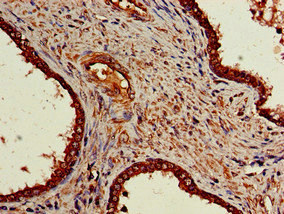
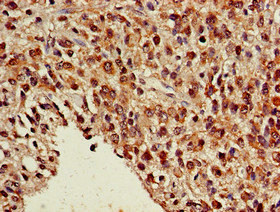
The antibody against NR5A2 was raised in rabbit using the Recombinant Human Nuclear receptor subfamily 5 group A member 2 protein (182-291AA) as the immunogen. This antibody exists as a non-conjugated isotype IgG, purified by protein G with a purity greater than 95%. This antibody has been validated on ELISA, WB, IHC.
$299.00
| Cat.No | ADC-12570A | Clonality | Polyclonal |
|---|---|---|---|
| Host Species | Rabbit | Target Name | NR5A2 |
| Form | Liquid | Species Reactivity | Human, Mouse |
| Isotype | IgG | Storage Buffer | 0.01M PBS, 0.03% Proclin 300; Constituents: 50% Glycerol, PH 7.4 |
| Purification Method | >95%, Protein G purified | Conjugate | Non-conjugated |
| Application | ELISA, IHC, WB | Storage | Upon receipt |
| Immunogen Description | Recombinant Human Nuclear receptor subfamily 5 group A member 2 protein (182-291AA) | Target Species | Human |
|---|---|---|---|
| Immunogen Sequence | Complete sequences for the immunogen, target protein, and peptides are available upon request. | Uniprot ID | O00482 |
Uniprot Id
O00482
Target Species
Human
Target Name
NR5A2
Target Full Name
Nuclear receptor subfamily 5 group A member 2
Target Function
Nuclear receptor that acts as a key metabolic sensor by regulating the expression of genes involved in bile acid synthesis, cholesterol homeostasis and triglyceride synthesis. Together with the oxysterol receptors NR1H3/LXR-alpha and NR1H2/LXR-beta, acts as an essential transcriptional regulator of lipid metabolism. Plays an anti-inflammatory role during the hepatic acute phase response by acting as a corepressor: inhibits the hepatic acute phase response by preventing dissociation of the N-Cor corepressor complex. Binds to the sequence element 5'-AACGACCGACCTTGAG-3' of the enhancer II of hepatitis B virus genes, a critical cis-element of their expression and regulation. May be responsible for the liver-specific activity of enhancer II, probably in combination with other hepatocyte transcription factors. Key regulator of cholesterol 7-alpha-hydroxylase gene (CYP7A) expression in liver. May also contribute to the regulation of pancreas-specific genes and play important roles in embryonic development. Activates the transcription of CYP2C38.
Target Subcellular Location
Nucleus.
Target Protein Families
Nuclear hormone receptor family, NR5 subfamily
Target Tissue Specificity
Abundantly expressed in pancreas, less in liver, very low levels in heart and lung. Expressed in the Hep-G2 cell line. Isoform 1 and isoform 2 seem to be present in fetal and adult liver and Hep-G2 cells.
Target Synonyms
Alpha-1-fetoprotein transcription factor; B1-binding factor; B1F; B1F2; CPF; CYP7A promoter-binding factor; FTF; FTZ F1; FTZ F1beta; FTZ-F1; FTZ-F1beta; hB1F 2; hB1F; hB1F-2; Hepatocytic transcription factor; Liver receptor homolog 1; LRH-1; LRH1; Nr5a2; NR5A2_HUMAN; Nuclear receptor subfamily 5 group A member 2
Target Background
The protein encoded by this gene is a DNA-binding zinc finger transcription factor and is a member of the fushi tarazu factor-1 subfamily of orphan nuclear receptors. The encoded protein is involved in the expression of genes for hepatitis B virus and cholesterol biosynthesis, and may be an important regulator of embryonic development.
Notification