• Contact info@abtriva.com for inquiries and orders.
  • Chinese (Simplified)

  • English

  • German

  • Korean

  • Spanish

United States (English / $ USD)

Rabbit anti-Human NRCAM Polyclonal Antibody

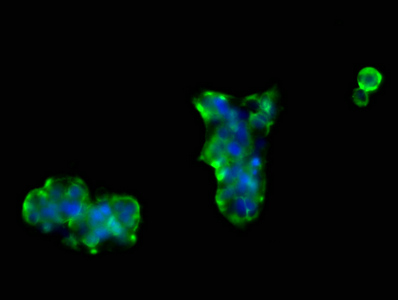
The antibody against NRCAM was raised in rabbit using the Recombinant Human Neuronal cell adhesion molecule protein (1194-1299AA) as the immunogen. This antibody exists as a non-conjugated isotype IgG, purified by protein G with a purity greater than 95%. This antibody has been validated on ELISA, IHC, IF.

ADC-05938A

The antibody against NRCAM was raised in rabbit using the Recombinant Human Neuronal cell adhesion molecule protein (1194-1299AA) as the immunogen. This antibody exists as a non-conjugated isotype IgG, purified by protein G with a purity greater than 95%. This antibody has been validated on ELISA, IHC, IF.

$299.00

Number
Order Exclusive Products Now

Request a Quote
High Purity LevelsPrecision and ReliabilityCustomization Options

Specifications


Cat.No ADC-05938A ClonalityPolyclonal
Host SpeciesRabbitTarget NameNRCAM
FormLiquidSpecies ReactivityHuman
IsotypeIgGStorage Buffer0.01M PBS, 0.03% Proclin 300; Constituents: 50% Glycerol, PH 7.4
Purification Method>95%, Protein G purifiedConjugateNon-conjugated
ApplicationELISA, IF, IHCStorageUpon receipt

Immunogen Information


Immunogen DescriptionRecombinant Human Neuronal cell adhesion molecule protein (1194-1299AA)Target SpeciesHuman
Immunogen SequenceComplete sequences for the immunogen, target protein, and peptides are available upon request.Uniprot IDQ92823
Background Information
  • Uniprot Id

    Q92823

  • Target Species

    Human

  • Target Name

    NRCAM

  • Target Full Name

    Neuronal cell adhesion molecule

  • Target Function

    Cell adhesion protein that is required for normal responses to cell-cell contacts in brain and in the peripheral nervous system. Plays a role in neurite outgrowth in response to contactin binding. Plays a role in mediating cell-cell contacts between Schwann cells and axons. Plays a role in the formation and maintenance of the nodes of Ranvier on myelinated axons. Nodes of Ranvier contain clustered sodium channels that are crucial for the saltatory propagation of action potentials along myelinated axons. During development, nodes of Ranvier are formed by the fusion of two heminodes. Required for normal clustering of sodium channels at heminodes; not required for the formation of mature nodes with normal sodium channel clusters. Required, together with GLDN, for maintaining NFASC and sodium channel clusters at mature nodes of Ranvier.

  • Target Subcellular Location

    Cell membrane; Single-pass type I membrane protein. Cell projection, axon. Secreted.

  • Target Protein Families

    Immunoglobulin superfamily, L1/neurofascin/NgCAM family

  • Target Tissue Specificity

    Detected in all the examined tissues. In the brain it was detected in the amygdala, caudate nucleus, corpus callosum, hippocampus, hypothalamus, substantia nigra, subthalamic nucleus and thalamus.

  • Target Synonyms

    Bravo; hBravo; Neuronal cell adhesion molecule; Neuronal surface protein Bravo; Ng CAM related; Ng-CAM-related; NgCAM related cell adhesion molecule; NgCAM-related cell adhesion molecule; Nr CAM; Nr-CAM; Nrcam; NRCAM_HUMAN

  • Target Background

    Cell adhesion molecules (CAMs) are members of the immunoglobulin superfamily. This gene encodes a neuronal cell adhesion molecule with multiple immunoglobulin-like C2-type domains and fibronectin type-III domains. This ankyrin-binding protein is involved in neuron-neuron adhesion and promotes directional signaling during axonal cone growth. This gene is also expressed in non-neural tissues and may play a general role in cell-cell communication via signaling from its intracellular domain to the actin cytoskeleton during directional cell migration. Allelic variants of this gene have been associated with autism and addiction vulnerability. Alternative splicing results in multiple transcript variants encoding different isoforms.

Inquire Rabbit anti-Human NRCAM Polyclonal Antibody Now


AbTriva respects your privacy and protects your personal data in accordance with AbTriva. For more information, please see our data protection statement. *

Notification