-
Chinese (Simplified)
-
English
-
German
-
Korean
-
Spanish
Chinese (Simplified)
English
German
Korean
Spanish
Sign up for an account to enjoy easy online shopping and instant order tracking.
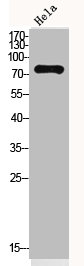
The antibody against OAS2 was raised in rabbit using the Synthesized peptide derived from the N-terminal region of Human OAS2. as the immunogen. This antibody exists as a non-conjugated isotype IgG. The antibody was affinity-purified from rabbit antiserum by affinity-chromatography using epitope-specific immunogen. This antibody has been validated on WB, ELISA.
$167.00
| Cat.No | ADC-32741A | Clonality | Polyclonal |
|---|---|---|---|
| Host Species | Rabbit | Target Name | OAS2 |
| Form | Liquid | Species Reactivity | Human |
| Isotype | IgG | Storage Buffer | 0.5% BSA and 0.02% sodium azide., Liquid in PBS containing 50% glycerol |
| Purification Method | The antibody was affinity-purified from rabbit antiserum by affinity-chromatography using epitope-specific immunogen. | Conjugate | Non-conjugated |
| Application | ELISA, WB | Storage | Upon receipt |
| Immunogen Description | Synthesized peptide derived from the N-terminal region of Human OAS2. | Target Species | Human |
|---|---|---|---|
| Immunogen Sequence | Complete sequences for the immunogen, target protein, and peptides are available upon request. | Uniprot ID | P29728 |
Uniprot Id
P29728
Target Species
Human
Target Name
OAS2
Target Full Name
2'-5'-oligoadenylate synthase 2
Target Function
Interferon-induced, dsRNA-activated antiviral enzyme which plays a critical role in cellular innate antiviral response. Activated by detection of double stranded RNA (dsRNA): polymerizes higher oligomers of 2'-5'-oligoadenylates (2-5A) from ATP which then bind to the inactive monomeric form of ribonuclease L (RNASEL) leading to its dimerization and subsequent activation. Activation of RNASEL leads to degradation of cellular as well as viral RNA, resulting in the inhibition of protein synthesis, thus terminating viral replication. Can mediate the antiviral effect via the classical RNASEL-dependent pathway or an alternative antiviral pathway independent of RNASEL. In addition, it may also play a role in other cellular processes such as apoptosis, cell growth, differentiation and gene regulation. May act as a negative regulator of lactation, stopping lactation in virally infected mammary gland lobules, thereby preventing transmission of viruses to neonates. Non-infected lobules would not be affected, allowing efficient pup feeding during infection.
Target Subcellular Location
Cytoplasm. Cytoplasm, perinuclear region.
Target Protein Families
2-5A synthase family
Target Synonyms
OAS2
Target Background
This gene encodes a member of the 2-5A synthetase family, essential proteins involved in the innate immune response to viral infection. The encoded protein is induced by interferons and uses adenosine triphosphate in 2'-specific nucleotidyl transfer reactions to synthesize 2', 5'-oligoadenylates (2-5As). These molecules activate latent RNase L, which results in viral RNA degradation and the inhibition of viral replication. The three known members of this gene family are located in a cluster on chromosome 12. Alternatively spliced transcript variants encoding different isoforms have been described.
Notification