-
Chinese (Simplified)
-
English
-
German
-
Korean
-
Spanish
Chinese (Simplified)
English
German
Korean
Spanish
Sign up for an account to enjoy easy online shopping and instant order tracking.
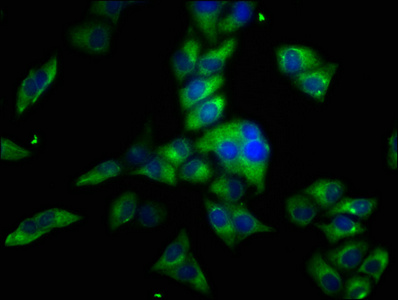
The antibody against OBSCN was raised in rabbit using the Recombinant Human Obscurin protein (1621-1712AA) as the immunogen. This antibody exists as a non-conjugated isotype IgG, purified by protein G with a purity greater than 95%. This antibody has been validated on ELISA, IHC, IF.
$299.00
| Cat.No | ADC-03286A | Clonality | Polyclonal |
|---|---|---|---|
| Host Species | Rabbit | Target Name | OBSCN |
| Form | Liquid | Species Reactivity | Human |
| Isotype | IgG | Storage Buffer | 0.01M PBS, 0.03% Proclin 300; Constituents: 50% Glycerol, PH 7.4 |
| Purification Method | >95%, Protein G purified | Conjugate | Non-conjugated |
| Application | ELISA, IF, IHC | Storage | Upon receipt |
| Immunogen Description | Recombinant Human Obscurin protein (1621-1712AA) | Target Species | Human |
|---|---|---|---|
| Immunogen Sequence | Complete sequences for the immunogen, target protein, and peptides are available upon request. | Uniprot ID | Q5VST9 |
Uniprot Id
Q5VST9
Target Species
Human
Target Name
OBSCN
Target Full Name
Obscurin
Target Function
Structural component of striated muscles which plays a role in myofibrillogenesis. Probably involved in the assembly of myosin into sarcomeric A bands in striated muscle. Has serine/threonine protein kinase activity and phosphorylates N-cadherin CDH2 and sodium/potassium-transporting ATPase subunit ATP1B1. Binds (via the PH domain) strongly to phosphatidylinositol 3,4-bisphosphate (PtdIns(3,4)P2) and phosphatidylinositol 4,5-bisphosphate (PtdIns(4,5)P2), and to a lesser extent to phosphatidylinositol 3-phosphate (PtdIns(3)P), phosphatidylinositol 4-phosphate (PtdIns(4)P), phosphatidylinositol 5-phosphate (PtdIns(5)P) and phosphatidylinositol 3,4,5-trisphosphate (PtdIns(3,4,5)P3).
Target Involvement
A chromosomal aberration involving OBSCN has been found in Wilms tumor. Translocation t(1;7)(q42;p15) with PTHB1.
Target Subcellular Location
[Isoform 3]: Cytoplasm, myofibril, sarcomere, M line. Cytoplasm, myofibril, sarcomere, Z line.
Target Protein Families
Protein kinase superfamily, CAMK Ser/Thr protein kinase family
Target Synonyms
BC046431; Gm878; KIAA1556; KIAA1639; OBSCN; OBSCN_HUMAN; Obscurin; Obscurin-MLCK; Obscurin-myosin light chain kinase; Obscurin-RhoGEF; OTTMUSG00000005786; UNC89
Target Background
The obscurin gene spans more than 150 kb, contains over 80 exons and encodes a protein of approximately 720 kDa. The encoded protein contains 68 Ig domains, 2 fibronectin domains, 1 calcium/calmodulin-binding domain, 1 RhoGEF domain with an associated PH domain, and 2 serine-threonine kinase domains. This protein belongs to the family of giant sacromeric signaling proteins that includes titin and nebulin, and may have a role in the organization of myofibrils during assembly and may mediate interactions between the sarcoplasmic reticulum and myofibrils. Alternatively spliced transcript variants encoding different isoforms have been identified.
Notification