-
Chinese (Simplified)
-
English
-
German
-
Korean
-
Spanish
Chinese (Simplified)
English
German
Korean
Spanish
Sign up for an account to enjoy easy online shopping and instant order tracking.
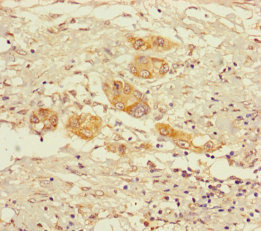
The antibody against OGDH was raised in rabbit using the Recombinant Human 2-oxoglutarate dehydrogenase, mitochondrial protein (41-423AA) as the immunogen. This antibody exists as a non-conjugated isotype IgG, purified by protein G with a purity greater than 95%. This antibody has been validated on ELISA, IHC.
$299.00
| Cat.No | ADC-49747A | Clonality | Polyclonal |
|---|---|---|---|
| Host Species | Rabbit | Target Name | OGDH |
| Form | Liquid | Species Reactivity | Human |
| Isotype | IgG | Storage Buffer | 0.01M PBS, 0.03% Proclin 300; Constituents: 50% Glycerol, PH 7.4 |
| Purification Method | >95%, Protein G purified | Conjugate | Non-conjugated |
| Application | ELISA, IHC | Storage | Upon receipt |
| Immunogen Description | Recombinant Human 2-oxoglutarate dehydrogenase, mitochondrial protein (41-423AA) | Target Species | Human |
|---|---|---|---|
| Immunogen Sequence | Complete sequences for the immunogen, target protein, and peptides are available upon request. | Uniprot ID | Q02218 |
Uniprot Id
Q02218
Target Species
Human
Target Name
OGDH
Target Full Name
2-oxoglutarate dehydrogenase complex component E1
Target Function
2-oxoglutarate dehydrogenase (E1) component of the 2-oxoglutarate dehydrogenase complex (OGDHC), which mediates the decarboxylation of alpha-ketoglutarate. The 2-oxoglutarate dehydrogenase complex catalyzes the overall conversion of 2-oxoglutarate to succinyl-CoA and CO(2). The 2-oxoglutarate dehydrogenase complex is mainly active in the mitochondrion. A fraction of the 2-oxoglutarate dehydrogenase complex also localizes in the nucleus and is required for lysine succinylation of histones: associates with KAT2A on chromatin and provides succinyl-CoA to histone succinyltransferase KAT2A.
Target Subcellular Location
Mitochondrion matrix. Nucleus.
Target Protein Families
Alpha-ketoglutarate dehydrogenase family
Target Research Area
Metabolism
Target Synonyms
2 oxoglutarate dehydrogenase; 2 oxoglutarate dehydrogenase complex component E1; 2 oxoglutarate dehydrogenase mitochondrial; 2-oxoglutarate dehydrogenase; 2-oxoglutarate dehydrogenase complex component E1; AKGDH; Alpha ketoglutarate dehydrogenase ; Alpha-ketoglutarate dehydrogenase; E1k; mitochondrial; ODO1_HUMAN; OGDC; OGDC E1; OGDC-E1; OGDH; Oxoglutarate (alpha ketoglutarate) dehydrogenase (lipoamide); Oxoglutarate decarboxylase; Oxoglutarate dehydrogenase (lipoamide); Oxoglutarate dehydrogenase (succinyl transferring)
Target Background
This gene encodes one subunit of the 2-oxoglutarate dehydrogenase complex. This complex catalyzes the overall conversion of 2-oxoglutarate (alpha-ketoglutarate) to succinyl-CoA and CO(2) during the Krebs cycle. The protein is located in the mitochondrial matrix and uses thiamine pyrophosphate as a cofactor. A congenital deficiency in 2-oxoglutarate dehydrogenase activity is believed to lead to hypotonia, metabolic acidosis, and hyperlactatemia. Alternative splicing results in multiple transcript variants encoding distinct isoforms.
Notification