• Contact info@abtriva.com for inquiries and orders.
  • Chinese (Simplified)

  • English

  • German

  • Korean

  • Spanish

United States (English / $ USD)

Rabbit anti-Human OPN4 Polyclonal Antibody

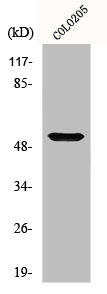
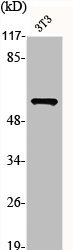
The antibody against OPN4 was raised in rabbit using the Synthesized peptide derived from the C-terminal region of Human Melanopsin. as the immunogen. This antibody exists as a non-conjugated isotype IgG. The antibody was affinity-purified from rabbit antiserum by affinity-chromatography using epitope-specific immunogen. This antibody has been validated on WB, IF, ELISA.

ADC-38257A

The antibody against OPN4 was raised in rabbit using the Synthesized peptide derived from the C-terminal region of Human Melanopsin. as the immunogen. This antibody exists as a non-conjugated isotype IgG. The antibody was affinity-purified from rabbit antiserum by affinity-chromatography using epitope-specific immunogen. This antibody has been validated on WB, IF, ELISA.

$167.00

Number
Order Exclusive Products Now

Request a Quote
High Purity LevelsPrecision and ReliabilityCustomization Options

Specifications


Cat.No ADC-38257A ClonalityPolyclonal
Host SpeciesRabbitTarget NameOPN4
Target SynonymsOPN4; MOP; Melanopsin; Opsin-4FormLiquid
Species ReactivityHumanIsotypeIgG
Storage Buffer0.5% BSA and 0.02% sodium azide., Liquid in PBS containing 50% glycerolPurification MethodThe antibody was affinity-purified from rabbit antiserum by affinity-chromatography using epitope-specific immunogen.
ConjugateNon-conjugatedApplicationELISA, IF, WB
StorageUpon receipt

Immunogen Information


Immunogen DescriptionSynthesized peptide derived from the C-terminal region of Human Melanopsin.Target SpeciesHuman
Immunogen SequenceComplete sequences for the immunogen, target protein, and peptides are available upon request.Uniprot IDQ9UHM6
Background Information
  • Uniprot Id

    Q9UHM6

  • Target Species

    Human

  • Target Name

    OPN4

  • Target Full Name

    Melanopsin

  • Target Function

    Photoreceptor that binds cis-retinaldehydes. Contributes to pupillar reflex, photoentrainment and other non-image forming responses to light. May be involved in the optokinetic visual tracking response. May be involved in the regulation of retinal hyaloid vessel growth and regression.

  • Target Subcellular Location

    Cell membrane; Multi-pass membrane protein. Cell projection, axon. Cell projection, dendrite. Perikaryon.

  • Target Protein Families

    G-protein coupled receptor 1 family, Opsin subfamily

  • Target Tissue Specificity

    Expressed in the retina.

  • Target Synonyms

    OPN4; MOP; Melanopsin; Opsin-4

  • Target Background

    Opsins are members of the guanine nucleotide-binding protein (G protein)-coupled receptor superfamily. This gene encodes a photoreceptive opsin protein that is expressed within the ganglion and amacrine cell layers of the retina. In mouse, retinal ganglion cell axons expressing this gene projected to the suprachiasmatic nucleus and other brain nuclei involved in circadian photoentrainment. In mouse, this protein is coupled to a transient receptor potential (TRP) ion channel through a G protein signaling pathway and produces a physiologic light response via membrane depolarization and increased intracellular calcium. The protein functions as a sensory photopigment and may also have photoisomerase activity. Experiments with knockout mice indicate that this gene attenuates, but does not abolish, photoentrainment. Alternative splicing results in multiple transcript variants encoding different isoforms.

Inquire Rabbit anti-Human OPN4 Polyclonal Antibody Now


AbTriva respects your privacy and protects your personal data in accordance with AbTriva. For more information, please see our data protection statement. *

Notification