-
Chinese (Simplified)
-
English
-
German
-
Korean
-
Spanish
Chinese (Simplified)
English
German
Korean
Spanish
Sign up for an account to enjoy easy online shopping and instant order tracking.
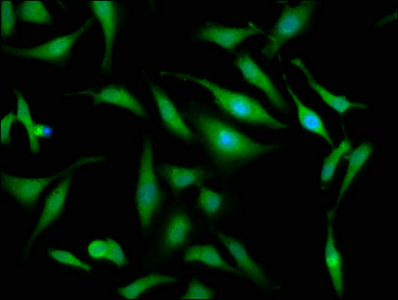
The antibody against OTUD7B was raised in rabbit using the Recombinant Human OTU domain-containing protein 7B protein (235-347AA) as the immunogen. This antibody exists as a non-conjugated isotype IgG, purified by protein G with a purity greater than 95%. This antibody has been validated on ELISA, IHC, IF.
$299.00
| Cat.No | ADC-05671A | Clonality | Polyclonal |
|---|---|---|---|
| Host Species | Rabbit | Target Name | OTUD7B |
| Form | Liquid | Species Reactivity | Human |
| Isotype | IgG | Storage Buffer | 0.01M PBS, 0.03% Proclin 300; Constituents: 50% Glycerol, PH 7.4 |
| Purification Method | >95%, Protein G purified | Conjugate | Non-conjugated |
| Application | ELISA, IF, IHC | Storage | Upon receipt |
| Immunogen Description | Recombinant Human OTU domain-containing protein 7B protein (235-347AA) | Target Species | Human |
|---|---|---|---|
| Immunogen Sequence | Complete sequences for the immunogen, target protein, and peptides are available upon request. | Uniprot ID | Q6GQQ9 |
Uniprot Id
Q6GQQ9
Target Species
Human
Target Name
OTUD7B
Target Full Name
OTU domain-containing protein 7B
Target Function
Negative regulator of the non-canonical NF-kappa-B pathway that acts by mediating deubiquitination of TRAF3, an inhibitor of the NF-kappa-B pathway, thereby acting as a negative regulator of B-cell responses. In response to non-canonical NF-kappa-B stimuli, deubiquitinates 'Lys-48'-linked polyubiquitin chains of TRAF3, preventing TRAF3 proteolysis and over-activation of non-canonical NF-kappa-B. Negatively regulates mucosal immunity against infections. Deubiquitinates ZAP70, and thereby regulates T cell receptor (TCR) signaling that leads to the activation of NF-kappa-B. Plays a role in T cell homeostasis and is required for normal T cell responses, including production of IFNG and IL2. Mediates deubiquitination of EGFR. Has deubiquitinating activity toward 'Lys-11', 'Lys-48' and 'Lys-63'-linked polyubiquitin chains. Has a much higher catalytic rate with 'Lys-11'-linked polyubiquitin chains (in vitro); however the physiological significance of these data are unsure. Hydrolyzes both linear and branched forms of polyubiquitin.
Target Subcellular Location
Cytoplasm. Nucleus.
Target Protein Families
Peptidase C64 family
Target Tissue Specificity
Widely expressed. Abundant in kidney, heart and fetal liver. Expressed differentially among B-cells at distinct developmental stages. Higher expression seen in primary immature B-cells as compared to the mature cells.
Target Synonyms
Cellular zinc finger anti NF kappa B protein ; Cellular zinc finger anti-NF-kappa-B protein; CEZANNE; HGNC:16683; OTU domain containing protein 7B; OTU domain-containing protein 7B; OTU7B_HUMAN; OTUD7B; ZA20D1; Zinc finger A20 domain containing protein 1; Zinc finger A20 domain-containing protein 1; Zinc finger protein Cezanne
Target Background
Enables Lys48-specific deubiquitinase activity and thiol-dependent deubiquitinase. Involved in several processes, including negative regulation of I-kappaB kinase/NF-kappaB signaling; negative regulation of macromolecule metabolic process; and protein deubiquitination. Located in cytoplasm and nucleus.
Notification