-
Chinese (Simplified)
-
English
-
German
-
Korean
-
Spanish
Chinese (Simplified)
English
German
Korean
Spanish
Sign up for an account to enjoy easy online shopping and instant order tracking.
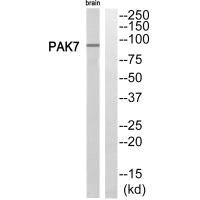
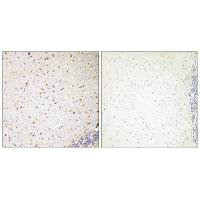
The antibody against PAK5 was raised in rabbit using the Synthesized peptide derived from C-terminal of Human PAK7. as the immunogen. The antibody was affinity-purified from rabbit antiserum by affinity-chromatography using epitope-specific immunogen. This antibody has been validated on ELISA, WB, IHC.
$297.00
| Cat.No | ADC-40691A | Clonality | Polyclonal |
|---|---|---|---|
| Host Species | Rabbit | Target Name | PAK5 |
| Form | Liquid | Species Reactivity | Human |
| Storage Buffer | PH 7.4, 0.02% sodium azide and 50% glycerol., 150mM NaCl, Rabbit IgG in phosphate buffered saline (without Mg2+ and Ca2+) | Purification Method | The antibody was affinity-purified from rabbit antiserum by affinity-chromatography using epitope-specific immunogen. |
| Application | ELISA, IHC, WB | Storage | Upon receipt |
| Immunogen Description | Synthesized peptide derived from C-terminal of Human PAK7. | Target Species | Human |
|---|---|---|---|
| Immunogen Sequence | Complete sequences for the immunogen, target protein, and peptides are available upon request. | Uniprot ID | Q9P286 |
Uniprot Id
Q9P286
Target Species
Human
Target Name
PAK5
Target Full Name
Serine/threonine-protein kinase PAK 5
Target Function
Serine/threonine protein kinase that plays a role in a variety of different signaling pathways including cytoskeleton regulation, cell migration, proliferation or cell survival. Activation by various effectors including growth factor receptors or active CDC42 and RAC1 results in a conformational change and a subsequent autophosphorylation on several serine and/or threonine residues. Phosphorylates the proto-oncogene RAF1 and stimulates its kinase activity. Promotes cell survival by phosphorylating the BCL2 antagonist of cell death BAD. Phosphorylates CTNND1, probably to regulate cytoskeletal organization and cell morphology. Keeps microtubules stable through MARK2 inhibition and destabilizes the F-actin network leading to the disappearance of stress fibers and focal adhesions.
Target Subcellular Location
Mitochondrion. Cytoplasm. Nucleus. Note=Shuttles between the nucleus and the mitochondria, and mitochondrial localization is essential for the role in cell survival.
Target Protein Families
Protein kinase superfamily, STE Ser/Thr protein kinase family, STE20 subfamily
Target Tissue Specificity
Predominantly expressed in brain.
Target Synonyms
EC 2.7.11.1; KIAA1264; MGC26232 ; p21 activated kinase 7; p21 protein (Cdc42/Rac)-activated kinase 7; p21(CDKN1A) activated kinase 7; p21-activated kinase 5; p21-activated kinase 7; PAK 5; PAK 7; PAK-5; PAK-7; PAK5; PAK7; PAK7_HUMAN; Protein kinase PAK5 ; Serine/threonine protein kinase PAK 7; Serine/threonine-protein kinase PAK 7
Target Background
The protein encoded by this gene is a member of the PAK family of Ser/Thr protein kinases. PAK family members are known to be effectors of Rac/Cdc42 GTPases, which have been implicated in the regulation of cytoskeletal dynamics, proliferation, and cell survival signaling. This kinase contains a CDC42/Rac1 interactive binding (CRIB) motif, and has been shown to bind CDC42 in the presence of GTP. This kinase is predominantly expressed in brain. It is capable of promoting neurite outgrowth, and thus may play a role in neurite development. This kinase is associated with microtubule networks and induces microtubule stabilization. The subcellular localization of this kinase is tightly regulated during cell cycle progression. Alternatively spliced transcript variants encoding the same protein have been described.
Notification