• Contact info@abtriva.com for inquiries and orders.
  • Chinese (Simplified)

  • English

  • German

  • Korean

  • Spanish

United States (English / $ USD)

Rabbit anti-Human PARP3 Polyclonal Antibody

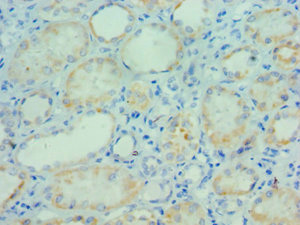
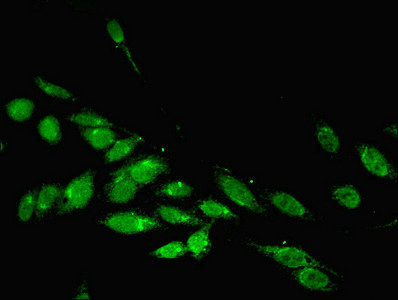
The antibody against PARP3 was raised in rabbit using the Recombinant Human Poly [ADP-ribose] polymerase 3 protein (294-533AA) as the immunogen. This antibody exists as a non-conjugated isotype IgG, Antigen affinity purified. This antibody has been validated on ELISA, WB, IHC, IF.

ADC-44469A

The antibody against PARP3 was raised in rabbit using the Recombinant Human Poly [ADP-ribose] polymerase 3 protein (294-533AA) as the immunogen. This antibody exists as a non-conjugated isotype IgG, Antigen affinity purified. This antibody has been validated on ELISA, WB, IHC, IF.

$299.00

Number
Order Exclusive Products Now

Request a Quote
High Purity LevelsPrecision and ReliabilityCustomization Options

Specifications


Cat.No ADC-44469A ClonalityPolyclonal
Host SpeciesRabbitTarget NamePARP3
Target SynonymsADP ribosyltransferase (NAD+, member 3 antibody; Poly (ADP ribose) synthetase 3 antibody; Poly [ADP-ribose] polymerase 3 antibody; Poly[ADP ribose] synthetase 3 antibody; Poly[ADP-ribose] synthase 3 antibodyFormLiquid
Species ReactivityHuman, MouseIsotypeIgG
Storage Buffer50% Glycerol, PBS with 0.02% sodium azide, pH7.3.Purification MethodAntigen affinity purified
ConjugateNon-conjugatedApplicationELISA, IF, IHC, WB
StorageUpon receipt

Immunogen Information


Immunogen DescriptionRecombinant Human Poly [ADP-ribose] polymerase 3 protein (294-533AA)Target SpeciesHuman
Immunogen SequenceComplete sequences for the immunogen, target protein, and peptides are available upon request.Uniprot IDQ9Y6F1
Background Information
  • Uniprot Id

    Q9Y6F1

  • Target Species

    Human

  • Target Name

    PARP3

  • Target Full Name

    Protein mono-ADP-ribosyltransferase PARP3

  • Target Function

    Mono-ADP-ribosyltransferase that mediates mono-ADP-ribosylation of target proteins and plays a key role in the response to DNA damage. Mediates mono-ADP-ribosylation of glutamate, aspartate or lysine residues on target proteins. In contrast to PARP1 and PARP2, it is not able to mediate poly-ADP-ribosylation. Associates with a number of DNA repair factors and is involved in the response to exogenous and endogenous DNA strand breaks. Together with APLF, promotes the retention of the LIG4-XRCC4 complex on chromatin and accelerate DNA ligation during non-homologous end-joining (NHEJ). Cooperates with the XRCC5-XRCC6 (Ku80-Ku70) heterodimer to limit end-resection thereby promoting accurate NHEJ. Involved in DNA repair by mediating mono-ADP-ribosylation of a limited number of acceptor proteins involved in chromatin architecture and in DNA metabolism, such as XRCC5 and XRCC6. ADP-ribosylation follows DNA damage and appears as an obligatory step in a detection/signaling pathway leading to the reparation of DNA strand breaks. May link the DNA damage surveillance network to the mitotic fidelity checkpoint. In addition to proteins, also able to ADP-ribosylate DNA: mediates DNA mono-ADP-ribosylation of DNA strand break termini via covalent addition of a single ADP-ribose moiety to a 5'- or 3'-terminal phosphate residues in DNA containing multiple strand breaks. Acts as a negative regulator of immunoglobulin class switch recombination, probably by controlling the level of AICDA /AID on the chromatin.

  • Target Subcellular Location

    Nucleus. Chromosome. Cytoplasm, cytoskeleton, microtubule organizing center, centrosome. Cytoplasm, cytoskeleton, microtubule organizing center, centrosome, centriole.

  • Target Tissue Specificity

    Widely expressed; the highest levels are in the kidney, skeletal muscle, liver, heart and spleen; also detected in pancreas, lung, placenta, brain, leukocytes, colon, small intestine, ovary, testis, prostate and thymus.

  • Target Research Area

    Cancer

  • Target Synonyms

    ADP-ribosyltransferase diphtheria toxin-like 3;ARTD3;DNA ADP-ribosyltransferase PARP3;IRT1;NAD+;ADPRT-3;Poly [ADP-ribose] polymerase 3;PARP-3;hPARP-3;Poly[ADP-ribose] synthase 3;pADPRT-3

  • Target Background

    The protein encoded by this gene belongs to the PARP family. These enzymes modify nuclear proteins by poly-ADP-ribosylation, which is required for DNA repair, regulation of apoptosis, and maintenance of genomic stability. This gene encodes the poly(ADP-ribosyl)transferase 3, which is preferentially localized to the daughter centriole throughout the cell cycle. Alternatively spliced transcript variants encoding different isoforms have been identified.

Inquire Rabbit anti-Human PARP3 Polyclonal Antibody Now


AbTriva respects your privacy and protects your personal data in accordance with AbTriva. For more information, please see our data protection statement. *

Notification