-
Chinese (Simplified)
-
English
-
German
-
Korean
-
Spanish
Chinese (Simplified)
English
German
Korean
Spanish
Sign up for an account to enjoy easy online shopping and instant order tracking.
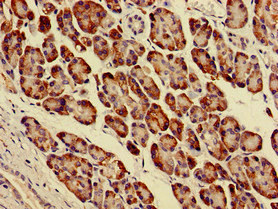
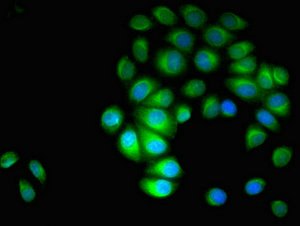
The antibody against PARVA was raised in rabbit using the Recombinant Human Alpha-parvin protein (2-94AA) as the immunogen. This antibody exists as a non-conjugated isotype IgG, purified by protein G with a purity greater than 95%. This antibody has been validated on ELISA, WB, IHC, IF.
$299.00
| Cat.No | ADC-09792A | Clonality | Polyclonal |
|---|---|---|---|
| Host Species | Rabbit | Target Name | PARVA |
| Form | Liquid | Species Reactivity | Human, Rat |
| Isotype | IgG | Storage Buffer | 0.01M PBS, 0.03% Proclin 300; Constituents: 50% Glycerol, PH 7.4 |
| Purification Method | >95%, Protein G purified | Conjugate | Non-conjugated |
| Application | ELISA, IF, IHC, WB | Storage | Upon receipt |
| Immunogen Description | Recombinant Human Alpha-parvin protein (2-94AA) | Target Species | Human |
|---|---|---|---|
| Immunogen Sequence | Complete sequences for the immunogen, target protein, and peptides are available upon request. | Uniprot ID | Q9NVD7 |
Uniprot Id
Q9NVD7
Target Species
Human
Target Name
PARVA
Target Full Name
Alpha-parvin
Target Function
Plays a role in sarcomere organization and in smooth muscle cell contraction. Required for normal development of the embryonic cardiovascular system, and for normal septation of the heart outflow tract. Plays a role in sprouting angiogenesis and is required for normal adhesion of vascular smooth muscle cells to endothelial cells during blood vessel development. Plays a role in the reorganization of the actin cytoskeleton, formation of lamellipodia and ciliogenesis. Plays a role in the establishment of cell polarity, cell adhesion, cell spreading, and directed cell migration.
Target Subcellular Location
Cell junction, focal adhesion. Cell membrane; Peripheral membrane protein; Cytoplasmic side. Cytoplasm, cytoskeleton. Cytoplasm, myofibril, sarcomere, Z line. Note=Constituent of focal adhesions. Associates with the actin cytoskeleton.
Target Protein Families
Parvin family
Target Tissue Specificity
Widely expressed, with highest levels in heart, skeletal muscle, kidney and liver.
Target Synonyms
Actopaxin; Alpha parvin; Alpha-parvin; Calponin like integrin linked kinase binding protein; Calponin-like integrin-linked kinase-binding protein; CH ILKBP; CH-ILKBP; FLJ10793; FLJ12254; Matrix remodelling associated 2; Matrix remodelling associated protein 2; Matrix-remodeling-associated protein 2; MXRA 2; MXRA2; PARV A; Parva; PARVA_HUMAN
Target Background
This gene encodes a member of the parvin family of actin-binding proteins. Parvins are associated with focal contacts and contain calponin homology domains that bind to actin filaments. The encoded protein is part of the integrin-linked kinase signaling complex and plays a role in cell adhesion, motility and survival.
Notification