-
Chinese (Simplified)
-
English
-
German
-
Korean
-
Spanish
Chinese (Simplified)
English
German
Korean
Spanish
Sign up for an account to enjoy easy online shopping and instant order tracking.
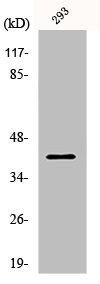
The antibody against PAWR was raised in rabbit using the Synthesized peptide derived from the C-terminal region of Human PAR4. as the immunogen. This antibody exists as a non-conjugated isotype IgG. The antibody was affinity-purified from rabbit antiserum by affinity-chromatography using epitope-specific immunogen. This antibody has been validated on WB, IHC, ELISA.
$167.00
| Cat.No | ADC-37904A | Clonality | Polyclonal |
|---|---|---|---|
| Host Species | Rabbit | Target Name | PAWR |
| Form | Liquid | Species Reactivity | Human, Mouse, Rat |
| Isotype | IgG | Storage Buffer | 0.5% BSA and 0.02% sodium azide., Liquid in PBS containing 50% glycerol |
| Purification Method | The antibody was affinity-purified from rabbit antiserum by affinity-chromatography using epitope-specific immunogen. | Conjugate | Non-conjugated |
| Application | ELISA, IHC, WB | Storage | Upon receipt |
| Immunogen Description | Synthesized peptide derived from the C-terminal region of Human PAR4. | Target Species | Human |
|---|---|---|---|
| Immunogen Sequence | Complete sequences for the immunogen, target protein, and peptides are available upon request. | Uniprot ID | Q96IZ0 |
Uniprot Id
Q96IZ0
Target Species
Human
Target Name
PAWR
Target Full Name
PRKC apoptosis WT1 regulator protein
Target Function
Pro-apoptotic protein capable of selectively inducing apoptosis in cancer cells, sensitizing the cells to diverse apoptotic stimuli and causing regression of tumors in animal models. Induces apoptosis in certain cancer cells by activation of the Fas prodeath pathway and coparallel inhibition of NF-kappa-B transcriptional activity. Inhibits the transcriptional activation and augments the transcriptional repression mediated by WT1. Down-regulates the anti-apoptotic protein BCL2 via its interaction with WT1. Seems also to be a transcriptional repressor by itself. May be directly involved in regulating the amyloid precursor protein (APP) cleavage activity of BACE1.
Target Subcellular Location
Cytoplasm. Nucleus.
Target Tissue Specificity
Widely expressed. Expression is elevated in various neurodegenerative diseases such as amyotrophic lateral sclerosis, Alzheimer, Parkinson and Huntington diseases and stroke. Down-regulated in several cancers.
Target Synonyms
2310001G03Rik; PAR 4; PAR-4; Pawr; PAWR_HUMAN; PRKC Apoptosis WT1 Regulator; PRKC apoptosis WT1 regulator protein; Prostate apoptosis response 4 protein; Prostate apoptosis response protein 4; prostate apoptosis response protein PAR-4; Transcriptional repressor Par-4-like protein PAWR; Transcriptional repressor PAR4; WT1 Interacting Protein
Target Background
This gene encodes a tumor suppressor protein that selectively induces apoptosis in cancer cells through intracellular and extracellular mechanisms. The intracellular mechanism involves the inhibition of pro-survival pathways and the activation of Fas-mediated apoptosis, while the extracellular mechanism involves the binding of a secreted form of this protein to glucose regulated protein 78 (GRP78) on the cell surface, which leads to activation of the extrinsic apoptotic pathway. This gene is located on the unstable human chromosomal 12q21 region and is often deleted or mutated different tumors. The encoded protein also plays an important role in the progression of age-related diseases.
Notification