-
Chinese (Simplified)
-
English
-
German
-
Korean
-
Spanish

Chinese (Simplified)
English
German
Korean
Spanish
Sign up for an account to enjoy easy online shopping and instant order tracking.
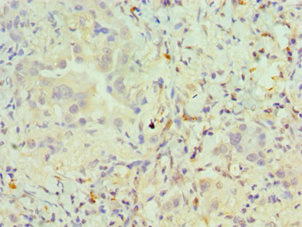
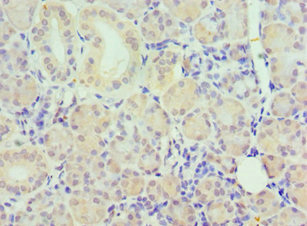
The antibody against PAX6 was raised in rabbit using the Recombinant Human Paired box protein Pax-6 protein (1-300AA) as the immunogen. This antibody exists as a non-conjugated isotype IgG, Antigen affinity purified. This antibody has been validated on ELISA, IHC.
$299.00
| Cat.No | ADC-44236A | Clonality | Polyclonal |
|---|---|---|---|
| Host Species | Rabbit | Target Name | PAX6 |
| Form | Liquid | Species Reactivity | Human |
| Isotype | IgG | Storage Buffer | 50% Glycerol, PBS with 0.02% sodium azide, pH7.3. |
| Purification Method | Antigen affinity purified | Conjugate | Non-conjugated |
| Application | ELISA, IHC | Storage | Upon receipt |
| Immunogen Description | Recombinant Human Paired box protein Pax-6 protein (1-300AA) | Target Species | Human |
|---|---|---|---|
| Immunogen Sequence | Complete sequences for the immunogen, target protein, and peptides are available upon request. | Uniprot ID | P26367 |
Uniprot Id
P26367
Target Species
Human
Target Name
PAX6
Target Full Name
Paired box protein Pax-6
Target Function
Transcription factor with important functions in the development of the eye, nose, central nervous system and pancreas. Required for the differentiation of pancreatic islet alpha cells. Competes with PAX4 in binding to a common element in the glucagon, insulin and somatostatin promoters. Regulates specification of the ventral neuron subtypes by establishing the correct progenitor domains. Acts as a transcriptional repressor of NFATC1-mediated gene expression.
Target Involvement
Aniridia 1 (AN1); Anterior segment dysgenesis 5 (ASGD5); Foveal hypoplasia 1 (FVH1); Keratitis hereditary (KERH); Coloboma, ocular, autosomal dominant (COAD); Coloboma of optic nerve (COLON); Bilateral optic nerve hypoplasia (BONH); Aniridia 2 (AN2)
Target Subcellular Location
Nucleus.; [Isoform 1]: Nucleus.; [Isoform 5a]: Nucleus.
Target Protein Families
Paired homeobox family
Target Tissue Specificity
[Isoform 1]: Expressed in lymphoblasts.; [Isoform 5a]: Weakly expressed in lymphoblasts.
Target Research Area
Developmental Biology
Target Synonyms
AN 2; AN; AN2; Aniridia type II protein; D11S812E; FVH1; KIAA0552; Leucine zipper putative tumor suppressor 3; LZTS3; MGC17209; MGDA; Oculorhombin; Paired box 6; Paired box gene 6 (aniridia keratitis); Paired Box Gene 6; Paired box homeotic gene 6; Paired box protein Pax-6; Paired box protein Pax6; PAX 6; PAX6; PAX6_HUMAN; ProSAP-interacting protein 1; PROSAPIP1; Sey; WAGR
Target Background
This gene encodes paired box protein Pax-6, one of many human homologs of the Drosophila melanogaster gene prd. In addition to a conserved paired box domain, a hallmark feature of this gene family, the encoded protein also contains a homeobox domain. Both domains are known to bind DNA and function as regulators of gene transcription. Activity of this protein is key in the development of neural tissues, particularly the eye. This gene is regulated by multiple enhancers located up to hundreds of kilobases distant from this locus. Mutations in this gene or in the enhancer regions can cause ocular disorders such as aniridia and Peter's anomaly. Use of alternate promoters and alternative splicing results in multiple transcript variants encoding different isoforms. Interestingly, inclusion of a particular alternate coding exon has been shown to increase the length of the paired box domain and alter its DNA binding specificity. Consequently, isoforms that carry the shorter paired box domain regulate a different set of genes compared to the isoforms carrying the longer paired box domain.
Notification