• Contact info@abtriva.com for inquiries and orders.
  • Chinese (Simplified)

  • English

  • German

  • Korean

  • Spanish

United States (English / $ USD)

Rabbit anti-Human PEG10 Polyclonal Antibody

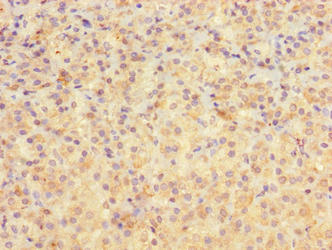
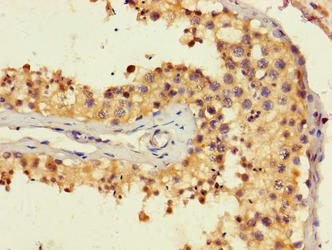
The antibody against PEG10 was raised in rabbit using the Recombinant Human Retrotransposon-derived protein PEG10 protein (1-325AA) as the immunogen. This antibody exists as a non-conjugated isotype IgG, purified by protein G with a purity greater than 95%. This antibody has been validated on ELISA, IHC.

ADC-50109A

The antibody against PEG10 was raised in rabbit using the Recombinant Human Retrotransposon-derived protein PEG10 protein (1-325AA) as the immunogen. This antibody exists as a non-conjugated isotype IgG, purified by protein G with a purity greater than 95%. This antibody has been validated on ELISA, IHC.

$299.00

Number
Order Exclusive Products Now

Request a Quote
High Purity LevelsPrecision and ReliabilityCustomization Options

Specifications


Cat.No ADC-50109A ClonalityPolyclonal
Host SpeciesRabbitTarget NamePEG10
FormLiquidSpecies ReactivityHuman
IsotypeIgGStorage Buffer0.01M PBS, 0.03% Proclin 300; Constituents: 50% Glycerol, PH 7.4
Purification Method>95%, Protein G purifiedConjugateNon-conjugated
ApplicationELISA, IHCStorageUpon receipt

Immunogen Information


Immunogen DescriptionRecombinant Human Retrotransposon-derived protein PEG10 protein (1-325AA)Target SpeciesHuman
Immunogen SequenceComplete sequences for the immunogen, target protein, and peptides are available upon request.Uniprot IDQ86TG7
Background Information
  • Uniprot Id

    Q86TG7

  • Target Species

    Human

  • Target Name

    PEG10

  • Target Full Name

    Retrotransposon-derived protein PEG10

  • Target Function

    Prevents apoptosis in hepatocellular carcinoma (HCC) cells through interaction with SIAH1, a mediator of apoptosis. May also have a role in cell growth promotion and hepatoma formation. Inhibits the TGF-beta signaling by interacting with the TGF-beta receptor ACVRL1. When overexpressed, induces the formation of cellular extension, such as filipodia in association with ACVRL1. Involved at the immediate early stage of adipocyte differentiation. May bind to the 5'-GCCTGTCTTT-3' DNA sequence of the MB1 domain in the myelin basic protein (MBP) promoter.

  • Target Subcellular Location

    Nucleus. Cytoplasm. Note=Detected predominantly in the cytoplasm of breast and prostate carcinomas, in hepatocellular carcinoma (HCC) and B-cell chronic lymphocytic leukemia (B-CLL) cells and in the Hep-G2 cell line. Colocalized with ACVRL1.

  • Target Tissue Specificity

    Expressed in the cytotrophoblast layer but not in the overlying syncytiotrophoblast of the placenta. Expressed in prostate and breast carcinomas but not in normal breast and prostate epithelial cells. Expressed in the Hep-G2 cell line (at protein level).

  • Target Synonyms

    AA407948; Edr; Embryonal carcinoma differentiation regulated; Embryonal carcinoma differentiation-regulated protein; HB 1; HB1; KIAA1051; Mammalian retrotransposon-derived protein 2; Mar2; Mart2; MEF3 like 1; MEF3-like protein 1; MEF3L; MEF3L1; MyEF 3; Myelin expression factor 3-like protein 1; Paternally expressed 10; Paternally expressed gene 10 ORF1; Paternally expressed gene 10 protein; Peg10; PEG10 protein; PEG10_HUMAN; Putative uncharacterized protein PEG10; Retrotransposon gag domain containing 3; Retrotransposon gag domain-containing protein 3; Retrotransposon-derived gag-like polyprotein; Retrotransposon-derived protein PEG10; RGAG3; Ty3/Gypsy-like protein

  • Target Background

    This is a paternally expressed imprinted gene that is thought to have been derived from the Ty3/Gypsy family of retrotransposons. It contains two overlapping open reading frames, RF1 and RF2, and expresses two proteins: a shorter, gag-like protein (with a CCHC-type zinc finger domain) from RF1; and a longer, gag/pol-like fusion protein (with an additional aspartic protease motif) from RF1/RF2 by -1 translational frameshifting (-1 FS). While -1 FS has been observed in RNA viruses and transposons in both prokaryotes and eukaryotes, this gene represents the first example of -1 FS in a eukaryotic cellular gene. This gene is highly conserved across mammalian species and retains the heptanucleotide (GGGAAAC) and pseudoknot elements required for -1 FS. It is expressed in adult and embryonic tissues (most notably in placenta) and reported to have a role in cell proliferation, differentiation and apoptosis. Overexpression of this gene has been associated with several malignancies, such as hepatocellular carcinoma and B-cell lymphocytic leukemia. Knockout mice lacking this gene showed early embryonic lethality with placental defects, indicating the importance of this gene in embryonic development. Additional isoforms resulting from alternatively spliced transcript variants, and use of upstream non-AUG (CUG) start codon have been reported for this gene.

Inquire Rabbit anti-Human PEG10 Polyclonal Antibody Now


AbTriva respects your privacy and protects your personal data in accordance with AbTriva. For more information, please see our data protection statement. *

Notification