• Contact info@abtriva.com for inquiries and orders.
  • Chinese (Simplified)

  • English

  • German

  • Korean

  • Spanish

United States (English / $ USD)

Rabbit anti-Human Phospho-c-Abl-Y412 Polyclonal Antibody

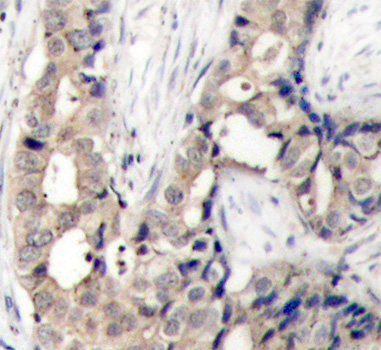
The antibody against Phospho-c-Abl-Y412 was raised in Rabbit using a synthetic phosphorylated peptide around Y412 of human ABL1 (NP_009297.2) as the immunogen. The polyclonal antibody exists as a isotype IgG, by affinity purification. This antibody has been validated on IHC-P, ELISA.

ADA-00753A

The antibody against Phospho-c-Abl-Y412 was raised in Rabbit using a synthetic phosphorylated peptide around Y412 of human ABL1 (NP_009297.2) as the immunogen. The polyclonal antibody exists as a isotype IgG, by affinity purification. This antibody has been validated on IHC-P, ELISA.

Number
Order Exclusive Products Now

Request a Quote
High Purity LevelsPrecision and ReliabilityCustomization Options

Specifications


Cat.No ADA-00753A ClonalityPolyclonal
Host SpeciesRabbitTarget NamePhospho-c-Abl-Y412
Target SynonymsABL; JTK7; p150; c-ABL; v-abl; CHDSKM; c-ABL1; BCR-ABL; bcr/abl; Phospho-c-Abl-Y412FormLiquid
Species ReactivityHuman, Mouse, RatIsotypeIgG
Storage Buffer50% Glycerol, PBS with 0.02% sodium azide, pH7.3.Purification MethodAffinity purification
ApplicationELISA, IHC-P

Immunogen Information


Immunogen DescriptionA synthetic phosphorylated peptide around Y412 of human ABL1 (NP_009297.2).Target SpeciesHuman
Immunogen SequenceComplete sequences for the immunogen, target protein, and peptides are available upon request.Uniprot IDP00519
Background Information
  • Uniprot Id

    P00519

  • Target Species

    Human

  • Target Name

    ABL1

  • Target Full Name

    Tyrosine-protein kinase ABL1

  • Target Function

    Non-receptor tyrosine-protein kinase that plays a role in many key processes linked to cell growth and survival such as cytoskeleton remodeling in response to extracellular stimuli, cell motility and adhesion, receptor endocytosis, autophagy, DNA damage response and apoptosis. Coordinates actin remodeling through tyrosine phosphorylation of proteins controlling cytoskeleton dynamics like WASF3 (involved in branch formation); ANXA1 (involved in membrane anchoring); DBN1, DBNL, CTTN, RAPH1 and ENAH (involved in signaling); or MAPT and PXN (microtubule-binding proteins). Phosphorylation of WASF3 is critical for the stimulation of lamellipodia formation and cell migration. Involved in the regulation of cell adhesion and motility through phosphorylation of key regulators of these processes such as BCAR1, CRK, CRKL, DOK1, EFS or NEDD9. Phosphorylates multiple receptor tyrosine kinases and more particularly promotes endocytosis of EGFR, facilitates the formation of neuromuscular synapses through MUSK, inhibits PDGFRB-mediated chemotaxis and modulates the endocytosis of activated B-cell receptor complexes. Other substrates which are involved in endocytosis regulation are the caveolin (CAV1) and RIN1. Moreover, ABL1 regulates the CBL family of ubiquitin ligases that drive receptor down-regulation and actin remodeling. Phosphorylation of CBL leads to increased EGFR stability. Involved in late-stage autophagy by regulating positively the trafficking and function of lysosomal components. ABL1 targets to mitochondria in response to oxidative stress and thereby mediates mitochondrial dysfunction and cell death. In response to oxidative stress, phosphorylates serine/threonine kinase PRKD2 at 'Tyr-717'. ABL1 is also translocated in the nucleus where it has DNA-binding activity and is involved in DNA-damage response and apoptosis. Many substrates are known mediators of DNA repair: DDB1, DDB2, ERCC3, ERCC6, RAD9A, RAD51, RAD52 or WRN. Activates the proapoptotic pathway when the DNA damage is too severe to be repaired. Phosphorylates TP73, a primary regulator for this type of damage-induced apoptosis. Phosphorylates the caspase CASP9 on 'Tyr-153' and regulates its processing in the apoptotic response to DNA damage. Phosphorylates PSMA7 that leads to an inhibition of proteasomal activity and cell cycle transition blocks. ABL1 acts also as a regulator of multiple pathological signaling cascades during infection. Several known tyrosine-phosphorylated microbial proteins have been identified as ABL1 substrates. This is the case of A36R of Vaccinia virus, Tir (translocated intimin receptor) of pathogenic E.coli and possibly Citrobacter, CagA (cytotoxin-associated gene A) of H.pylori, or AnkA (ankyrin repeat-containing protein A) of A.phagocytophilum. Pathogens can highjack ABL1 kinase signaling to reorganize the host actin cytoskeleton for multiple purposes, like facilitating intracellular movement and host cell exit. Finally, functions as its own regulator through autocatalytic activity as well as through phosphorylation of its inhibitor, ABI1. Regulates T-cell differentiation in a TBX21-dependent manner. Phosphorylates TBX21 on tyrosine residues leading to an enhancement of its transcriptional activator activity.

  • Target Involvement

    Leukemia, chronic myeloid (CML); Congenital heart defects and skeletal malformations syndrome (CHDSKM)

  • Target Subcellular Location

    Cytoplasm, cytoskeleton. Nucleus. Mitochondrion.; [Isoform IB]: Nucleus membrane; Lipid-anchor. Note=The myristoylated c-ABL protein is reported to be nuclear.

  • Target Protein Families

    Protein kinase superfamily, Tyr protein kinase family, ABL subfamily

  • Target Tissue Specificity

    Widely expressed.

  • Target Research Area

    Apoptosis

  • Target Synonyms

    Abelson murine leukemia viral oncogene homolog 1; Abelson tyrosine protein kinase 1; Abl 1; ABL; ABL proto oncogene 1 non receptor tyrosine kinase; ABL1; ABL1_HUMAN; bcr/abl; bcr/c abl oncogene protein; c ABL; c abl oncogene 1 non receptor tyrosine kinase; c abl oncogene 1 receptor tyrosine kinase; c ABL1; JTK7; p150; Proto oncogene tyrosine protein kinase ABL1; Proto-oncogene c-Abl; Tyrosine-protein kinase ABL1; v abl Abelson murine leukemia viral oncogene homolog 1; v abl

  • Target Background

    This gene is a protooncogene that encodes a protein tyrosine kinase involved in a variety of cellular processes, including cell division, adhesion, differentiation, and response to stress. The activity of the protein is negatively regulated by its SH3 domain, whereby deletion of the region encoding this domain results in an oncogene. The ubiquitously expressed protein has DNA-binding activity that is regulated by CDC2-mediated phosphorylation, suggesting a cell cycle function. This gene has been found fused to a variety of translocation partner genes in various leukemias, most notably the t(9;22) translocation that results in a fusion with the 5' end of the breakpoint cluster region gene (BCR; MIM:151410). Alternative splicing of this gene results in two transcript variants, which contain alternative first exons that are spliced to the remaining common exons.

Inquire Rabbit anti-Human Phospho-c-Abl-Y412 Polyclonal Antibody Now


AbTriva respects your privacy and protects your personal data in accordance with AbTriva. For more information, please see our data protection statement. *

Notification