-
Chinese (Simplified)
-
English
-
German
-
Korean
-
Spanish
Chinese (Simplified)
English
German
Korean
Spanish
Sign up for an account to enjoy easy online shopping and instant order tracking.
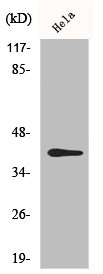
The antibody against CCR5 was raised in rabbit using the Synthesized peptide derived from Human CKR-5 around the phosphorylation site of S349. as the immunogen. This antibody exists as a non-conjugated isotype IgG. The antibody was affinity-purified from rabbit antiserum by affinity-chromatography using epitope-specific immunogen. This antibody has been validated on WB, ELISA.
$167.00
| Cat.No | ADC-39550A | Clonality | Polyclonal |
|---|---|---|---|
| Host Species | Rabbit | Target Name | CCR5 |
| Target Synonyms | CCR5; CMKBR5; C-C chemokine receptor type 5; C-C CKR-5; CC-CKR-5; CCR-5; CCR5; CHEMR13; HIV-1 fusion coreceptor; CD antigen CD195 | Form | Liquid |
| Species Reactivity | Human | Isotype | IgG |
| Storage Buffer | 0.5% BSA and 0.02% sodium azide., Liquid in PBS containing 50% glycerol | Purification Method | The antibody was affinity-purified from rabbit antiserum by affinity-chromatography using epitope-specific immunogen. |
| Conjugate | Non-conjugated | Application | ELISA, WB |
| Storage | Upon receipt |
| Immunogen Description | Synthesized peptide derived from Human CKR-5 around the phosphorylation site of S349. | Target Species | Human |
|---|---|---|---|
| Immunogen Sequence | Complete sequences for the immunogen, target protein, and peptides are available upon request. | Uniprot ID | P51681 |
Uniprot Id
P51681
Target Species
Human
Target Name
CCR5
Target Full Name
C-C chemokine receptor type 5
Target Function
Receptor for a number of inflammatory CC-chemokines including CCL3/MIP-1-alpha, CCL4/MIP-1-beta and RANTES and subsequently transduces a signal by increasing the intracellular calcium ion level. May play a role in the control of granulocytic lineage proliferation or differentiation. Participates in T-lymphocyte migration to the infection site by acting as a chemotactic receptor.; (Microbial infection) Acts as a coreceptor (CD4 being the primary receptor) of human immunodeficiency virus-1/HIV-1.
Target Involvement
Diabetes mellitus, insulin-dependent, 22 (IDDM22)
Target Subcellular Location
Cell membrane; Multi-pass membrane protein.
Target Protein Families
G-protein coupled receptor 1 family
Target Tissue Specificity
Highly expressed in spleen, thymus, in the myeloid cell line THP-1, in the promyeloblastic cell line KG-1a and on CD4+ and CD8+ T-cells. Medium levels in peripheral blood leukocytes and in small intestine. Low levels in ovary and lung.
Target Synonyms
CCR5; CMKBR5; C-C chemokine receptor type 5; C-C CKR-5; CC-CKR-5; CCR-5; CCR5; CHEMR13; HIV-1 fusion coreceptor; CD antigen CD195
Target Background
This gene encodes a member of the beta chemokine receptor family, which is predicted to be a seven transmembrane protein similar to G protein-coupled receptors. This protein is expressed by T cells and macrophages, and is known to be an important co-receptor for macrophage-tropic virus, including HIV, to enter host cells. Defective alleles of this gene have been associated with the HIV infection resistance. The ligands of this receptor include monocyte chemoattractant protein 2 (MCP-2), macrophage inflammatory protein 1 alpha (MIP-1 alpha), macrophage inflammatory protein 1 beta (MIP-1 beta) and regulated on activation normal T expressed and secreted protein (RANTES). Expression of this gene was also detected in a promyeloblastic cell line, suggesting that this protein may play a role in granulocyte lineage proliferation and differentiation. This gene is located at the chemokine receptor gene cluster region. An allelic polymorphism in this gene results in both functional and non-functional alleles; the reference genome represents the functional allele. Two transcript variants encoding the same protein have been found for this gene.
Notification